Infused Oils vs Tinctures vs Teas
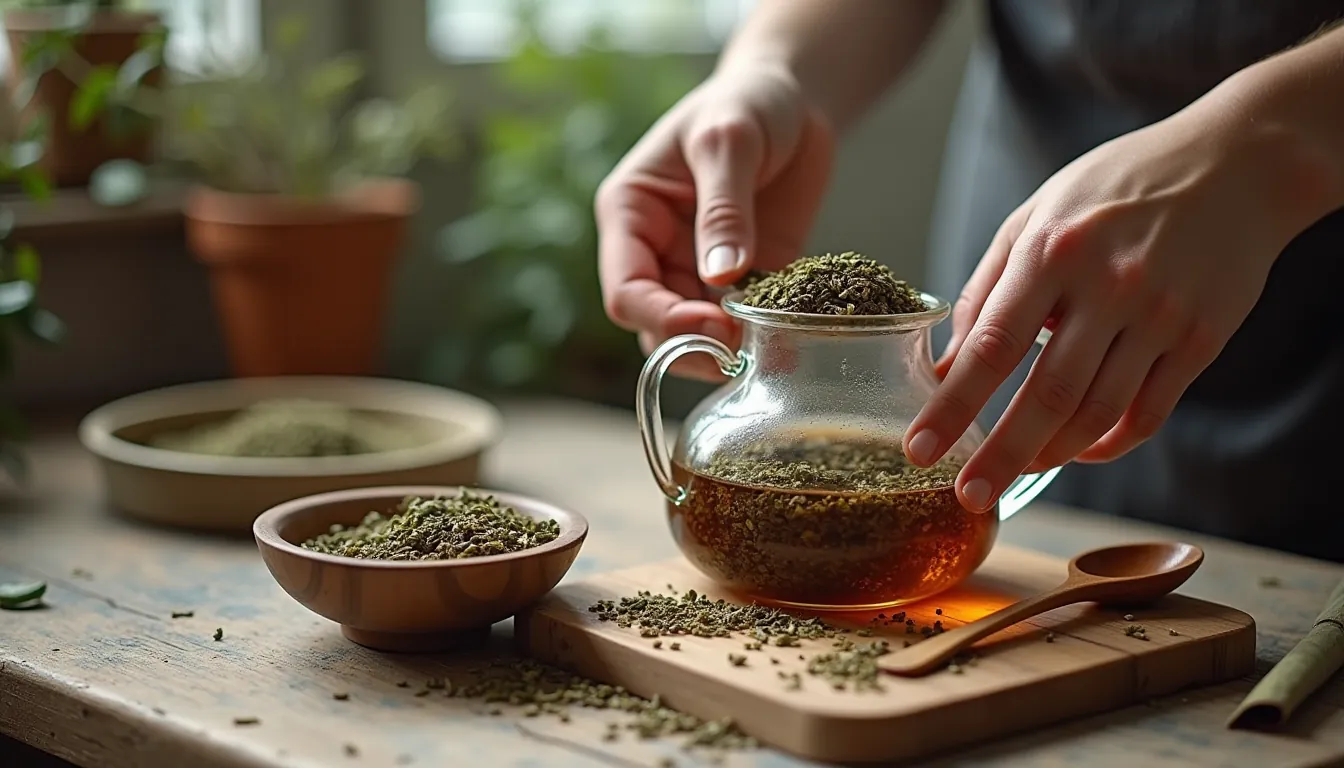
A handful of herbs can become a cup of tea, an alcohol-based tincture or an infused oil. The plant may be the same, but the solvent and preparation method shape the finished product. That difference matters when handling fresh material and deciding how to store what you’ve made.
The preparations have different uses and handling needs. This comparison covers how they are made and what to watch for, not dosing or treatment. Check cautions and interactions for the exact herb and intended use.
Not medical advice. This article is for general information only. It does not diagnose or treat anything. Talk to a qualified health professional before using any herb or remedy, especially if you are pregnant, breastfeeding, on medication or have a medical condition.
Three preparations, three solvents
Tea uses water. Tinctures use alcohol, sometimes mixed with water. Infused oils use oil. These are distinct preparations, and a change in solvent changes what may be drawn from the plant.
The result also depends on the plant and the method. A review of herbal-tea formulations in Frontiers in Pharmacology describes water solubility as one factor in whether a botanical suits a tea mixture. It also discusses ingredient stability and formulation challenges.
Those points help explain why a plant’s presence in a preparation does not settle questions of quality or safety. The solvent and plant material both matter, and a preparation method alone cannot establish how much of a constituent is present or what effect the finished product will have.
Tea: water, heat and steeping
Herbal tea can be made by infusion, decoction or maceration. Oregon State University Extension’s garden-tea example uses boiling water: cover the herbs, steep for 10 minutes, then strain. It gives examples of leaves, flowers, seeds, roots and fruits used in tea preparations.
The Frontiers in Pharmacology review also identifies infusion, decoction and maceration as ways herbal teas may be prepared. The method and plant matter; no single recipe fits every herb.
Water affects which constituents may move into the drink. The review notes that an ingredient’s suitability for a tea mixture can depend on its solubility in water. A water-based preparation can differ from one made with another solvent.
Oregon State University Extension advises using only tea ingredients known to be safe to consume. Check the identity of fresh herbs before preparation, and rinse them under running water.
Tinctures: alcohol-based extraction
A tincture is an alcohol-based preparation, sometimes made with a mixture of alcohol and water. Its solvent differs from the water used for tea. The specific plant and method also matter.
There is no basis here for a universal claim about how much a tincture extracts, what alcohol percentage suits every herb, or whether one tincture is stronger than another. The name alone tells you little about the finished preparation’s composition.
A tincture’s preparation method does not show that it will be more effective than tea. If you’re considering one for a particular herb or purpose, check plant-specific cautions and interactions with a qualified professional. Safety information for one herb should not be assumed to apply to another.
Infused oils: oil as the solvent
An infused oil is made by steeping plant material in oil. The exact result depends on the material and process. Avoid assuming that a homemade recipe extracts every fat-soluble constituent or produces a consistent result.
The name does not tell you whether an oil is intended for cooking, topical use or another purpose. Use it only for the purpose specified by a reliable recipe or product guidance, and don’t infer intended use from the word “infused.”
Fresh plant material in oil calls for particular care. The National Center for Home Food Preservation warns that garlic-in-oil mixtures stored at room temperature risk botulism. Its guidance applies specifically to garlic-in-oil, not to every homemade herbal oil.
Plant material and method
Plant part is one practical consideration when making tea. Oregon State University Extension gives examples involving leaves, flowers, seeds, roots and fruits. These examples show the range of plant material used for tea, but they do not provide a universal guide to which part suits each preparation.
The Frontiers in Pharmacology review identifies solubility and stability as considerations in herbal-tea formulation. A botanical does not automatically suit a water-based mixture just because it is an herb.
For tinctures and infused oils, the plant and process shape the preparation too. Broad rules about which solvent is best for a plant need guidance specific to that herb and method. When that guidance is unavailable, don’t treat a traditional recipe as proof of a particular composition, safety profile or effect.
Storage and spoilage
Tea is perishable. Oregon State University Extension advises refrigerating leftover tea within two hours. Keep prepared tea chilled rather than leaving a batch at room temperature.
Garlic-in-oil has a specific food-safety hazard. The National Center for Home Food Preservation says room-temperature storage risks botulism. For garlic-in-oil, it advises making the mixture fresh, refrigerating it at 40°F (4°C) or lower for no more than four days, or freezing it for longer storage. Its freezing instructions, including container and headspace details, apply to that preparation.
Those instructions do not provide a storage timetable for every herb-infused oil. Plant material, oil and preparation vary, so follow guidance validated for the particular recipe. Don’t use appearance or smell alone to decide whether a homemade oil is safe.
Safety
Start with accurate plant identification. Oregon State University Extension says to use only tea ingredients known to be safe to consume and to rinse fresh herbs under running water. Handle plant material cleanly and use clean containers.
Oil needs particular care when fresh plant material is involved. NCHFP documents a botulism risk for garlic stored in oil at room temperature. Its directions are specific to garlic-in-oil. Do not apply those limits as a safety guarantee for another herb or recipe.
Check cautions and interactions for the exact herb and intended use. Ask a qualified health professional before using an herb or remedy if you are pregnant, breastfeeding, have a medical condition or take medication. Familiarity with a plant or its preparation does not settle whether it is safe for you.
Sources
- Oregon State University Extension Service, “Garden Herbal Tea,” https://extension.oregonstate.edu/imported-publication/garden-herbal-tea
- National Center for Home Food Preservation, “Freezing Garlic-In-Oil,” https://nchfp.uga.edu/how/freeze/vegetable/freezing-garlic-in-oil/
- “Suitability of botanical extracts as components of complex mixtures used in herbal tea infusions: challenges and opportunities,” Frontiers in Pharmacology, https://www.frontiersin.org/journals/pharmacology/articles/10.3389/fphar.2022.1013340/full
Comments (0)
No comments yet.
Log in to comment.