The Water Battery: Gravity-Fed Systems Our Villages Forgot
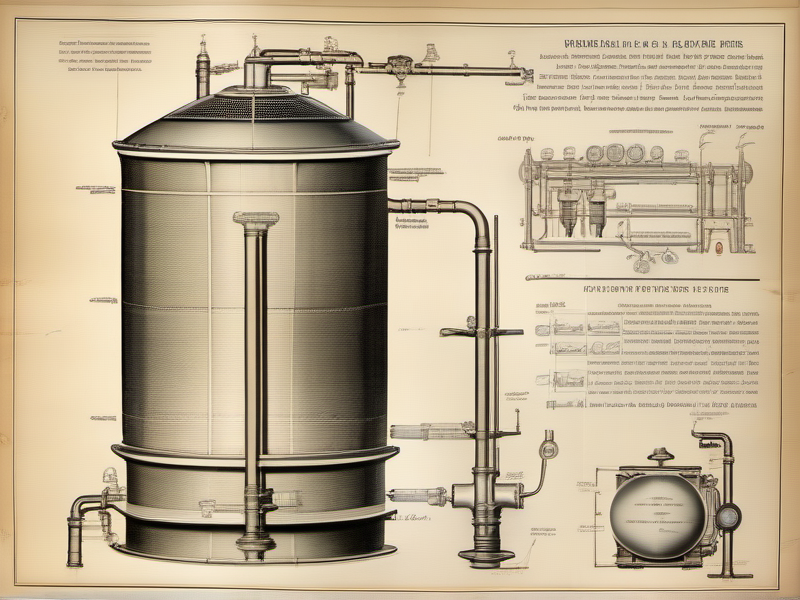
Every medieval European village had running water without a single electric pump. The ram pump, invented in 1796, lifts water uphill using nothing but the energy of falling water itself. Here's how to build a complete gravity-fed water system for under $200 — from spring capture to kitchen tap.
Part I: The Amnesia
There is a peculiar blind spot in the modern homesteading conversation. We debate solar panel wattage and battery chemistries. We obsess over well pump horsepower and generator runtime. We size inverters and calculate amp-hours. And in doing so, we forget that for roughly ten thousand years of settled civilization, human beings had running water delivered to their homes, their fountains, their bathhouses, and their fields without a single watt of electricity.
Not stagnant water. Not bucket-from-the-creek water. Running water. Under pressure. Delivered over distances of fifty kilometers or more.
The Romans did it. The Persians did it with qanats stretching forty-five kilometers through desert rock. Medieval European villages did it with wooden conduits and stone troughs. The mountain villages of Switzerland, Austria, and the Pyrenees still do it today, many of them running on infrastructure that predates Columbus.
What all of these systems share is a single, unbreakable principle: water flows downhill. And if you are clever about where you catch it and where you store it, gravity will deliver it to your tap at pressures that rival municipal supply, twenty-four hours a day, three hundred sixty-five days a year, for exactly zero dollars in energy cost.
This is the water battery. Not a metaphor. A literal description. Elevate water above its point of use and you have stored potential energy. Open a valve and you convert that potential into pressure and flow. No moving parts. No fuel. No maintenance beyond keeping your catchment clean and your pipes intact.
The modern off-grid movement has largely forgotten this. Or worse, it never learned it in the first place. The default assumption is that water requires a pump, a pump requires electricity, and electricity requires either a grid connection or an expensive solar-and-battery installation. This assumption is wrong. It has been wrong for millennia. And correcting it might be the single most impactful thing you can do for your homestead, your off-grid cabin, or your rural property.
This article is a complete engineering guide. We will cover every component of a gravity-fed water system: finding and developing a water source, calculating your storage needs, sizing pipes, building a hydraulic ram pump to lift water uphill without electricity, and delivering clean water to your home. Every formula is simplified for field use. Every material list includes approximate costs. Every technique has been proven over centuries.
Let us begin where the Romans did: with elevation.
Part II: The Physics of Free Pressure
One Number to Remember
The single most important number in gravity-fed water engineering is this:
1 foot of elevation = 0.433 PSIThat is it. That is the entire physics of your water system reduced to a single conversion factor. If your water storage tank sits 100 feet above your kitchen sink, you have 43.3 PSI at the tap. A typical municipal water system delivers 40-60 PSI. You can match that with nothing but a hillside and a tank.
The metric equivalent: 1 meter of elevation = 9.81 kPa, or roughly 0.1 bar.
This relationship is not approximate. It is not a rule of thumb. It is the precise hydrostatic pressure exerted by a column of water at standard temperature. It works the same whether your pipe runs straight down the hillside or snakes three miles around a mountain. The pressure at the bottom depends only on the vertical height difference between the water surface and the outlet. Pipe length, pipe diameter, and pipe route do not change the static pressure. They only affect friction losses, which we will address in the pipe-sizing section.
What This Means in Practice
Here is a quick reference table for common elevation differences:
| Elevation (ft) | PSI | Practical Meaning |
|---|---|---|
| 10 | 4.3 | Barely a trickle from a garden hose |
| 25 | 10.8 | Adequate for drip irrigation |
| 50 | 21.7 | Low-flow shower, garden watering |
| 75 | 32.5 | Decent household pressure |
| 100 | 43.3 | Standard residential pressure |
| 115 | 49.8 | Matches most municipal systems |
| 150 | 65.0 | High pressure — consider a PRV |
| 230 | 99.7 | Maximum rated for most household plumbing |
If you have a spring or creek 100 vertical feet above your house site, you have a municipal-grade water system waiting to be built. If you only have 50 feet of elevation, you still have a workable system that will run a low-flow shower, fill a sink, water a garden, and flush a toilet. Below 25 feet, you will want supplemental pressure for indoor use, but gravity alone will still serve irrigation, livestock, and outdoor needs admirably.
The Critical Distinction: Head vs. Pressure
In water engineering, vertical elevation is called "head." You will see this term everywhere. There are two types worth knowing:
Static head is the vertical distance between your water source (or tank surface) and the point of use, measured when no water is flowing. This gives you the maximum theoretical pressure. Dynamic head is the effective pressure remaining after friction losses in the pipe. When water flows, it loses energy to friction against the pipe walls. The longer the pipe, the narrower the pipe, and the rougher the interior surface, the more head you lose. Dynamic head is always less than static head.The goal of system design is to minimize the gap between static and dynamic head. You do this by sizing your pipes correctly and keeping your runs as short as practical. We will cover the math in Part V.
Part III: Finding Your Water
A gravity-fed system needs two things: a water source and an elevation advantage. The source can be a spring, a creek, a river, collected rainwater, or even a combination. The elevation can come from natural topography or from a hydraulic ram pump (covered in Part VI). Let us examine each source type.
Springs: The Gold Standard
A natural spring is the single best water source for a gravity-fed system. Springs deliver water that has been filtered through rock and soil for years, decades, or centuries. The flow is typically consistent year-round. The water temperature is stable — usually between 50-57 degrees Fahrenheit in temperate climates, reflecting the mean annual air temperature. And because springs emerge from hillsides, they almost always sit above the building sites in a valley, giving you natural head.
How Springs WorkRain falls on high ground, percolates through permeable soil and rock, collects in underground aquifers, and eventually emerges where the water table intersects the land surface. This intersection typically occurs on hillsides, at the base of rock ledges, in ravines, and at the boundary between permeable and impermeable geological layers.
Springs are classified by magnitude, from first magnitude (discharging more than 100 cubic feet per second, or roughly 2,800 liters per second — think of the headwaters of a river) down to eighth magnitude (barely a seep). For a homestead, you need surprisingly little. A family of four using 80 gallons per day can be served by a spring flowing at just 0.06 gallons per minute. Even a modest seep, if properly captured, can fill a storage tank overnight.
How to Find a SpringWalk your property in late summer, when the water table is at its lowest. Look for:
- Green patches in otherwise dry hillsides
- Watercress or skunk cabbage growing in unexpected places (both require year-round moisture)
- Soft, boggy ground on slopes that should be well-drained
- Iron staining (orange-red mineral deposits) on rocks
- Frost-free patches in early winter (spring water maintains a constant temperature that melts frost)
- Animal trails converging on a single point on a hillside
Talk to old-timers in the area. In many rural communities, spring locations are common knowledge passed down through generations. Check historical maps — springs were frequently marked because they were critical infrastructure. The USGS topographic maps from the early twentieth century are particularly useful.
How to Measure Spring FlowYou need to know your spring's output before you design your system. The simplest method:
- Dig a small catch basin below the spring's emergence point
- Use a section of pipe or a trough to concentrate the flow into a single stream
- Hold a one-gallon container under the stream
- Time how long it takes to fill
If it takes 60 seconds to fill one gallon, your spring flows at 1 GPM (gallon per minute). Multiply by 1,440 (minutes per day) to get daily output: 1,440 gallons per day. That is more than enough for a family of four, a large garden, and a small flock of livestock.
Measure at least three times: once in spring (high flow), once in late summer (low flow), and once in winter. Design your system around the lowest measurement. If you only get one measurement and it is not during the driest part of the year, cut it in half as a safety factor.
Developing a Spring: The Spring Box
A raw spring is a muddy seep. A developed spring is a clean, reliable water source. The difference is a spring box.
A spring box is a buried, waterproof enclosure built directly over the spring's emergence point. It serves three functions: it protects the water from surface contamination, it consolidates scattered seeps into a single collection point, and it provides a clean takeoff point for your supply pipe.
Construction: Concrete Ring MethodThe most durable spring box uses precast concrete rings, the same type used for well casings. Here is the procedure:
Materials: - 1 precast concrete ring, 36-inch diameter, 24-inch tall (~$80-120) - 1 concrete cap or poured lid (~$30-50) - Hydraulic cement, 10 lbs (~$8) - Coarse washed gravel, 3-4 cubic feet (~$15) - 2-inch PVC overflow pipe, 3 feet ($5) - 1-inch or 1.25-inch polyethylene supply pipe fitting ($8) - Stainless steel screen, fine mesh ($10) - Bentonite clay or hydraulic cement for sealing (~$15) Total materials cost: approximately $170-230 Procedure:- Excavate around the spring emergence to expose the water-bearing layer. Dig carefully. You are looking for the point where water emerges from rock or hardpan. Do not dig deeper than the emergence point — you want to capture the water as it surfaces, not disrupt the aquifer.
- Set the ring directly over the emergence area, pressing it firmly into the soil. The bottom is open — water enters from below. Seal the outside perimeter with hydraulic cement or bentonite clay to prevent surface water from entering around the edges.
- Line the bottom with 6-8 inches of coarse washed gravel. This prevents sediment from entering your supply pipe while allowing water to flow freely upward.
- Install the supply pipe through a hole drilled in the concrete ring, approximately 8-12 inches above the gravel bed. Seal around the pipe with hydraulic cement. Attach a stainless steel screen over the interior end to keep debris out.
- Install the overflow pipe through a second hole, higher than the supply pipe but below the top of the ring. This is critical — it prevents the box from pressurizing and potentially cracking. The overflow should discharge downhill, away from the spring box, through a screened end to prevent insects from entering.
- Set the cap with hydraulic cement. Leave no gaps. The interior should be lightless and sealed against surface water, insects, and animals.
- Backfill around the outside of the ring with clay soil, mounding it above grade so that surface water drains away from the spring box in all directions. This is your most important contamination barrier.
- Install a diversion ditch uphill of the spring box to route surface runoff around it during heavy rain.
A properly built spring box will deliver clean water for decades with minimal maintenance. Inspect it annually. Remove the cap and check for sediment buildup, insect intrusion, or cracks. Flush the gravel bed if flow decreases.
Creeks and Streams
If you do not have a spring but you do have a creek above your house site, you have a viable water source. Creek water requires more treatment than spring water (it is surface water, exposed to animal contamination and runoff), but the volume is typically abundant.
The challenge with creeks is intake design. You need to divert a portion of the flow into your supply pipe without clogging it with leaves, gravel, and debris.
The Coanda Screen IntakeThe most reliable creek intake is a Coanda-effect screen — a curved, wedge-wire screen that uses the Coanda effect (the tendency of water to follow a curved surface) to separate clean water from debris. Water flows over the curved screen surface, and the thin boundary layer closest to the screen is drawn through the narrow slots while leaves and gravel ride over the top and back into the creek.
Commercial Coanda screens cost $400-800. A functional DIY version can be built using a curved section of stainless steel wedge-wire screen (available from industrial filtration suppliers for $50-150) mounted in a concrete or treated-lumber frame placed across a small dam or weir in the creek.
The Simpler Option: A Screened Intake PoolFor smaller installations:
- Build a small rock dam across the creek to create a pool 18-24 inches deep
- Place a screened intake pipe (PVC with drilled holes wrapped in geotextile fabric) in the pool
- Run the supply pipe from the pool to your storage tank
- Install a sediment trap (a buried bucket or small tank with a cleanout) within the first 50 feet of the supply line
This approach requires more maintenance — you will need to clear the screen after every major rain — but it costs under $50 and works reliably if tended.
Rainwater: The Universal Source
You do not need a spring or a creek. If you have a roof and rainfall, you have a water source. The math is straightforward.
The Collection FormulaRoof area (square feet) x rainfall (inches per year) x 0.623 = gallons collected per year
The 0.623 factor converts cubic inches to gallons and accounts for a reasonable collection efficiency of about 80% (losses to evaporation, splash, first-flush diversion, and gutter overflow).
Worked ExampleA modest house with a 1,200 square foot roof footprint in an area receiving 40 inches of annual rainfall:
1,200 x 40 x 0.623 = 29,904 gallons per year
That is 81.9 gallons per day — enough for a family of four at conservation-level usage (20 gallons per person per day covers drinking, cooking, basic hygiene, and modest cleaning).
A larger roof — say 2,000 square feet — in the same rainfall zone:
2,000 x 40 x 0.623 = 49,840 gallons per year, or 136.5 gallons per day.
That is a genuinely comfortable water supply for a family of four, with surplus for garden watering in the growing season.
The Storage ProblemRain does not fall evenly throughout the year. In most temperate climates, you will have wet months and dry months. Your cistern must be large enough to bridge the dry gap.
A useful rule of thumb: size your cistern to hold your total water needs for the longest expected dry period, plus a 25% safety margin.
If your driest stretch is typically 60 days, and your family uses 80 gallons per day:
80 x 60 x 1.25 = 6,000 gallons
That is a single 6,000-gallon polyethylene tank ($1,500-2,500) or a poured concrete cistern of approximately 800 cubic feet (an 8 x 10 x 10 foot chamber).
For a gravity-fed system, your cistern must be elevated above your point of use. This is the "battery" part of the water battery. Options include:
- Hilltop placement: If your terrain allows it, place the tank on higher ground and run pipe downhill to the house
- Tank stand: A reinforced timber or steel stand raising the tank 15-25 feet provides 6.5-10.8 PSI — enough for basic gravity feed to outdoor taps and drip irrigation
- Tower tank: A purpose-built water tower of 40-60 feet provides 17-26 PSI — workable for indoor plumbing with low-flow fixtures
For higher pressures from rainwater alone, you either need significant natural elevation between your cistern and your house, or you need a small pump to move water from a ground-level collection cistern to an elevated distribution tank. A solar-powered DC pump running once or twice a day can fill an elevated tank efficiently — this is a hybrid system, not purely gravity-fed, but it minimizes electrical dependence to a single small component.

Part IV: How Much Water Do You Actually Need?
Before you size pipes and tanks, you need a realistic water budget. The average American uses 80-100 gallons per day. This number is grotesque. It reflects long showers, flush-and-forget toilets, running the tap while brushing teeth, and irrigating lawns of non-native grass.
An off-grid household practicing reasonable conservation uses dramatically less. Here is a realistic breakdown:
The Conservation Water Budget
| Use | Gallons/Person/Day | Notes |
|---|---|---|
| Drinking & cooking | 2 | Generous. WHO minimum is 0.5 gal/day |
| Dishwashing (by hand) | 2 | Basin method, not running water |
| Personal hygiene | 5 | Navy shower (wet, soap, rinse) + hand/face washing |
| Laundry | 3 | Hand wash or efficient machine, averaged daily |
| Toilet | 3 | Composting toilet = 0. Low-flow = 1.6 gal/flush x 5 |
| Cleaning | 1 | Floors, surfaces, general |
| Total per person | 16 |
For a family of four: 64 gallons per day, or roughly 23,360 gallons per year.
If you add a garden (100 square feet of vegetable garden needs approximately 60 gallons per week during the growing season) and a small flock of chickens (25 birds drink about 4 gallons per day in summer), your total daily demand might reach 75-90 gallons.
Compare this with the 1 GPM spring we measured earlier, which produces 1,440 gallons per day. Even a spring flowing at a quarter of a gallon per minute produces 360 gallons daily — four to five times what a conservation-minded family needs.
The point: most people dramatically overestimate how much water they need, and dramatically underestimate how much water a modest natural source can provide. A trickle that you would step over without noticing can supply a household.
Livestock Water Requirements
If you are running animals, factor them in:
| Animal | Gallons/Day (Summer) |
|---|---|
| Dairy cow | 20-30 |
| Beef cattle | 10-15 |
| Horse | 10-15 |
| Goat/sheep | 2-4 |
| Pig | 3-5 |
| Chicken (per 25 birds) | 3-4 |
| Duck (per 25 birds) | 4-6 |
A diversified small farm with a milk cow, a dozen goats, fifty chickens, and a family of four might need 130-160 gallons per day at peak summer demand. That is still well within the capacity of a decent spring or a properly sized rainwater collection system.
Part V: Pipe Sizing — Getting the Water There
This is where most DIY water systems fail. Not because the source is inadequate or the storage is too small, but because the pipe is too narrow, too long, or both. Undersized pipe is the number one cause of poor performance in gravity-fed systems.
The Fundamental Trade-Off
Water flowing through a pipe loses energy to friction. The losses depend on three things:
- Pipe diameter — smaller pipes create more friction per unit of flow
- Pipe length — longer runs mean more total friction loss
- Flow rate — higher flow rates create exponentially more friction
You are balancing pipe cost (larger pipe costs more) against performance (larger pipe delivers more water at higher pressure). In almost every case, the right answer is to use pipe one size larger than you think you need. Pipe is a one-time expense. Inadequate pressure is a daily frustration.
Simplified Pipe Sizing Table
The following table is derived from the Hazen-Williams equation, simplified for polyethylene pipe (C=140, the standard material for rural water lines) at common gravity-fed flow rates. It shows the head loss in feet per 100 feet of pipe.
Head Loss (feet per 100 feet of pipe) — Polyethylene Pipe| Flow Rate | 3/4" Pipe | 1" Pipe | 1.25" Pipe | 1.5" Pipe | 2" Pipe |
|---|---|---|---|---|---|
| 1 GPM | 1.9 | 0.5 | 0.2 | 0.1 | 0.03 |
| 2 GPM | 6.6 | 1.8 | 0.6 | 0.3 | 0.08 |
| 3 GPM | 13.7 | 3.7 | 1.2 | 0.5 | 0.15 |
| 5 GPM | 34.5 | 9.3 | 3.0 | 1.3 | 0.38 |
| 8 GPM | 80.1 | 21.6 | 7.0 | 3.1 | 0.89 |
| 10 GPM | 119.0 | 32.1 | 10.4 | 4.6 | 1.32 |
But push that same 3 GPM through 3/4-inch pipe over 500 feet? Your loss is 13.7 x 5 = 68.5 feet. From 80 feet of static head, you are left with only 11.5 feet of dynamic head — just 5.0 PSI. Barely a dribble.
The Practical Sizing Rules
For most homestead gravity-fed systems, these rules will serve you well:
- For runs under 200 feet at 1-3 GPM: 1-inch pipe is adequate
- For runs of 200-500 feet at 1-3 GPM: Use 1.25-inch pipe minimum
- For runs of 500-1,000 feet: 1.5-inch pipe minimum
- For runs over 1,000 feet or flow rates above 5 GPM: 2-inch pipe
- For the supply line from spring to storage tank: Always oversize. This line runs constantly and you want maximum flow with minimum friction. 1.5-inch minimum for any run over 100 feet.
Fittings and Valves: The Hidden Head Losses
Every elbow, tee, valve, and reducer in your system creates additional friction. A single 90-degree elbow in 1-inch pipe creates the same friction as approximately 3 feet of straight pipe. A gate valve adds about 0.5 feet equivalent. A ball valve, about 1 foot.
For a rough system estimate, count your fittings, multiply by 3 feet each as an average, and add this to your total pipe length before calculating friction losses.
Or use the simpler method: add 10% to your measured pipe length to account for fittings in a typical residential installation with 5-10 fittings. Add 20% if the route requires many direction changes.
Pipe Material Selection
For buried rural water lines, your practical choices are:
Polyethylene (PE) pipe — The standard choice. Flexible, tough, freeze-resistant (it expands rather than cracking), available in long coils that minimize fittings. Use HDPE rated for potable water (NSF 61 certified). Cost: $0.30-0.80 per foot for 1-inch to 2-inch sizes. PVC (Schedule 40 or 80) — Rigid, durable, cheap. Better pressure rating than PE at equivalent wall thickness. But it is rigid, so it requires more fittings on uneven terrain, and it cracks if water freezes inside it. Best for short runs, above-grade installations in non-freezing climates, or inside buildings. Cost: $0.25-0.70 per foot. Galvanized steel — Old school. Very durable but heavy, expensive, prone to internal corrosion that reduces flow over time, and difficult to install without threading equipment. Not recommended for new installations. Mentioned here only because you may encounter it in existing systems.Burial Depth
Bury your main supply line below the frost line for your region. In the southern United States, this may be only 12-18 inches. In the northern states and southern Canada, 36-48 inches. In extreme northern climates, 60 inches or more. Your county extension office or building department can tell you the frost line depth for your area.
If you cannot dig below the frost line (rocky ground, for example), insulate the pipe with closed-cell foam and bury it as deep as practical. Alternatively, keep the pipe filled and flowing — moving water freezes much slower than standing water. A small bleed valve at the lowest point in the house that drips continuously during freeze events can prevent frozen pipes in marginal installations.
Part VI: The Hydraulic Ram Pump — Lifting Water Uphill Without Electricity
Here is where the engineering becomes beautiful.
You have a creek, but it is below your house. You have a spring, but it emerges at a lower elevation than your storage tank site. You need to push water uphill, and you have no electricity at the source.
Enter the hydraulic ram pump.
History
In 1796, Joseph Michel Montgolfier — the same family that invented the hot air balloon — built the first self-acting hydraulic ram pump at his paper mill in Voiron, France. His friend Matthew Boulton obtained a British patent for the device in 1797. The Montgolfier sons refined the design with further patents in 1816.
The device spread rapidly across Europe and America during the nineteenth century. By the 1870s, thousands of ram pumps were in operation on farms, estates, and in villages across the industrialized world. They pumped water to hilltop storage tanks, supplied country houses, and irrigated orchards. Many ran for decades without repair.
Then came rural electrification. Electric pumps were cheaper to install, easier to understand, and did not require a flowing water source. The ram pump was gradually forgotten. By the mid-twentieth century, it had largely disappeared from mainstream knowledge.
But the physics has not changed. The device still works. And for anyone with a flowing water source and an elevation challenge, it remains one of the most elegant pieces of engineering ever devised.
How It Works
The hydraulic ram exploits the water hammer effect — the pressure spike that occurs when flowing water is suddenly stopped.
You have experienced water hammer if you have ever quickly closed a faucet and heard the pipes bang. That bang is a pressure wave traveling backward through the pipe at roughly 3,000-4,000 feet per second — close to the speed of sound in water. For a brief instant, the pressure at the valve can spike to several hundred PSI, far exceeding the normal static pressure in the line.
The Joukowsky equation describes this precisely:
Delta-P = rho x a x Delta-vWhere Delta-P is the pressure spike, rho is water density, a is the wave speed in the pipe, and Delta-v is the velocity change. For water flowing at 5 feet per second in a steel pipe, the pressure spike from instantaneous valve closure can exceed 300 PSI — many times the static pressure.
A hydraulic ram harnesses this destructive force and puts it to work.
The device has only two moving parts:
- The waste valve (also called the "clack valve" or "impulse valve") — a spring- or weight-loaded check valve that opens under its own weight and closes when water flow past it reaches a critical velocity.
- The delivery valve — a one-way check valve leading to the delivery pipe and a pressure vessel.
- Water flows from the source, down through the drive pipe, and out through the open waste valve. It accelerates.
- When the flow velocity reaches a threshold, the hydrodynamic force on the waste valve slams it shut.
- The sudden stoppage creates a water hammer pressure spike in the drive pipe.
- This pressure spike — momentarily much higher than the delivery head — forces a small amount of water through the delivery valve and into the pressure vessel (an air chamber that smooths the pulsing flow into a more continuous stream).
- From the pressure vessel, water is pushed up the delivery pipe to the elevated storage tank.
- As the pressure wave dissipates, the pressure in the drive pipe drops. The waste valve reopens under its own weight.
- The cycle repeats. Typically 30-100 times per minute, depending on pipe length and valve characteristics.
Each cycle delivers a small pulse of water uphill. Cumulatively, over 24 hours, the delivery is substantial.
The Efficiency Question
A hydraulic ram does not create energy. It trades volume for height. Most of the water that enters the ram exits through the waste valve. Only a fraction — typically 10-25% of the supply volume — is actually delivered uphill. The rest is "wasted" (returned to the stream below the ram).
This sounds inefficient, and volumetrically it is. But in terms of energy, a well-built ram pump is 60-80% efficient. It captures a majority of the kinetic energy in the flowing water and converts it into the potential energy of elevated water.
The key formula for estimating delivery:
D = S x (h / H) x EWhere: - D = delivery flow rate (GPM delivered uphill) - S = supply flow rate into the ram (GPM) - h = supply head (vertical fall from source to ram, in feet) - H = delivery head (vertical rise from ram to storage tank, in feet) - E = efficiency (typically 0.6 to 0.8)
Worked Example:Your creek drops 6 feet over a distance of 100 feet upstream of the ram installation site. You can divert 10 GPM into your drive pipe. You need to lift water 50 feet uphill to your storage tank. Assuming 60% efficiency:
D = 10 x (6 / 50) x 0.6 = 0.72 GPM
That is 0.72 gallons per minute, or approximately 1,037 gallons per day. More than enough for a household.
If you can increase the supply head to 10 feet (by running a longer drive pipe to a higher intake point):
D = 10 x (10 / 50) x 0.6 = 1.2 GPM, or 1,728 gallons per day.
The ratio of delivery head to supply head is the critical variable. A ram can typically deliver water to a height 10-15 times its supply head. Some well-built rams can reach ratios of 20:1 or higher, though efficiency drops at extreme ratios.
Building a DIY Ram Pump
A functional hydraulic ram pump can be built from standard plumbing fittings for $50-200, depending on size. Here is a complete build list for a 1.25-inch ram suitable for supply flows of 3-15 GPM:
Materials List Drive pipe assembly: - 1.25-inch galvanized or black steel pipe, 20-40 feet long (the drive pipe must be rigid — PVC flexes and absorbs the water hammer energy you are trying to capture). Cost: $30-60 - 1.25-inch pipe fittings as needed for your route. Cost: $10-20 Ram body: - 1.25-inch galvanized tee fitting: $6 - 1.25-inch x 3/4-inch reducing bushing: $3 - 3/4-inch brass swing check valve (this is the delivery valve): $15 - 1.25-inch brass swing check valve (some builders use this as the waste valve; alternatives below): $18 - 3/4-inch x close nipple: $2 - 3/4-inch tee fitting: $4 - 3/4-inch to delivery pipe adapter: $3 Pressure vessel: - 4-inch PVC pipe, Schedule 40, 24 inches long, with two end caps (this is the air chamber): $15 - 3/4-inch threaded adapter into one cap: $4 - Bicycle tire valve (Schrader valve) threaded into the other cap, for recharging air: $3 Waste valve (clack valve): - Many builders fabricate this from a 1.25-inch brass swing check valve modified with an added weight, or from a purpose-built flap valve. The simplest approach: a 1.25-inch swing check valve mounted vertically so it opens under gravity and closes under flow pressure. Cost: $15-20 Delivery pipe: - 3/4-inch or 1-inch polyethylene pipe to storage tank. Length as needed. Cost: $0.30-0.60/foot Miscellaneous: - Teflon tape, pipe dope: $5 - Strainer/screen for drive pipe intake: $5 - Concrete block or poured pad for mounting the ram (it vibrates): $10-15 Total estimated cost: $130-200 for a complete installation, excluding the delivery pipe run. Assembly Sequence:- Mount the tee — This is the heart of the ram. The drive pipe connects to one branch. The waste valve points down from the bottom or out from the side (depending on your mounting orientation). The delivery valve connects to the remaining branch, leading to the pressure vessel.
- Install the waste valve — It must open freely under its own weight (or with a light spring assist) and close quickly when water velocity builds. The valve should be oriented so that gravity keeps it open when flow is stopped, and hydrodynamic pressure slams it shut at peak flow. This is the component that requires the most tuning.
- Connect the pressure vessel — The air chamber mounts above the delivery valve. It should hold roughly 3-5 times the volume of water delivered per cycle. For a 1.25-inch ram, a 4-inch x 24-inch PVC chamber provides approximately 0.3 gallons of air space, which is adequate.
- Run the drive pipe — From the water source to the ram. The drive pipe must be straight or nearly so (gentle curves are acceptable, sharp elbows are not). Length should be 3-7 times the supply head. For a 6-foot supply head, the drive pipe should be 18-42 feet long. Steel pipe is ideal. Thick-wall PVC (Schedule 80) can work but is less efficient because it flexes, absorbing some of the water hammer energy.
- Run the delivery pipe — From the pressure vessel to the storage tank. This pipe can be flexible PE because it carries smooth, relatively low-pressure flow. Size it generously: 3/4-inch minimum for runs under 500 feet, 1-inch for longer runs.
- Mount the ram on a solid base — a concrete pad or heavy timbers. The ram vibrates with every cycle and will walk off an unsecured mount.
- Start the pump — Open the supply. Let water flow through the waste valve for 30-60 seconds to purge air from the drive pipe. Then manually snap the waste valve shut a few times to initiate the pumping cycle. Once started, the ram should cycle on its own. Adjust the waste valve weight or spring tension to achieve a steady, rhythmic cycle — typically 40-80 beats per minute.
Tuning the Ram
The ram's performance depends on three adjustable variables:
- Waste valve weight/spring tension — Heavier weight or stronger spring = faster closure = shorter cycle = more beats per minute = less water per beat but more beats. Lighter = slower, larger pulses. Optimal is typically where the ram cycles steadily without stalling or racing.
- Drive pipe length — Longer drive pipe = more water momentum = stronger hammer = more water per cycle, but slower cycle frequency. The sweet spot is 3-7 times the supply head.
- Air chamber pressure — The air in the pressure vessel compresses during each delivery pulse and expands between pulses, smoothing the flow. Over time, air dissolves into the water and the chamber waterloggs, reducing performance. Check monthly. Recharge by pumping air in through the Schrader valve with a bicycle pump until you can hear and feel the characteristic rhythmic beating return to its normal pattern.
Common Problems and Fixes
Ram stalls (stops cycling): - Waste valve too heavy or spring too tight — reduce weight - Drive pipe too short — extend it - Insufficient supply flow — check intake for debris - Air chamber waterlogged — recharge with bicycle pump Ram races (cycles too fast, delivers almost nothing): - Waste valve too light — add weight - Drive pipe too long — consider shortening - Delivery head too high for available supply head — the ratio may exceed the ram's capability Ram delivers air with water: - Air leak in drive pipe connections — check and reseal all joints - Air being drawn in at intake — ensure intake is fully submerged Excessive vibration: - Secure ram to heavier base - Ensure drive pipe has no unsupported spans - Check for loose fittings
Part VII: Storage — The Battery Itself
Your storage tank is the battery. The water source is the charger. The elevation is the voltage. The pipe is the wire. This analogy is not just poetic — it is physically exact. Elevated water stores potential energy that converts to pressure and flow on demand, precisely as a battery stores chemical energy that converts to voltage and current.
Tank Sizing
Size your tank to bridge the gap between supply rate and peak demand rate. If your spring delivers 1 GPM continuously (1,440 gallons/day) and your peak household demand is 10 GPM during the morning shower-and-breakfast hour, you need a buffer. Even though your daily supply (1,440 gallons) far exceeds your daily demand (75-90 gallons), you cannot draw 10 GPM from a 1 GPM source without a tank.
Minimum tank size = peak demand period flow x peak demand durationIf your peak demand is 10 GPM for 30 minutes (morning routine): 10 x 30 = 300 gallons minimum.
A 500-gallon tank provides a comfortable buffer. A 1,000-gallon tank gives you a full day of reserve if the supply is interrupted for maintenance or turbidity events after heavy rain.
For rainwater-only systems, tank sizing is driven by the dry season bridge calculation covered in Part III — typically 3,000-10,000 gallons depending on climate and household size.
Tank Options and Costs
| Type | Size Range | Cost | Pros | Cons |
|---|---|---|---|---|
| Polyethylene (above-ground) | 50-10,000 gal | $100-3,000 | Lightweight, UV-resistant, food-safe | Must be on stable, level base |
| Concrete (poured or block) | 500-50,000 gal | $500-5,000+ | Permanent, high thermal mass, can be buried | Requires forming and curing |
| Ferrocement | 500-10,000 gal | $200-1,500 | DIY-friendly, extremely durable | Labor-intensive to build |
| IBC totes (recycled) | 275 gal each | $50-100 each | Cheap, available, stackable | UV degrades plastic, limited life |
| Galvanized steel | 100-5,000 gal | $200-2,000 | Durable, clean appearance | Corrosion over time, not for burial |
For most homesteaders, the practical choice is a 1,000-1,500 gallon polyethylene tank on a hilltop or elevated platform. Total cost with basic stand and plumbing: $500-1,000.
The Ferrocement Option
If you want to build cheap and permanent, ferrocement is the answer. A ferrocement tank is a thin-shell concrete structure reinforced with layers of wire mesh and chicken wire, plastered with a rich cement-sand mortar.
A 2,000-gallon ferrocement tank can be built for $200-400 in materials:
- 6 bags of Portland cement (~$70)
- 15 cubic feet of clean sand (~$30)
- 100 feet of 1/4-inch rebar (~$30)
- 200 square feet of chicken wire (~$25)
- 100 square feet of welded wire mesh (~$40)
- Waterproofing additive or coating (~$30)
The labor is substantial — approximately 40-60 person-hours — but the result is a tank that will outlast you and your children. Ferrocement is the standard construction method for water tanks throughout the developing world, with millions of tanks in service across Asia and Africa, many of them decades old.
Tank Placement and Elevation
Every foot of elevation between your tank's water surface and your lowest point of use gives you 0.433 PSI. Place the tank as high as feasible. Here are common approaches:
Natural hilltop: Best case scenario. If you have a knoll or ridgeline 80-120 feet above your house, place the tank there and enjoy municipal-grade pressure for free. Run a buried pipe downhill. Elevated platform: Build a treated-timber or steel platform. A platform 12 feet high gives you only 5.2 PSI — adequate for outdoor taps and drip irrigation, marginal for indoor plumbing. A 20-foot platform gives 8.7 PSI — workable with low-flow fixtures. Repurposed structure: A barn loft, a second-story attic, a rocky outcrop. Any existing elevated surface can support a tank. Check the structural load: water weighs 8.34 pounds per gallon, so a 500-gallon tank weighs over two tons when full. Water tower: A purpose-built tower of 40-60 feet delivers 17-26 PSI. This is the minimum for a comfortable indoor plumbing experience with standard fixtures. Water towers are more common on homesteads than you might think. A simple pole-frame tower can be built from six pressure-treated 6x6 timbers, braced and cross-braced, with a platform on top for a polyethylene tank. Total cost for a 40-foot tower carrying a 1,000-gallon tank: approximately $800-1,500 in materials.Part VIII: The Complete System — Putting It All Together
Let us walk through a complete gravity-fed water system for a hypothetical homestead. This will tie together every concept in the article.
The Scenario
You have purchased a 20-acre rural property in the southern Appalachian mountains. The house site sits at 1,800 feet elevation. There is a spring emerging from a rock ledge on the property at 1,920 feet elevation — 120 feet above the house site, approximately 800 feet of horizontal distance away. The spring flows at 2 GPM in late summer (the minimum measurement). A creek runs along the bottom of the property at 1,740 feet, but it is below the house.
Family of four. Goal: complete water independence with no electric pumps.
System Design
Source: The spring, developed with a concrete-ring spring box. Supply line: 1.5-inch HDPE pipe, buried 24 inches deep, running 900 feet from the spring box to the storage tank (800 feet horizontal plus fittings equivalent of approximately 100 feet). Total cost for pipe: 900 feet x $0.50/foot = $450. Storage tank: 1,500-gallon polyethylene tank, placed on a leveled gravel pad at 1,900 feet elevation — on the hillside below the spring but still 100 feet above the house. Cost: approximately $800. Distribution line: 1.25-inch HDPE pipe, buried 24 inches deep, running 600 feet from the tank to the house (accounting for the switchback route down the hillside). Cost: 600 feet x $0.40/foot = $240. Head calculation: - Static head from tank to house: 1,900 - 1,800 = 100 feet - Friction loss through 600 feet of 1.25-inch pipe at 3 GPM: 1.2 feet per 100 feet x 6 = 7.2 feet - Fittings allowance (10%): add 0.72 feet - Total friction loss: 7.9 feet - Dynamic head: 100 - 7.9 = 92.1 feet - Pressure at the house: 92.1 x 0.433 = 39.9 PSIThat is excellent pressure for a gravity-fed system. It will run standard household fixtures without modification.
Supply rate check: - Spring flow: 2 GPM minimum - Friction loss from spring to tank: 900 feet of 1.5-inch pipe at 2 GPM = 0.3 feet per 100 feet x 9 = 2.7 feet - Available head from spring to tank: 1,920 - 1,900 = 20 feet - Remaining head: 20 - 2.7 = 17.3 feet (plenty — this just needs to flow, not deliver pressure) - Daily supply: 2 GPM x 1,440 minutes = 2,880 gallons/day - Daily demand: approximately 75-90 gallons - Supply exceeds demand by more than 30:1. The tank will stay full.Total System Cost
| Component | Cost |
|---|---|
| Spring box (materials) | $200 |
| Supply pipe (900 ft, 1.5" HDPE) | $450 |
| Storage tank (1,500 gal poly) | $800 |
| Distribution pipe (600 ft, 1.25" HDPE) | $240 |
| Fittings, valves, connectors | $150 |
| Gravel pad for tank | $60 |
| Sediment filter at house entry | $40 |
| UV treatment unit | $150 |
| Total | $2,090 |
For approximately $2,000, you have a complete water system delivering 40 PSI to your house, sourced from a natural spring, with zero ongoing energy cost. Compare this with:
- Well drilling: $5,000-15,000
- Well pump and pressure tank: $1,500-3,000
- Annual electricity cost for well pump: $200-600
- Generator or solar system to power pump off-grid: $3,000-10,000
The gravity-fed system costs less to build and nothing to operate. It has no moving parts (except the UV treatment unit, which draws about 40 watts and can run on a tiny solar panel). It will function during power outages, grid failures, and fuel shortages. It is, in every measurable way, the superior system — provided you have the elevation.
What If You Do Not Have the Elevation?
This is where the hydraulic ram pump enters the picture.
Alternate Scenario: Same property, but the only reliable water source is the creek at 1,740 feet — 60 feet below the house at 1,800 feet. The creek has a natural drop of 8 feet over a 50-foot stretch upstream of a good installation site. You can divert 15 GPM into a drive pipe. Ram pump calculation:D = S x (h / H) x E
D = 15 x (8 / 60) x 0.6 = 1.2 GPM delivered to the hilltop tank
That is 1,728 gallons per day — more than enough.
Now you add the ram pump cost to the system:
| Component | Cost |
|---|---|
| Ram pump (DIY build) | $180 |
| Drive pipe (40 ft, 1.5" steel) | $80 |
| Creek intake and screen | $50 |
| Delivery pipe (800 ft, 1" HDPE) | $320 |
| Storage tank (1,500 gal) | $800 |
| Distribution pipe (same as above) | $240 |
| Fittings, valves | $150 |
| Filtration and UV | $190 |
| Total | $2,010 |
Nearly the same cost. The ram pump adds complexity and requires occasional maintenance (checking the air chamber monthly, replacing the waste valve rubber every 2-5 years), but it lifts water 60 feet uphill continuously, day and night, without a drop of fuel or a single watt from the grid.
The Hybrid Approach
Many real-world systems combine multiple sources. A common and highly resilient design:
- Primary source: Spring-fed gravity system for daily use
- Backup source: Rainwater cistern sized for 30-60 days of dry-season reserve
- Emergency source: Ram pump on the creek, plumbed into the same storage tank as a third supply
Three independent water sources, all feeding one storage tank, all operating without electricity. This is genuine water security.
Part IX: Water Quality — When to Worry and What to Do
Gravity-fed water is not automatically safe to drink. Spring water is generally cleaner than surface water, but "clean" is not the same as "safe." Even deep springs can contain bacteria from animal activity near the emergence point, parasites from wildlife, or dissolved minerals at problematic concentrations.
The Baseline: Test First
Before drinking from any private water source, get it tested. Your county health department or cooperative extension service typically offers water testing for $20-50. At minimum, test for:
- Total coliform bacteria — Indicator of possible fecal contamination. Any detection means treatment is needed.
- E. coli — Confirms fecal contamination. Zero tolerance for drinking water.
- Nitrate — Safe below 10 mg/L (EPA standard). Higher levels indicate agricultural or septic contamination.
- pH — Should be between 6.5 and 8.5. Outside this range, water can be corrosive to pipes or taste objectionable.
- Hardness — Not a health concern, but very hard water (above 180 mg/L as CaCO3) causes scale buildup in pipes and on fixtures.
Additionally, test for turbidity (cloudiness), iron (staining, taste), and manganese (staining, taste) if you notice any discoloration.
For spring water, test at least twice: once during normal flow and once after a heavy rain event. Rain can drive surface contamination into the spring through fractures in the rock. If your spring tests clean during both conditions, your spring box is doing its job.
For surface water (creek, river), assume it requires treatment at all times.
Treatment Options for Gravity-Fed Systems
The beauty of gravity-fed treatment is that several effective methods also require no electricity.
Slow Sand FilterThe oldest and simplest water treatment technology. Water percolates slowly through a bed of fine sand, and a biological layer (the schmutzdecke) that develops on the surface removes bacteria, protozoa, and turbidity with remarkable effectiveness. Properly operated slow sand filters remove 90-99% of bacteria and virtually 100% of protozoa like Giardia and Cryptosporidium.
Construction is simple: a container (barrel, concrete tank, or ferrocement chamber) filled with layers of gravel (bottom), coarse sand (middle), and fine sand (top). Water enters the top and exits through a drain at the bottom. Flow rate is slow — typically 0.1-0.3 GPM per square foot of sand surface area. A 3-foot-diameter filter provides about 7 square feet of surface area and can treat 0.7-2.1 GPM. This is adequate for household use and requires no energy input — gravity alone drives the water through the sand bed.
Cost: $50-150 in materials. Maintenance: scrape and wash the top inch of sand every 1-3 months when flow slows.
Ceramic FiltersGravity-fed ceramic filters (like the Berkey-style filters or traditional pot filters) remove bacteria and protozoa through tiny pores in the ceramic element. They are effective, portable, and require no energy. Flow rate is typically 1-3 gallons per hour per element. Most are rated to remove 99.99% of bacteria and 99.9% of protozoa.
Cost: $50-300 for a complete unit. Maintenance: scrub the ceramic elements every few weeks; replace every 2-5 years.
UV TreatmentUltraviolet light at 254 nanometers wavelength (UV-C) destroys the DNA of bacteria, viruses, and protozoa, rendering them unable to reproduce. A UV treatment unit installed in the supply line just before it enters the house provides a reliable final barrier against biological contamination.
UV is particularly effective against Cryptosporidium and Giardia — organisms that resist chemical disinfection (chlorine) but are readily killed by UV exposure at doses of 10-40 mJ/cm2.
A residential UV unit draws approximately 40 watts — easily powered by a small solar panel and battery. Units cost $100-300 and require lamp replacement annually (approximately $30-50 per lamp).
UV does not remove chemicals, dissolved minerals, or turbidity. It is a biological treatment only. For best results, pair it with a sediment pre-filter (a simple cartridge filter that removes particles above 5 microns, cost $15-30, replaced every 3-6 months).
ChlorinationA few drops of household bleach (5.25% sodium hypochlorite) per gallon of water provides chemical disinfection. For continuous treatment, a drip chlorinator can be improvised from an IV drip bag or a small container with a needle valve, adjusted to deliver approximately 2 mg/L of free chlorine to the supply line.
This is the least-cost option ($5-10 per year in bleach) but it gives water a taste that many people dislike, and it is less effective against Cryptosporidium and Giardia than UV or filtration.
The Recommended Treatment Train
For a spring-fed system with a properly built spring box:
- Sediment filter (5-micron cartridge) at the house entry — removes particles, protects downstream equipment. Cost: $15-30 for the housing, $5-10 per replacement cartridge.
- UV treatment — final biological barrier. Cost: $100-300 initially, $30-50/year for lamp replacement.
Total ongoing cost: approximately $50-80 per year. This provides drinking-water-quality treatment for a spring that tests negative for chemical contamination.
For a surface water (creek) system, add a slow sand filter or ceramic filter upstream of the UV unit:
- Slow sand filter or ceramic filter — primary biological and turbidity removal
- Sediment filter — polishing step
- UV treatment — final barrier
This three-stage system handles virtually any surface water source and costs under $300 to build, with $50-100 per year in maintenance.
Part X: Lessons from the Ancients — What the Romans Knew
The Romans did not invent gravity-fed water delivery. But they perfected it at a scale that would not be matched for fifteen hundred years.
At its peak, the city of Rome was served by eleven major aqueducts delivering approximately 1.2 million cubic meters of water per day to a population of roughly one million people. That is 300 gallons per person per day — more than modern Americans use. The water supplied public fountains, bathhouses, private homes (for the wealthy), industrial operations, and ornamental displays.
The Engineering
Roman aqueduct engineering rested on precise surveying. The Pont du Gard aqueduct in southern France descends only 17 meters over its entire 50-kilometer length — a gradient of 1 in 2,941, or roughly 0.034%. To maintain this gradient over hilly terrain, the engineers used a combination of techniques:
- Open channels on gentle slopes, covered with stone slabs to prevent contamination and evaporation
- Tunnels through hills, some extending kilometers
- Arcaded bridges across valleys — the iconic arched structures we associate with Roman aqueducts
- Inverted siphons to cross deep valleys, using lead or stone pipes that descended into the valley and rose on the other side, with the pressure of the water column driving the flow upward
Vitruvius, writing in the first century BC, recommended a minimum gradient of 1 in 4,800 — approximately 0.02%. This extraordinarily gentle slope minimized erosion while maintaining adequate flow.
The typical channel cross-section was approximately 0.7 meters wide and 1.5 meters tall — large enough for a person to walk through for maintenance. Interior surfaces were lined with waterproof plaster (opus signinum, a mixture of lime, volcanic ash, and crushed pottery) that remained effective for centuries.
The Siphon Principle
The Romans understood and used inverted siphons to cross valleys. The Aqueduct of the Gier, serving ancient Lyon, used nine lead pipes in parallel, encased in concrete, to cross the Trion valley. The pipes descended into the valley and rose on the far side, with the water column's weight on the entry side pushing water up the exit side.
This is the same principle that makes your gravity-fed system work: water will rise to nearly the same height as its source, minus friction losses. The Romans simply applied it at a monumental scale.
What They Got Right (That We Forget)
- Redundancy: Rome had eleven aqueducts. If one was down for maintenance, the others continued. Modern homesteads should follow this logic — multiple sources feeding one system.
- Gravity first: The Romans used siphons and pumps (Archimedean screws, bucket chains) only when absolutely necessary. The default was always gravity. They understood that a system with no moving parts is a system that does not break.
- Oversizing: Roman channels were far larger than needed for average flow. They were sized for peak supply, not average demand. This gave the system resilience against droughts and surges. The lesson: always build bigger than you think you need.
- Settling basins: Water entered the distribution system through piscinae — settling basins where sediment dropped out before the water continued to consumers. This is the ancient equivalent of your sediment filter. The Romans placed them at intervals along the aqueduct and at the urban entry point.
- Multiple use: Water cascaded through the system, serving the highest-value uses first (drinking fountains), then lower-priority uses (bathhouses), then finally the lowest (street cleaning, sewers). Nothing was wasted. A gravity-fed homestead should follow the same cascade: kitchen and drinking first, then bathing, then laundry, then garden irrigation, then livestock.
Part XI: The Ram Pump in History — A Lost Machine Rediscovered
The hydraulic ram deserves its own moment in this story, because its history illustrates how thoroughly we can forget useful technology.
Joseph Michel Montgolfier built his first ram pump in 1796 to supply water to his paper mill in Voiron, a town in southeastern France near the Alps. The region had abundant streams and hilly terrain — perfect conditions for the device. His design worked immediately and reliably.
The British engineer Matthew Boulton, visiting Montgolfier, recognized the commercial potential and obtained a British patent in 1797. Within decades, ram pumps were manufactured and sold across Europe and North America. The English firm of John Blake Limited became perhaps the most prolific manufacturer, with Blake rams installed on farms and estates throughout the British Isles.
In the United States, the Rife Hydraulic Engine Manufacturing Company of New York produced ram pumps from the 1880s through the mid-twentieth century. Their catalogs show dozens of models, from small homestead units to industrial rams capable of lifting thousands of gallons per day. The Rife rams were installed on farms, in municipal water systems for small towns, at military installations, and in mining operations across the Americas.
By 1900, the hydraulic ram was a mature, well-understood technology serving tens of thousands of installations worldwide. Then, over the course of roughly fifty years, it nearly vanished.
Rural electrification programs — the Tennessee Valley Authority in the US, the Central Electricity Board in Britain — brought power lines to farms and villages. Electric submersible pumps were cheap, powerful, and worked from deep wells that rams could not reach. They did not require a flowing stream. They did not waste 80% of the water. They were easier to install and required less site-specific engineering.
The advantages were real. But so were the dependencies. An electric pump requires a grid connection or a generator. It requires replacement every 10-20 years. It stops working when the power goes out. It costs money to operate every hour of every day.
The ram pump requires only flowing water and a few dollars' worth of replacement valve rubber every few years. A well-built ram will run for decades without major repair. The original Blake rams from the 1850s have been documented still operating in the 1990s — over 140 years of continuous service.
Today, the hydraulic ram is experiencing a modest renaissance. Development organizations promote it in rural areas of Africa, Asia, and Central America where electricity is unavailable or unreliable. In the developed world, a growing number of homesteaders, permaculture practitioners, and off-grid enthusiasts are rediscovering it. YouTube and homesteading forums are full of DIY ram pump builds, many of them remarkably effective.
But the technology remains obscure. Ask a plumber, a well driller, or even most civil engineers about hydraulic ram pumps, and you will likely get a blank stare. The knowledge is not lost — it is simply no longer taught. It lives in old engineering manuals, in the memories of a few octogenarian farmers, and in the growing library of DIY documentation created by people who stumbled upon the idea and could not believe it was real.
It is real. It has been real for 230 years. And it is waiting for you.
Part XII: Modern Practitioners — Living on Gravity
The gravity-fed water system is not a historical curiosity or a theoretical exercise. People are living on these systems today, in the developed world, with modern expectations of comfort and convenience.
The Mountain Communities
Across the Alps, the Pyrenees, the Scottish Highlands, the Appalachian Mountains, and the Rockies, thousands of rural homes and small communities operate on gravity-fed spring water. In Switzerland, many mountain villages have used the same spring-fed infrastructure for centuries, with modern pipes replacing the original wooden conduits but the basic system design unchanged.
In the southern Appalachians, gravity-fed spring water is common enough that real estate listings for rural properties routinely note "gravity-fed spring" as a feature. Properties with developed springs and adequate elevation often command a premium, because buyers understand that gravity-fed water means zero utility bills, zero mechanical failures, and water that keeps flowing when the grid goes down.
The Off-Grid Homesteaders
A growing community of off-grid homesteaders across North America has embraced gravity-fed water as a core element of their systems. Common configurations include:
- Spring-to-tank-to-house systems delivering 30-50 PSI, with UV treatment and sediment filtration, serving all household needs including washing machines and dishwashers
- Ram pump installations lifting creek water 40-100 feet to hilltop storage tanks, providing irrigation and livestock water with household water reserved for a separate spring-fed line
- Rainwater-only systems in the Pacific Northwest and Southeast, where ample rainfall and large roof areas produce 30,000-50,000 gallons per year, stored in ferro-cement or polyethylene cisterns and gravity-fed to the house
These systems typically cost $1,500-5,000 to build, require 10-20 hours of maintenance per year, and produce zero ongoing utility costs.
The Developing World
Perhaps the most impressive modern examples of gravity-fed water engineering are in the developing world, where organizations like Gravity Water, WaterAid, and numerous local NGOs have built gravity-fed systems serving entire communities.
A single gravity-fed system in the hills of Nepal or Rwanda — a developed spring, a storage tank, and a network of pipes to standpipes in the village below — can serve hundreds or thousands of people with clean, reliable water. These systems cost a fraction of what a pumped system would cost, require no electricity or fuel, and can be maintained by local technicians with minimal training.
The technology is identical to what a homesteader would build. The scale is larger, but the principles are unchanged: find water at elevation, store it, pipe it downhill. Gravity does the rest.
Part XIII: Design Calculations — A Field Reference
This section provides the formulas and reference tables you need to design a gravity-fed water system in the field, without a computer.
Head Pressure Conversion
- 1 foot of head = 0.433 PSI
- 1 PSI = 2.31 feet of head
- 1 meter of head = 9.81 kPa = 0.0981 bar
- 1 bar = 10.2 meters of head
Flow Unit Conversions
- 1 GPM = 1,440 gallons per day = 5,451 liters per day
- 1 GPM = 0.0631 liters per second
- 1 liter per second = 15.85 GPM
- 1 cubic meter per day = 264 gallons per day = 0.183 GPM
Rainwater Collection
Annual collection (gallons) = Roof area (sq ft) x Annual rainfall (inches) x 0.623This assumes 80% collection efficiency. For a metal roof with clean gutters, use 0.700 (90% efficiency). For a rough shingle roof, use 0.545 (70% efficiency).
Pipe Friction Loss (Simplified Hazen-Williams)
For polyethylene pipe (C=140), the friction loss in feet of head per 100 feet of pipe can be approximated:
h_f = (4.52 x Q^1.852) / (C^1.852 x d^4.87) x 100Where Q is flow in GPM and d is internal pipe diameter in inches.
For field use, the table in Part V is faster. Copy it onto a card and keep it in your toolbox.
Pipe Velocity Check
Water velocity in the pipe should not exceed 5 feet per second (fps) for a quiet, low-maintenance system. Above 5 fps, you get noise, erosion of fittings, and increased risk of water hammer damage.
Velocity (fps) = 0.408 x Q / d^2Where Q is flow in GPM and d is internal diameter in inches.
For a 1-inch pipe at 3 GPM: V = 0.408 x 3 / 1^2 = 1.22 fps. Well within limits.
For a 3/4-inch pipe at 5 GPM: V = 0.408 x 5 / 0.75^2 = 3.63 fps. Acceptable but getting firm.
For a 3/4-inch pipe at 10 GPM: V = 0.408 x 10 / 0.75^2 = 7.25 fps. Too fast. Upsize to 1-inch or larger.
Ram Pump Delivery
D = S x (h / H) x EWhere: - D = delivery flow (GPM) - S = supply flow (GPM) - h = supply head — vertical drop from source to ram (feet) - H = delivery head — vertical rise from ram to tank (feet) - E = efficiency factor (use 0.6 for a first estimate, 0.66 for a well-tuned unit, 0.8 for an excellent commercial ram)
Maximum practical delivery ratio: H/h should not exceed 15:1 for reliable operation. Some rams will work at 20:1 but performance drops sharply. Drive pipe sizing: Length should be 3-7 times the supply head. Diameter should match the ram body size (typically 1.25-inch for small homestead rams, 2-inch for larger installations).Tank Weight
Water weighs 8.34 lbs per gallon. Design your tank support accordingly:
| Tank Size | Water Weight | Total (with tank) |
|---|---|---|
| 275 gal (IBC) | 2,294 lbs | ~2,360 lbs |
| 500 gal | 4,170 lbs | ~4,300 lbs |
| 1,000 gal | 8,340 lbs | ~8,550 lbs |
| 1,500 gal | 12,510 lbs | ~12,800 lbs |
| 2,500 gal | 20,850 lbs | ~21,300 lbs |
A full 1,500-gallon tank weighs over six tons. Your foundation, platform, or tower must be engineered for this load with an appropriate safety factor.
Daily Water Yield from a Spring
Daily yield (gallons) = GPM x 1,440| Spring Flow (GPM) | Daily Yield (gal) | Household Equivalent |
|---|---|---|
| 0.1 | 144 | 1-2 people (conservation) |
| 0.25 | 360 | Family of 4 (conservation) |
| 0.5 | 720 | Family of 4 + garden |
| 1.0 | 1,440 | Family of 4 + garden + livestock |
| 2.0 | 2,880 | Small farm, abundant supply |
| 5.0 | 7,200 | Multiple homes or heavy irrigation |
Part XIV: Troubleshooting — When Things Go Wrong
Gravity-fed systems are reliable precisely because they are simple. But simple does not mean infallible. Here are the most common problems and their fixes.
Low Pressure at the Tap
Symptom: Water flows but without much force. Causes and fixes: 1. Insufficient elevation: Check your actual elevation difference with a handheld GPS or a sight level. Estimates are often optimistic. If your real head is 40 feet instead of the 60 feet you assumed, you have 17.3 PSI instead of 26 PSI. 2. Undersized pipe: The most common error. See the friction loss table. If your pipe is too small, the only fix is to replace it with a larger diameter or add a parallel pipe. 3. Partially closed valve: Check every valve in the system. One gate valve left half-closed can halve your pressure. 4. Clogged filter or screen: Check and clean sediment filters, intake screens, and tank inlet screens. 5. Air lock: Air trapped in a high point of the pipe run creates a blockage. Install an air release valve at the highest point in the line, or temporarily disconnect the pipe at the high point to bleed the air.No Flow at All
Symptom: Nothing comes out of the tap. Causes and fixes: 1. Empty tank: Check the tank level. If the supply line is blocked or the source has dried up, the tank drains without refilling. 2. Frozen pipe: If temperatures have been below freezing, check for ice blockage, particularly at shallow burial points or above-grade runs. Thaw carefully with warm water — never with an open flame. 3. Complete air lock: A large air pocket can stop flow entirely. Bleed at the high point. 4. Crushed pipe: If you used flexible PE pipe, check for points where vehicle traffic, construction, or fallen trees may have crushed the pipe. 5. Closed shutoff valve: The obvious answer is sometimes the right one.Cloudy or Discolored Water
Symptom: Water is cloudy (turbid), brown, orange, or has visible particles. Causes and fixes: 1. After heavy rain: Surface water entering the spring box through inadequate sealing. Improve the backfill, diversion ditch, or consider resealing the spring box. 2. Brown or orange: Iron or manganese in the source water, or rusting pipes/fittings. Test the source. If iron exceeds 0.3 mg/L, consider an iron filter (oxidizing filter or birm media). 3. White cloudiness: Air bubbles. Usually harmless — fill a glass and wait. If it clears from the bottom up, it is just dissolved air coming out of solution. 4. Sediment particles: Clean or replace the sediment filter. Check the spring box gravel bed and clean if necessary.Bacterial Contamination (Positive Coliform Test)
Symptom: Lab test shows coliform bacteria present. Causes and fixes: 1. Surface water infiltration: The most common cause. Check the spring box seal, cap, and backfill. Ensure the diversion ditch is routing surface runoff away from the spring box. Check for animal activity near the spring — fence it off if necessary. 2. Contamination at the tank: Ensure the tank is sealed, with screened vents and no openings where animals, insects, or debris can enter. 3. Biofilm in pipes: Older systems can develop bacterial biofilms inside the pipe. Flush the system with a chlorine solution (50 ppm, which is about one cup of bleach per 100 gallons of water in the system), let it sit for 12-24 hours, then flush until the chlorine smell is gone. Retest after 48 hours. 4. Inadequate treatment: If contamination persists after addressing the source, your treatment system (UV, filter) may need upgrading. Ensure UV lamps are not past their rated lifespan (typically 9,000-12,000 hours, or roughly one year of continuous use).Part XV: Legal and Regulatory Considerations
Water rights, rainwater collection laws, and building codes vary enormously by jurisdiction. This section cannot substitute for local legal advice, but here are the key issues to be aware of.
Water Rights
In the western United States, water is governed by the doctrine of prior appropriation — "first in time, first in right." Diverting water from a stream or spring may require a water right permit, even on your own property. In most western states, you cannot simply take water from a creek without a permit, no matter how small the diversion.
In the eastern United States, riparian rights generally allow landowners to make reasonable use of water flowing through or adjacent to their property. Spring water emerging on your land is typically yours to use.
Check with your state's water resources department before building any system that diverts surface water.
Rainwater Collection
Most states now explicitly allow rainwater collection, though a few (notably Colorado, until its law changed in 2016) historically restricted it. As of the time of writing, rainwater harvesting is legal in all fifty states, though some states impose limits on collection volume or require permits for large systems.
Building Codes and Plumbing
If you are connecting a gravity-fed system to indoor plumbing, your local building code and plumbing code apply. Most jurisdictions require:
- A potable water source that meets state drinking water standards
- A backflow prevention device if the system connects to any municipal supply
- Appropriate pipe materials rated for potable water (NSF 61 certified)
- Accessible shutoff valves
Some jurisdictions may not have experience with gravity-fed systems and may require additional documentation or engineering sign-off. Others, particularly in rural areas with a tradition of spring-fed homes, will have standard procedures for permitting gravity-fed water supplies.
Septic Considerations
If your property uses a septic system, your water supply source should be a minimum distance from the septic tank and leach field — typically 50-100 feet, depending on local health department regulations. Springs, being groundwater sources, are particularly sensitive to septic contamination. Ensure your spring is uphill and a safe distance from any septic components.
Part XVI: The Argument for Memory
We live in an era of extraordinary technological capability and extraordinary technological fragility. The same grid that powers your well pump also powers the gas station, the grocery store, the pharmacy, and the hospital. When it fails — and it does fail, in ice storms, hurricanes, heat waves, cyber attacks, and infrastructure decay — everything stops at once.
A gravity-fed water system does not care about the grid. It does not care about fuel prices, supply chain disruptions, or rolling blackouts. It ran before electricity existed and it will run after the last generator runs out of diesel.
This is not survivalist paranoia. It is engineering conservatism. The same instinct that leads a good engineer to put a manual bypass on every automated valve, to install a gravity drain alongside every sump pump, to keep a hand tool for every powered tool. Redundancy. Simplicity. Gravity.
The Romans understood that the most reliable system is the one with the fewest failure modes. A gravity-fed aqueduct has exactly one: the source dries up. Everything else — the channel, the pipe, the tank — is passive. It cannot break down because it is not doing anything. It is simply allowing water to do what water always does: flow downhill.
Joseph Montgolfier understood that the energy in a flowing stream is free and eternal. His ram pump — two valves and a pressure vessel — captures that energy and puts it to work lifting water uphill. The device has been in continuous operation somewhere in the world for 230 years. Some individual installations have run for over a century without major repair.
Your great-grandparents understood, even if they did not articulate it in engineering terms, that a spring on the hill and a pipe to the house was a system of profound resilience. They understood it because they depended on it.
We forgot. We traded resilience for convenience. We replaced gravity with electricity, passive systems with active ones, springs with wells, hillside tanks with pressure switches and bladder tanks. And we got convenience. We also got dependency.
The water battery asks you to remember. Not to reject modern technology — a UV treatment unit and a PEX manifold are modern technologies and they are excellent — but to build your foundation on principles that do not require anything you cannot control. Gravity. Elevation. Flow.
The water is there. It is always there, falling as rain, emerging as springs, flowing in creeks. All it asks is that you put it somewhere high and let it come down.
The rest is just plumbing.
References
- Vitruvius. De Architectura, Book VIII. (c. 30-15 BC). On aqueducts, water supply, and recommended gradients for channel construction.
- Frontinus, Sextus Julius. De Aquaeductu Urbis Romae (On the Water Supply of the City of Rome). (c. 97 AD). Primary source on Roman aqueduct administration, capacities, and engineering standards.
- Montgolfier, J.M. French patent for the hydraulic ram pump. (1796). Original patent documentation for the self-acting ram pump.
- Calvert, N.G. "The Hydraulic Ram." Proceedings of the Institution of Mechanical Engineers. (1957). Technical analysis of ram pump theory and efficiency measurements.
- Watt, S.B. A Manual on the Hydraulic Ram for Pumping Water. Intermediate Technology Development Group. (1975). Comprehensive guide to ram pump design, construction, and installation for development applications.
- Hazen, A. and Williams, G.S. Hydraulic Tables. (1920). Original publication of the Hazen-Williams pipe friction equation and associated tables.
- EPA. Water Health Series: Filtration Facts. United States Environmental Protection Agency. (2005). Guidance on filtration technologies for small water systems.
- WHO. Guidelines for Drinking-water Quality, 4th Edition. World Health Organization. (2011). International standards for drinking water safety parameters.
- Joukowsky, N. "Uber den hydraulischen Stoss in Wasserleitungsrohren" (On the Hydraulic Hammer in Water Supply Pipes). Memoirs of the Imperial Academy of Sciences of St. Petersburg. (1898). Foundational paper on water hammer theory.
- Lifewater International. Rural Water Supply Design Manual. (2004). Field guide to spring development, gravity-fed system design, and community water system construction.
- Thomas, T.H. and Martinson, D.B. Roofwater Harvesting: A Handbook for Practitioners. IRC International Water and Sanitation Centre. (2007). Technical reference for rainwater harvesting system design and sizing.
- Smet, J. and van Wijk, C. Small Community Water Supplies: Technology, People and Partnership. IRC International Water and Sanitation Centre. (2002). Comprehensive reference on gravity-fed systems, spring development, and ram pump installations in community water supply.
- Hofkes, E.H., editor. Small Community Water Supplies. International Reference Centre for Community Water Supply and Sanitation. (1981). Engineering manual covering gravity-fed systems and hydraulic ram pumps.
- Clemson Cooperative Extension. Rainwater Harvesting for Homeowners. (2019). Practical sizing formulas and system design for residential rainwater collection.
Comments (0)
No comments yet.
Log in to comment.