The Psychology of Sovereignty: Why Off-Grid Independence Begins in the Prefrontal Cortex
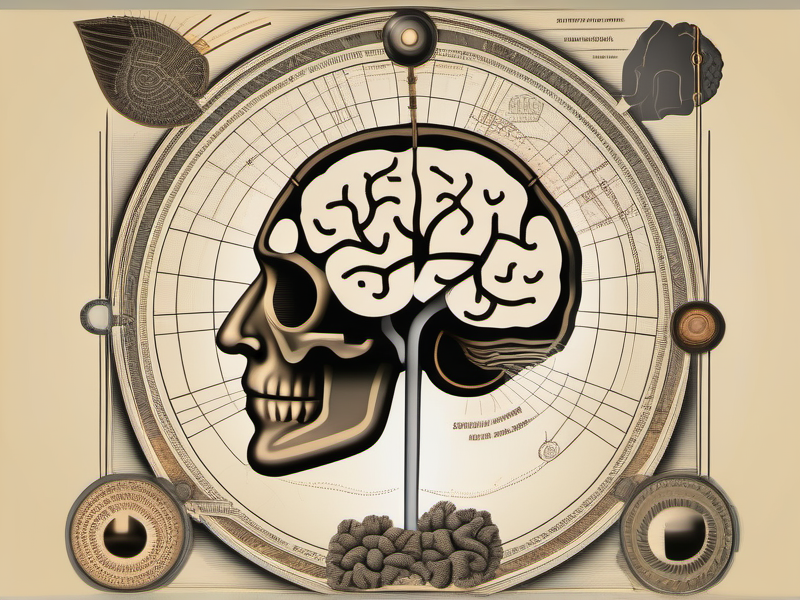
You can own forty acres of black soil, a well drilled to 300 feet, a photovoltaic array rated at 10 kilowatts, and a root cellar stocked with two thousand pounds of dry goods. You can possess every physical asset that the preparedness community considers essential. And you can still fail -- not because your infrastructure was inadequate, but because the six inches of tissue between your ears was never upgraded from its factory settings.
The greatest obstacle to self-sufficiency is not land, money, or skill. It is a psychological condition that has been studied since 1967, documented in over 3,000 peer-reviewed papers, replicated across species from dogs to humans, and confirmed by functional brain imaging. It is called learned helplessness, and it is the default operating system of the modern consumer.
This article is about that condition: what it is, how it was discovered, how the consumer economy perfected it, and how the neuroscience of the last two decades has revealed both the neural circuits that maintain it and the specific, trainable behaviors that dismantle it. It is about the psychology of sovereignty -- the mental architecture that must be constructed before any physical homestead can function.
Because the truth that the preparedness community does not want to hear is this: the problem is not out there. The problem is in here. And the solution begins in the prefrontal cortex.
Part I: The Discovery of Helplessness
The Dogs That Gave Up
In the autumn of 1967, at the University of Pennsylvania, a 24-year-old graduate student named Martin Seligman and his colleague J. Bruce Overmier conducted an experiment that would reshape the psychology of motivation for the next half century [1].
The experimental design was a triadic model using three groups of dogs:
Group 1 (Control): Dogs were placed in a harness for a period of time and then released. No shocks were administered. Group 2 (Escape): Dogs were placed in a harness and given electric shocks at random intervals. Each dog could terminate the shock by pressing a panel with its nose. The dogs learned quickly -- within a few trials, they pressed the panel immediately upon receiving a shock. Group 3 (Yoked/Inescapable): Each dog in this group was paired with a dog in Group 2. Whenever the Group 2 dog received a shock, the Group 3 dog received an identical shock of the same intensity and duration. But the Group 3 dog's panel was disconnected. Nothing it did -- pressing, jumping, barking, struggling -- affected the shock. The shock began and ended based on the paired Group 2 dog's behavior, not its own. The Group 3 dogs received exactly the same amount of shock as Group 2, but they had no control over it.Twenty-four hours later, all dogs were placed in a shuttlebox -- a rectangular chamber divided by a low barrier. When a shock was applied, the dog could easily escape by jumping over the barrier to the other side. The shock would stop the moment the dog crossed.
The results were unambiguous [1][2]:
Group 1 dogs (no prior shock): Quickly discovered the barrier, jumped it, and escaped the shock within seconds. Average escape time decreased with each trial as the dogs learned the solution. Group 2 dogs (prior shock with control): Same pattern as Group 1. They had learned in Phase 1 that their behavior could affect outcomes, and they transferred this expectation to the new situation. Group 3 dogs (prior shock without control): Two-thirds of these dogs did not try to escape. They lay down in the shuttlebox, whimpered, and endured the shock passively. They did not jump the barrier -- even though the barrier was low enough that they could see the safe side, even though they had four functional legs, even though escape required nothing more than a single step.They had learned that their behavior did not matter. They had learned helplessness.
The Human Parallel
Seligman immediately recognized the implications for human psychology. In 1975, he and his colleagues published the book Helplessness: On Depression, Development, and Death, extending the learned helplessness framework to clinical depression [3]. The parallel was striking: depressed humans, like the Group 3 dogs, often believe that their actions cannot influence their circumstances. They stop trying. They endure passively. They exhibit what Seligman called "motivational deficit" (failure to initiate action), "cognitive deficit" (failure to learn from new information that contradicts the helplessness belief), and "emotional deficit" (increased anxiety and depression).
The 1978 reformulation by Abramson, Seligman, and Teasdale added a critical dimension: attributional style [4]. Helplessness becomes most entrenched when the individual makes three specific attributions about negative events:
- Internal: "This is my fault" (rather than attributing to external circumstances)
- Stable: "This will always be the case" (rather than viewing the situation as temporary)
- Global: "This affects everything in my life" (rather than viewing it as specific to one domain)
A person who loses a job and thinks "I'm incompetent, I'll always be incompetent, and this incompetence affects every area of my life" is exhibiting the attributional style that produces learned helplessness. A person who thinks "This company had budget problems, the job market is cyclical, and my other abilities are unaffected" is exhibiting the attributional style that produces resilience.
The relevance to self-sufficiency is direct. A person who attempts to grow a garden, watches the tomatoes die of blight, and concludes "I can't grow anything, I'll never be able to grow anything, and I'm not cut out for this whole homesteading thing" has made all three helplessness attributions. A person who concludes "The blight was caused by overhead watering in humid conditions; I'll mulch and use drip irrigation next year" has made the attributional shift that enables learning.
The first person gives up. The second person succeeds -- not because they are more talented, but because their explanatory framework permits learning from failure.
The 2016 Revision: Helplessness Is the Default
In 2016, Seligman and Maier published a paper that fundamentally revised their original theory based on fifty years of accumulated neuroscience data [5]. The revision was profound and, for the purposes of this article, transformative.
The original 1967 theory proposed that helplessness was learned -- that the dogs in Group 3 had acquired a belief that their behavior was ineffective. The 2016 revision, informed by detailed mapping of the neural circuits involved, concluded the opposite: passivity in response to prolonged aversive events is not learned. It is the default, unlearned response.
The mechanism, as mapped by neuroscience, works as follows [5]:
- Prolonged, uncontrollable stress activates the dorsal raphe nucleus (DRN) in the brainstem -- a structure that produces serotonin.
- The activated DRN sends serotonergic projections to the amygdala (increasing fear and anxiety), the striatum (reducing motivation to act), and other limbic structures.
- This serotonergic cascade produces passivity, fear, and motivational deficit -- the classic symptoms of learned helplessness.
- This response is automatic and unlearned. It is the brain's default reaction to prolonged, uncontrollable stress. It does not require prior experience. It does not require learning. It is built into the neural architecture.
- What does require learning is the override. When an animal (or human) discovers that their behavior can control an aversive event, the medial prefrontal cortex (mPFC) detects this contingency -- the reliable relationship between action and outcome.
- The activated mPFC sends inhibitory projections to the DRN, suppressing the serotonergic cascade and restoring the animal's motivation to act.
- Once this inhibitory circuit has been established through experience, it generalizes: the animal becomes resistant to helplessness in future situations, even novel ones. The mPFC has learned that control is possible, and it preemptively suppresses the DRN's passivity response.
The implication is staggering: organisms do not learn to be helpless. They learn to be in control. Helplessness is the factory setting. Agency is the upgrade.
This reframes the entire self-sufficiency project. The modern consumer does not need to unlearn helplessness (a daunting therapeutic task). They need to learn control (a practical training task). Every successful experience of exerting control over an outcome -- starting a fire, growing food, repairing a tool, building a shelter -- activates the mPFC's inhibitory circuit and weakens the DRN's default passivity response.
Self-sufficiency is not just a lifestyle choice. It is a neurological rehabilitation program.
Part II: The Locus of Control
Rotter's Framework
In 1966 -- one year before Seligman's dog experiments -- Julian Rotter published a paper in Psychological Monographs that summarized over a decade of research on what he called "locus of control" [6]. Rotter was interested in a fundamental question: do people believe that the outcomes of their lives are determined by their own actions (internal locus of control) or by external forces beyond their influence (external locus of control)?
The concept, as Rotter defined it, is not a binary. It is a continuum. Everyone falls somewhere on the spectrum between purely internal ("Everything that happens to me is a direct consequence of my choices") and purely external ("Nothing I do makes any difference; fate, luck, or powerful others determine my outcomes").
Rotter developed a 23-item forced-choice questionnaire (plus six filler items) to measure locus of control. Each item presents two statements, and the respondent selects the one they agree with more. For example:
- (a) "Many of the unhappy things in people's lives are partly due to bad luck."
- (b) "People's misfortunes result from the mistakes they make."
Selecting (a) indicates a more external locus; selecting (b) indicates a more internal locus.
The Correlates of Internal Locus
The research literature on locus of control is vast -- over 10,000 studies in the decades since Rotter's original publication [7]. The consistent findings are:
Health: Individuals with an internal locus of control engage in more health-promoting behaviors (exercise, healthy eating, preventive medical care), are more likely to quit smoking, and have better overall health outcomes. They believe their health is within their control, so they take actions to protect it. Achievement: Internal locus is consistently associated with higher academic performance, higher income, and greater career satisfaction. People who believe effort produces results invest more effort. Mental health: External locus is associated with higher rates of anxiety, depression, and stress-related disorders. People who believe they cannot control their circumstances experience chronic psychological distress. Resilience: Internal locus predicts superior coping during adverse events -- job loss, illness, natural disaster. The individual frames the event as a problem to be solved rather than a fate to be endured. Self-sufficiency: This is the correlation most relevant to our purposes. Every behavior associated with self-sufficiency -- growing food, building shelter, repairing tools, managing resources, preparing for contingencies -- requires the foundational belief that one's actions can influence outcomes. An individual with a strongly external locus of control will not invest the effort required for self-sufficiency because they do not believe the effort will produce results.The Neuroscience of Locus of Control
Recent neuroscience has begun mapping locus of control onto brain structure and function. A key finding: individuals with an internal locus of control show greater activation in the prefrontal cortex during decision-making tasks, and this activation is associated with stronger functional connectivity between the PFC and the striatum (the brain's reward and motivation center) [8].
The PFC is the brain's executive center -- the seat of planning, decision-making, impulse control, and the evaluation of consequences. It is the most recently evolved region of the human brain, the last to mature (not reaching full development until approximately age 25), and the most susceptible to degradation by chronic stress, sleep deprivation, and substance use.
The PFC performs a specific function relevant to locus of control: it detects contingency -- the reliable relationship between an action and its outcome. When you plant a seed and watch it grow, the PFC encodes the contingency: "My action (planting) produced this outcome (growth)." When you repair a leaky faucet and the dripping stops, the PFC encodes: "My action (repair) produced this outcome (no dripping)."
Each encoded contingency strengthens the PFC's representation of the self as an effective agent. This is not abstract self-esteem. It is a specific neural model that says: "When I act, things change." Over time, with enough contingency-encoding experiences, this model becomes the default frame through which the individual interprets new situations. The PFC, well-trained through repeated experiences of effective action, begins preemptively suppressing the DRN's passivity response -- the mechanism identified by Maier and Seligman in their 2016 revision [5].
In neurological terms: self-sufficiency builds the very brain circuits that make self-sufficiency possible. The practice is self-reinforcing. Each successful action strengthens the neural infrastructure for the next successful action.

Part III: Bandura's Self-Efficacy and the Mastery Loop
The Theory
Albert Bandura's self-efficacy theory, published in 1977, provides the third pillar of our psychological framework [9]. While Seligman described what happens when control is lost and Rotter described the belief system that either enables or prevents the pursuit of control, Bandura described the mechanism by which the belief in control is built.
Self-efficacy is not locus of control. Locus of control is a generalized belief about whether outcomes are controllable. Self-efficacy is a specific belief about whether you can perform the specific behaviors required to produce a specific outcome. A person can believe that outcomes are generally controllable (internal locus) while simultaneously believing that they, personally, lack the ability to control a particular outcome (low self-efficacy for that domain).
The distinction matters enormously for self-sufficiency. A person can believe, in the abstract, that it is possible to grow food, build a shelter, and live independently. But if they do not believe that they can do these things -- if their self-efficacy for practical skills is low -- they will not attempt them.
Bandura identified four sources of self-efficacy, ranked by potency [9]:
1. Mastery experiences (most powerful): Successfully completing a challenging task. This is the gold standard. Nothing builds self-efficacy as effectively as doing the thing and succeeding. The success does not need to be perfect. It does not need to be efficient. It needs only to be real. 2. Vicarious experiences: Watching someone similar to yourself succeed. This is why community matters for self-sufficiency. A suburban professional who has never grown food watches a neighbor -- another suburban professional, not a lifelong farmer -- grow a productive garden. The implicit message: "If they can do it, I can do it." The model must be perceived as similar to the observer. Watching an expert perform a skill does not build self-efficacy in the novice -- it may actually decrease it ("I could never do that"). Watching a fellow novice succeed does. 3. Social persuasion: Being told by a credible source that you can succeed. This is the weakest verbal source. Words alone do not build self-efficacy. But encouragement from someone who has demonstrated their own competence -- a mentor, a teacher, a neighbor who has already walked the path -- has measurable effects on persistence and performance. 4. Physiological states: Interpreting bodily arousal as excitement rather than fear. The racing heart, the sweating palms, the heightened alertness that accompany a novel challenge can be interpreted as either anxiety or readiness. The interpretation determines whether the individual engages or withdraws.The Mastery Loop
The practical application of Bandura's framework is what I call the mastery loop -- a self-reinforcing cycle that converts helplessness into competence:
Step 1: Choose a small, achievable challenge. Not "build a house." Not "become self-sufficient." A single, specific, completable task: start a fire. Sharpen a knife. Bake a loaf of bread. Plant ten garlic cloves. Change the oil in your car. The task must be difficult enough to require effort but not so difficult as to guarantee failure. Step 2: Attempt the task. Not study the task. Not watch a video about the task. Not plan to attempt the task next weekend. Attempt it. Today. With the materials available. Accept that the first attempt will be imperfect. Step 3: Complete the task or learn from the failure. If the fire starts, you have a mastery experience. If the fire does not start, you have information. The tinder was wet. The kindling was too thick. The wind was too strong. This information is not failure -- it is data. Adjust and try again. Step 4: Register the accomplishment. This is not narcissism. It is neurochemistry. When you successfully complete a challenging task, dopamine is released in the striatum [10]. This dopamine release is the neurochemical basis of motivation -- it signals to the brain that the behavior was rewarding and should be repeated. Allow yourself to feel the satisfaction. Do not immediately move on to the next task. Sit with the fire you started. Eat the bread you baked. Hold the knife you sharpened and feel its edge. The dopamine needs time to consolidate the memory. Step 5: Increase the challenge. Once a task has become reliable -- you can start a fire consistently, your bread rises predictably, your knife holds an edge -- increase the difficulty. Start a fire in the rain. Bake bread with wild-harvested yeast. Sharpen an axe, then a chisel, then a scythe. The challenge-skill balance must be maintained for flow to occur and for self-efficacy to continue growing. Step 6: Repeat. For the rest of your life. The mastery loop has no endpoint. There is always a harder challenge, a more refined skill, a deeper level of competence. The individual who has been running this loop for ten years possesses not just skills but a fundamental identity: "I am someone who can do things."This identity is the psychological foundation of sovereignty. It cannot be purchased. It cannot be inherited. It cannot be conferred by a diploma or a certificate. It is built, one mastery experience at a time, by hands that do real work in the real world.
Part IV: How the Consumer Economy Produces Helplessness
The consumer economy is the most efficient helplessness-generating system in human history. This is not a conspiracy theory. It is a structural analysis. The system does not intentionally produce helpless people (though some of its actors may). It produces them as a byproduct of its operating logic.
The Outsourcing of Competence
Consider the competency stack of a typical American in 1890 versus 2026:
1890: The average adult could grow food, preserve food, cook from raw ingredients, build and repair a dwelling, sew and repair clothing, manage livestock, treat common illnesses with herbal remedies, maintain and repair tools, navigate without maps or GPS, predict weather from natural signs, manage a fire, purify water, and perform dozens of other practical tasks. 2026: The average adult can operate a smartphone, drive a car, navigate a grocery store, operate a microwave, send an email, and use a credit card.Every competency that the 1890 adult possessed has been outsourced to the market. The consumer does not grow food -- they buy food. They do not build shelter -- they rent or mortgage shelter built by others. They do not repair clothing -- they buy new clothing. They do not treat illness -- they visit a professional. They do not manage fire -- they adjust a thermostat controlled by a utility company.
Each act of outsourcing is individually rational. Why spend three hours baking bread when you can buy a loaf for $4? Why spend a weekend repairing a fence when you can hire a contractor? Why learn to identify plants when you can order supplements from Amazon?
The problem is cumulative. Each outsourced competency removes one thread from the fabric of self-efficacy. After a lifetime of outsourcing, the individual is left with a psychological profile that mirrors Seligman's Group 3 dogs: they have never experienced a reliable contingency between their own effort and a life-sustaining outcome. They have never planted a seed and eaten the fruit. They have never built a structure and sheltered within it. They have never caught a fish and fed their family.
They do not believe they can. And because they have never tried, they have no evidence to the contrary.
The Dopamine Trap
The neuroscience of consumer behavior reveals a second mechanism of helplessness induction: the hijacking of the dopamine reward system.
In a natural environment, dopamine is released in response to mastery experiences -- successful foraging, successful hunting, successful building. The dopamine reinforces the behaviors that produced the success, motivating the individual to repeat and refine those behaviors. This is the neurological basis of competence-building: do something hard, succeed, feel rewarded, do it again better.
The consumer economy has engineered a shortcut. Dopamine is now triggered by purchasing. The anticipation of a purchase (browsing, comparison shopping, adding to cart) activates the same mesolimbic dopamine pathways that evolved to reward competence [10][11]. The moment of purchase provides a dopamine spike. The arrival of the product provides another.
But purchasing is not mastery. It is the opposite of mastery. Purchasing requires no skill, no effort, no problem-solving, no persistence. The dopamine reward is decoupled from competence-building behavior. The individual receives the neurochemical signal that says "You did something good" without having done anything at all.
Over time, this decoupling produces tolerance. The brain, chronically stimulated by purchase-driven dopamine, downregulates its dopamine receptors [11]. Activities that produce modest, natural dopamine responses -- gardening, cooking, repairing, building -- become subjectively less rewarding. They feel boring. They feel pointless. The individual reaches for the phone and buys something instead.
This is the same neurological mechanism that underlies behavioral addiction. The consumer is not addicted to any particular product. They are addicted to the act of consumption -- to the dopamine hit of acquiring without producing. And like all addictions, the tolerance escalates: more purchases, more frequently, to achieve the same diminishing reward.
The practical consequence for self-sufficiency is devastating. The person who attempts to start a garden for the first time will find it dull, frustrating, and unrewarding -- not because gardening is inherently unrewarding, but because their dopamine system has been recalibrated by years of consumer dopamine shortcuts. The modest, delayed reward of watching a seedling emerge from soil cannot compete with the immediate, engineered reward of an Amazon delivery notification.
Breaking this cycle requires understanding it. The boredom is not a signal that gardening is wrong. The boredom is a withdrawal symptom. Like any withdrawal, it is temporary. The brain's dopamine receptors will upregulate -- resensitize -- over a period of weeks to months, if the high-frequency artificial stimuli are reduced and the natural stimuli are sustained.
The Learned Irrelevance of Effort
A third mechanism connects consumer culture to helplessness: the systematic elimination of the effort-outcome contingency.
In a pre-industrial household, effort and outcome were tightly coupled. If you did not work, you did not eat. If you did not repair the roof, the rain came in. If you did not tend the fire, you were cold. The relationship between effort and consequence was immediate, visible, and non-negotiable.
In a consumer economy, the effort-outcome link is severed. You work -- but the work is typically abstract (sending emails, attending meetings, processing data), and the compensation arrives as a number in a bank account that is exchanged for goods and services through a series of automated transactions. The connection between your labor and your dinner is mediated by so many intermediate steps that it is cognitively invisible.
A child growing up in this environment never experiences the fundamental equation: my effort = my survival. They experience instead: my compliance = my comfort. If they attend school, complete their homework, and do not cause trouble, food appears on the table, a roof stays over their head, and clothing materializes in their closet. The child's effort is not causally linked to these outcomes. The parents' income is. And the parents' income is linked to employment, which is controlled by an employer, which is controlled by a market, which is controlled by forces no individual can influence.
The child learns, correctly within this system, that their own effort is irrelevant to their material circumstances. This is not learned helplessness in Seligman's clinical sense -- it is learned irrelevance of personal agency. The outcome is the same: a person who does not believe that their direct action can produce life-sustaining results.
Digital Dependency and the Atrophy of Initiative
A fourth mechanism has emerged in the last two decades: the offloading of cognitive functions to digital devices.
Consider what a smartphone replaces:
- Navigation: GPS eliminates the need to read maps, judge distances, observe landmarks, or develop spatial awareness
- Memory: Contact lists, calendars, and note-taking apps eliminate the need to remember phone numbers, dates, and information
- Calculation: Calculators eliminate the need for mental arithmetic
- Decision-making: Recommendation algorithms (what to watch, what to buy, what to eat, where to go) eliminate the need for independent judgment
- Problem-solving: Search engines provide instant answers, eliminating the need to reason through problems
- Social skills: Text messaging eliminates the need for face-to-face communication skills
Each of these offloaded functions was, until recently, a form of cognitive exercise that strengthened the prefrontal cortex. The PFC, like a muscle, atrophies with disuse [12]. When navigation is handled by GPS, the hippocampal circuits involved in spatial reasoning weaken. When decisions are made by algorithms, the PFC circuits involved in evaluation and judgment weaken. When problems are solved by Google, the PFC circuits involved in reasoning and inference weaken.
The result is a population with diminished prefrontal cortical function -- the very brain region responsible for detecting contingency, overriding default passivity, planning for the future, and sustaining effort toward long-term goals. The brain region that Maier and Seligman identified as the essential circuit for overcoming learned helplessness [5] is being systematically degraded by the technologies that the consumer economy promotes.
This is not an argument against technology. It is an argument against cognitive outsourcing. A tool that enhances your capability -- a chainsaw, a solar panel, a water filter -- extends your agency. A tool that replaces your capability -- a GPS that thinks for you, an algorithm that decides for you -- diminishes your agency. The distinction matters.

Part V: The Neuroscience of Breaking Free
The neuroscience of the last two decades provides not just a diagnosis but a treatment protocol. The brain circuits involved in helplessness and agency are plastic -- they can be strengthened or weakened throughout life. The process is called neuroplasticity, and it operates through a simple principle: neurons that fire together wire together [13].
The Prefrontal Cortex as Training Target
The mPFC -- the medial prefrontal cortex -- is the brain structure that Maier and Seligman identified as the "controller detector" [5]. When the mPFC detects that a behavior reliably produces an outcome, it sends inhibitory projections to the DRN, suppressing the default passivity response and enabling the individual to act.
The mPFC can be strengthened through experience. The key experiences are those that encode action-outcome contingencies -- situations where the individual's behavior produces a clear, reliable result.
The most effective contingency-encoding experiences share three features:
- Physical engagement: The action involves the body, not just the mind. Hands, muscles, balance, spatial awareness. Physical actions produce stronger contingency signals than purely cognitive actions because they engage more sensory modalities and produce more vivid feedback [14].
- Visible outcome: The result is immediate and observable. The fire starts or it does not. The joint fits or it does not. The plant grows or it does not. Abstract outcomes (earning a grade, receiving a paycheck, getting likes on a post) produce weaker contingency signals because the relationship between action and outcome is opaque.
- Difficulty calibrated to skill: The task must be challenging enough to require effort but not so overwhelming as to produce consistent failure. This is Csikszentmihalyi's "flow channel" [15] and Bandura's optimal challenge level [9]. Tasks that are too easy produce no dopamine reward. Tasks that are too hard produce cortisol and reinforce helplessness.
Practical Activities Ranked by Neurological Impact
Based on the neuroscience of contingency encoding, here are practical self-sufficiency activities ranked by their effectiveness at building the mPFC circuits of agency:
Highest impact (immediate, physical, visible outcome):- Fire starting: The most primal and powerful contingency experience available to a modern human. The action (striking, feeding, blowing) produces an immediate, dramatic, and multisensory result (flame, heat, light, crackle, smoke). No other self-sufficiency activity produces such a concentrated burst of contingency feedback. Research on campfire experiences has documented measurable reductions in cortisol and increases in subjective well-being following fire-tending activities [16].
- Hand tool work (carving, splitting wood, forging): The tool transmits immediate physical feedback to the hand. A sharp chisel bites cleanly; a dull one bounces. The grain of the wood resists in predictable patterns. The feedback loop between action and result is continuous and millisecond-fast.
- Cooking from raw ingredients: Transforming raw materials into edible food is one of the oldest contingency experiences in human evolution. The visual, olfactory, and gustatory feedback is immediate and unambiguous.
- Building and repair: Constructing a physical structure from raw materials produces a persistent, visible outcome that the builder can revisit, use, and show to others. The structure stands as permanent evidence that the builder's effort produced a real result.
- Gardening: The contingency between planting and harvest is real but delayed by weeks or months. This delayed feedback is important for a different reason: it builds the PFC's capacity for long-term planning and delayed gratification -- executive functions that are essential for self-sufficiency and that atrophy with disuse in a consumer economy.
- Animal husbandry: The contingency between care (feeding, watering, sheltering) and outcome (eggs, milk, healthy animals) is daily but incremental.
- Food preservation (canning, fermenting, drying): The contingency is delayed (you preserve in summer, consume in winter) but the physical process is immediate and engaging.
- Financial management: Budgeting, tracking expenses, planning for purchases. The outcome is numerical rather than physical, but the contingency is real.
- Teaching others: Transmitting a skill to another person provides a different kind of contingency -- the student's success confirms the teacher's competence.
- Community building: Organizing collective projects, bartering, mutual aid. The outcomes are social rather than physical, but the sense of agency is real.
The Role of Struggle
A critical finding from the neuroscience of agency: the mPFC is activated most strongly not during easy success but during the transition from struggle to success [5][14]. The moment of breakthrough -- when the fire catches after three failed attempts, when the stubborn bolt finally turns, when the sourdough finally rises -- produces a stronger contingency signal and a larger dopamine response than easy, first-try success.
This has a practical implication that runs counter to consumer psychology: you should seek out difficulty. Not pointless difficulty, not arbitrary suffering, but the productive difficulty of attempting things that are slightly beyond your current capability. The struggle is not an obstacle to the reward. The struggle is the reward mechanism. The PFC encodes: "I persisted through difficulty and produced a result. I can do hard things."
This is why the consumer economy is psychologically corrosive. It systematically eliminates struggle. Every product, every service, every app is designed to reduce friction -- to make everything easier, faster, smoother. The implicit promise is: you should never have to struggle. The implicit consequence is: you never build the neural circuits that struggling produces.
The self-sufficient individual inverts this logic. They choose the harder path -- not out of masochism but out of neurological necessity. They split wood by hand when they could use a hydraulic splitter. They sharpen a blade on a stone when they could use an electric grinder. They start a fire with a ferro rod when they could use a lighter. Each act of voluntary difficulty is a training repetition for the mPFC, strengthening the circuits of agency and weakening the DRN's default passivity response.
Part VI: A Protocol for Psychological Sovereignty
The following protocol synthesizes Seligman's learned helplessness research, Rotter's locus of control framework, Bandura's self-efficacy theory, and contemporary neuroscience into a practical, executable program for building psychological sovereignty. It is designed for the modern consumer who has recognized the problem and is ready to address it.
Phase 1: Assessment (Week 1)
Day 1: The Dependency AuditTake a sheet of paper. Draw a line down the middle. On the left, write "THINGS I NEED TO SURVIVE" (food, water, shelter, heat, clothing, medical care, transportation, communication). On the right, write "HOW I CURRENTLY GET EACH ONE."
For most people, every item on the right side will be a market transaction: grocery store, utility company, landlord, clothing store, doctor, gas station, phone company.
Now answer this question for each item: "If this market transaction became unavailable tomorrow, could I provide this for myself?"
For most people, the answer to every question is no.
This is not an attack. It is a diagnosis. You are mapping the exact dimensions of your dependency so that you can begin reducing them systematically.
Day 2: The Locus of Control Self-AssessmentWrite ten things that went wrong in your life in the past year. For each, write your initial explanation. Then categorize each explanation:
- Internal vs. External: Did you attribute the cause to yourself or to outside forces?
- Stable vs. Unstable: Did you describe the cause as permanent or temporary?
- Global vs. Specific: Did you describe the cause as affecting everything or just this situation?
Count your attributions. If you have more than seven external-stable-global explanations out of ten, your attributional style is predisposing you toward helplessness. This is not a character flaw. It is a habit -- and habits can be changed.
Days 3-7: The Digital AuditTrack your screen time for five days. Not your estimate -- your actual measurement. Use the built-in screen time tracker on your phone. Record:
- Total hours per day
- Number of times you picked up your phone
- Time spent on social media
- Time spent on shopping/browsing
- Time spent on passive entertainment (streaming, gaming)
Calculate: how many of those hours involved you producing something versus consuming something?
For most people, the ratio is 95:5 in favor of consumption, or worse. This ratio is your neurological diet. You are feeding the passivity circuits seven hours a day and the agency circuits thirty minutes. The result is predictable.
Phase 2: The First Mastery Experiences (Weeks 2-4)
The goal of this phase is to produce three genuine mastery experiences -- three instances where your own physical effort produces a tangible, useful result.
Challenge 1: Start a Fire Without a LighterAcquire a ferro rod (ferrocerium striker), available for $5-15 at any outdoor supply store. Gather natural tinder: dry grass, birch bark, cattail fluff, or fatwood shavings. Build a fire lay. Strike the ferro rod with the spine of a knife until the tinder catches. Feed the fire from tinder to kindling to fuel wood. Maintain the fire for one hour.
This may take multiple attempts. That is the point. Each failed attempt teaches something: the tinder was damp, the kindling was too thick, the wind direction was wrong, the strikes were too gentle. Each adjustment is an act of problem-solving that engages the PFC. When the fire finally catches, the dopamine spike will be proportional to the difficulty of the achievement.
Sit with the fire for twenty minutes after you start it. Watch it. Feel the heat. Register the accomplishment. You produced fire from raw material and a piece of metal. This is what your ancestors did. This is what you can do.
Challenge 2: Cook a Complete Meal from Whole IngredientsNot from a box. Not from a kit. From raw materials: flour, eggs, butter, vegetables, meat or legumes, salt. Make bread from flour, water, salt, and yeast. Make a soup or stew from vegetables you cut yourself. Cook it over a fire if possible, or on a stove if necessary.
Eat the meal. Feed it to someone else if you can. The act of nourishing yourself or another person with food you made from raw ingredients is one of the most powerful contingency experiences available to a modern human.
Challenge 3: Repair Something That Is BrokenNot replace it. Repair it. A leaky faucet. A torn garment. A broken chair leg. A dull knife. Choose something in your home that is broken or degraded and fix it using your hands and basic tools.
The repair does not need to be elegant. It needs to be functional. The faucet stops dripping. The garment holds together. The chair supports weight. The knife cuts.
Each of these three challenges engages the mastery loop: attempt, struggle, adjust, succeed, register, advance. Each produces a dopamine response proportional to the difficulty overcome. Each encodes a contingency in the PFC: "My effort produced this result."
Phase 3: The Competence Expansion (Months 2-6)
With three mastery experiences established, expand the competence stack systematically. Add one new skill per month:
Month 2: Growing food. Plant a small garden or a set of containers. Even five tomato plants, three pepper plants, and a row of beans will produce a meaningful harvest. The delayed gratification of gardening strengthens the PFC's capacity for long-term planning. Month 3: Water. Learn to identify, collect, and purify water from a natural source. Build a simple charcoal-and-sand filter. Boil water over your fire. Understand how your home water system works -- where the shut-off valves are, how the well pump operates, where the pipes run. Month 4: Shelter. Build something. A raised garden bed from lumber. A chicken coop. A cold frame for extending the growing season. A shelf for the pantry. The scale does not matter. The act of constructing a physical structure from raw materials encodes a powerful contingency: "I built this. It exists because of me." Month 5: Preservation. Preserve food you grew or acquired. Water-bath can tomatoes. Ferment sauerkraut. Dry herbs. Smoke fish. Build a root cellar or a cold storage area. These skills extend the mastery loop into the future: the food you preserved in September sustains you in February. The contingency spans months. Month 6: Community. Teach one of your acquired skills to another person. Barter something you produced for something someone else produced. Organize a neighborhood skill-share. The social dimension of self-sufficiency builds a different kind of resilience -- the knowledge that you are not alone, that competence is distributed, and that mutual aid is available.Phase 4: The Identity Shift (Ongoing)
After six months of consistent mastery-loop practice, something changes that is not captured by any individual skill. The identity shifts. The internal narrative changes from "I am someone who buys what I need" to "I am someone who makes what I need."
This identity shift is the threshold event. Once it occurs, the mastery loop becomes self-sustaining. The individual no longer needs external motivation to pursue new skills. The pursuit of competence becomes intrinsically rewarding. The PFC has been trained to derive satisfaction from the contingency between effort and outcome. The DRN's passivity response has been weakened by repeated experiences of control. The locus of control has shifted internally. Self-efficacy has generalized from specific domains to a global belief in one's own agency.
This is psychological sovereignty. Not a destination but a state -- a continuous process of engaging with challenges, overcoming them, encoding the contingencies, and strengthening the neural circuits that make the next challenge easier.

Part VII: The Stoic Operating System
The psychological framework described above -- learned helplessness, locus of control, self-efficacy, mastery experiences -- was articulated by academic psychologists in the 20th century. But the insights are not new. They were practiced, in a different vocabulary, by a philosophical tradition that is 2,300 years old.
Epictetus and the Dichotomy of Control
Epictetus, born a slave in Hierapolis around 50 CE, formulated what is arguably the most practically useful idea in the history of Western philosophy: the dichotomy of control [17].
"Some things are within our power, while others are not. Within our power are opinion, motivation, desire, aversion, and, in a word, whatever is of our own doing. Not within our power are our body, our property, reputation, office, and, in a word, whatever is not of our own doing."
This is Rotter's locus of control, stated two thousand years early. Epictetus is not describing a psychological construct. He is prescribing a practice: systematically direct your attention and effort toward what you can control. Systematically release your attachment to what you cannot control.
For the self-sufficient individual, the application is direct:
- You can control how many seeds you plant. You cannot control the weather.
- You can control how well you maintain your tools. You cannot control whether the handle breaks.
- You can control how thoroughly you preserve your harvest. You cannot control whether the next season will be abundant or lean.
- You can control your response to adversity. You cannot control adversity itself.
The practice of distinguishing between what is "up to us" and what is "not up to us" -- and investing energy only in the former -- is the Stoic version of PFC training. Each act of distinguishing engages the prefrontal cortex in a discriminative judgment that strengthens its executive function. Each act of releasing attachment to what is not within control reduces amygdala activation and cortisol release.
Seneca and the Pre-Meditation of Adversity
Seneca, writing in the first century CE, prescribed a specific mental exercise that anticipates Seligman's learned helplessness research by two millennia [18]:
"We should project our thoughts ahead of us at every turn and have in mind every possible eventuality instead of only the usual course of events. For what is there that Fortune does not, when she has so willed it, drag down from the very height of its prosperity?"
Seneca's premeditatio malorum -- the pre-meditation of evils -- is a systematic practice of imagining worst-case scenarios before they occur. The practice has a specific neurological function: it activates the PFC's planning circuits in the context of imagined adversity, encoding contingencies (if X happens, I will do Y) before the adversity occurs [19].
The result is that when adversity does occur, the PFC has already rehearsed the response. The DRN's default passivity response is preempted because the PFC has a ready-made plan. The individual responds to crisis with action rather than paralysis -- not because they are braver, but because they have already mentally practiced the response.
For the self-sufficient individual, the practical implementation is a weekly exercise:
- Write down three specific, plausible worst-case scenarios for your homestead or household. Not apocalyptic fantasies -- practical disruptions. "The well pump fails in February." "A late frost kills the garden transplants." "I injure my dominant hand and cannot use tools for three months."
- For each scenario, write a specific, actionable response plan. Not a feeling. Not an attitude. A plan: "If the well pump fails in February, I will melt snow in the cast-iron pot on the woodstove, ration to 1.5 gallons per person per day, and contact the well driller by day three."
- Visualize executing the plan. See yourself performing the actions. Feel the cold. Hear the silence of the dead pump. Walk through the steps in your mind as vividly as possible.
This exercise is not pessimism. It is cognitive preparation. It is the PFC training itself to override the DRN's passivity response before the crisis arrives.
Marcus Aurelius and the Sovereignty of Judgment
Marcus Aurelius, emperor of Rome and author of the Meditations, articulated the principle that ties the entire psychological framework together [20]:
"You have power over your mind -- not outside events. Realize this, and you will find strength."
This is, in modern neuroscience terms, a statement about the PFC's capacity to reframe experience. The event (the drought, the equipment failure, the injury) activates the amygdala. The PFC interprets the event. If the PFC interprets the event as catastrophic and uncontrollable, the amygdala response escalates and the DRN activates passivity. If the PFC interprets the event as a problem to be solved, the amygdala response is modulated and the individual acts.
Marcus Aurelius was not writing philosophy for its own sake. He was writing an operations manual for sovereignty -- for the capacity to govern oneself under adversity. The Stoic practices -- the dichotomy of control, the pre-meditation of adversity, the reframing of events as problems rather than catastrophes -- are, in aggregate, a training program for the prefrontal cortex.
Modern neuroscience has confirmed what the Stoics practiced intuitively. Cognitive reappraisal -- the deliberate reinterpretation of an emotional event -- reduces amygdala activation by as much as 60% in controlled studies [21]. The mechanism is the same one that Maier and Seligman identified: the PFC sends inhibitory projections to the amygdala and the DRN, suppressing fear and restoring the capacity to act.
The Stoic operating system is the psychological equivalent of what the self-sufficient individual builds in the physical world. The homestead is the external infrastructure of independence. The Stoic mind is the internal infrastructure. One without the other is incomplete. A homestead operated by a person with an untrained mind will collapse under the first sustained pressure. A Stoic mind without a homestead is resilient but materially vulnerable. The goal is both.
Part VIII: The Practical Integration
The foregoing analysis -- Seligman's learned helplessness, Rotter's locus of control, Bandura's self-efficacy, modern neuroscience of PFC-DRN circuits, and the Stoic philosophical tradition -- converges on a single practical conclusion:
Psychological sovereignty is built through repeated experiences of exercising control over material outcomes, interpreted through a framework that attributes those outcomes to one's own effort and reframes adversity as solvable problems.The protocol described in Part VI is the operationalization of this conclusion. But it can be further simplified into three daily practices:
Practice 1: Do One Hard Thing With Your Hands (Daily)
Every day, perform at least one task that requires physical effort and produces a tangible result. Split wood. Weed the garden. Repair something. Bake bread. Sharpen a blade. Build a section of fence. The task must require enough skill that failure is possible. The completion must be visible.
This is PFC training. This is mastery loop activation. This is dopamine recalibration. Every day.
Practice 2: The Evening Review (10 Minutes Daily)
At the end of each day, sit quietly and answer three questions in writing:
- What did I control today? List the actions you took that produced results. "I split the wood pile for the week. I planted the garlic. I fixed the gate latch."
- What did I not control today? List the events that occurred regardless of your actions. "It rained and delayed the concrete pour. The hen stopped laying. The package did not arrive."
- For each uncontrolled event, what is my response plan? "I will pour the concrete Wednesday if the forecast holds. I will check the hen for signs of illness and adjust her feed. I will source the part locally instead of waiting for delivery."
This is the Stoic judgment audit translated into modern language. It trains the PFC to distinguish between controllable and uncontrollable events, and to focus attention on the former.
Practice 3: The Weekly Adversity Rehearsal (20 Minutes Weekly)
Once per week, perform Seneca's pre-meditation of adversity:
- Choose one specific disruption scenario relevant to your current circumstances.
- Write a detailed response plan.
- Visualize executing the plan.
- Note any emotional response (anxiety, fear, resistance) and observe it without engaging.
Over months, this practice builds a library of contingency plans that the PFC can access under stress. The individual who has rehearsed twenty disruption scenarios has twenty ready-made responses. When the twenty-first scenario arrives -- one they did not rehearse -- the PFC extrapolates from the existing library and generates a novel response. The individual responds with action rather than paralysis.
This is the compound interest of psychological preparation. Each rehearsal builds not just a specific plan but a general capacity for planning. The mPFC becomes more efficient at generating action-outcome contingencies. The DRN's passivity response becomes weaker. The individual becomes, in the most literal neurological sense, harder to break.

Conclusion: The Forge Is Between Your Ears
The preparedness community has spent decades optimizing hardware: solar panels, water filtration, food storage, ammunition, seed banks, hand tools. These are necessary. They are not sufficient.
The sufficient condition for sovereignty is the mind that operates the hardware. And that mind is either trained for agency or defaulting to helplessness. There is no middle ground. The DRN's passivity response activates automatically under sustained stress. The mPFC's override activates only if it has been trained to do so.
The training is not abstract. It is not philosophical. It is physical, daily, and measurable. Start a fire. Cook a meal. Repair a tool. Build a structure. Grow food. Preserve food. Struggle, fail, adjust, succeed. Register the success. Feel the dopamine. Repeat.
The neuroscience is clear: every mastery experience strengthens the mPFC-DRN inhibitory circuit. Every experience of control over a material outcome shifts the locus of control internally. Every successful completion of a challenging task increases self-efficacy. The effects are cumulative, durable, and generalizable.
The Stoics knew this without fMRI machines. Epictetus, a man who was born into slavery and died free, understood that sovereignty is not a function of one's external circumstances but of one's internal architecture. He trained himself to be unbreakable -- not by acquiring invulnerability, but by systematically building the cognitive circuits that transform adversity into problem-solving.
You can do the same.
The obstacle is not your land. It is not your budget. It is not your skill set. The obstacle is the six inches of neural tissue that has been conditioned, by a lifetime of consumer passivity, to believe that your effort does not matter.
It does matter. The neuroscience proves it. The psychology confirms it. The Stoics lived it. And you can build it -- one mastery experience at a time, one day at a time, until the factory settings are overwritten and the upgraded operating system is running.
That operating system has a name. It is not resilience. It is not grit. It is not positive thinking.
It is sovereignty. And it begins in the prefrontal cortex.
References
[1] Overmier, J.B., Seligman, M.E.P. "Effects of Inescapable Shock upon Subsequent Escape and Avoidance Responding." Journal of Comparative and Physiological Psychology, 63(1): 28-33, 1967. See also: Seligman, M.E.P., Maier, S.F. "Failure to Escape Traumatic Shock." Journal of Experimental Psychology, 74(1): 1-9, 1967.
[2] Simply Psychology. "Learned Helplessness: Seligman's Theory of Depression." Comprehensive review of the original triadic design and subsequent replications, updated 2024.
[3] Seligman, M.E.P. Helplessness: On Depression, Development, and Death. W.H. Freeman, 1975.
[4] Abramson, L.Y., Seligman, M.E.P., Teasdale, J.D. "Learned Helplessness in Humans: Critique and Reformulation." Journal of Abnormal Psychology, 87(1): 49-74, 1978.
[5] Maier, S.F., Seligman, M.E.P. "Learned Helplessness at Fifty: Insights from Neuroscience." Psychological Review, 123(4): 349-367, 2016. PMC 4920136. The seminal revision: passivity is the default, unlearned response to uncontrollable stress; what is learned is control, mediated by the medial prefrontal cortex inhibiting the dorsal raphe nucleus.
[6] Rotter, J.B. "Generalized Expectancies for Internal Versus External Control of Reinforcement." Psychological Monographs: General and Applied, 80(1): 1-28, 1966.
[7] Lefcourt, H.M. Locus of Control: Current Trends in Theory and Research. 2nd edition, Lawrence Erlbaum Associates, 1982. See also: PMC 8275955, editorial review of locus of control research following Rotter's definition.
[8] Unplugged Psychology. "The Neuroscience of Internal Locus of Control." Review of functional neuroimaging studies linking internal locus of control to prefrontal cortex activation and PFC-striatum connectivity, 2024.
[9] Bandura, A. "Self-Efficacy: Toward a Unifying Theory of Behavioral Change." Psychological Review, 84(2): 191-215, 1977.
[10] Wise, R.A. "Dopamine, Learning and Motivation." Nature Reviews Neuroscience, 5(6): 483-494, 2004.
[11] Volkow, N.D., Wang, G.J., Fowler, J.S., Tomasi, D., Telang, F., Baler, R. "Addiction: Decreased Reward Sensitivity and Increased Expectation Sensitivity Conspire to Overwhelm the Brain's Control Circuit." BioEssays, 32(9): 748-755, 2010. See also: PMC 2958859, integrative review of dopaminergic reward system.
[12] Arnsten, A.F.T. "Stress Signalling Pathways That Impair Prefrontal Cortex Structure and Function." Nature Reviews Neuroscience, 10(6): 410-422, 2009.
[13] Hebb, D.O. The Organization of Behavior. John Wiley & Sons, 1949. The foundational text on neural plasticity: "When an axon of cell A is near enough to excite cell B and repeatedly or persistently takes part in firing it, some growth process or metabolic change takes place in one or both cells such that A's efficiency, as one of the cells firing B, is increased."
[14] Shadmehr, R., Smith, M.A., Krakauer, J.W. "Error Correction, Sensory Prediction, and Adaptation in Motor Control." Annual Review of Neuroscience, 33: 89-108, 2010. Documents the neurological mechanisms by which physical skill learning produces stronger contingency encoding than abstract learning.
[15] Csikszentmihalyi, M. Flow: The Psychology of Optimal Experience. Harper & Row, 1990.
[16] Lynn, C.D., et al. "Hearth and Campfire Influences on Arterial Blood Pressure: Defraying the Costs of the Social Brain Through Fireside Relaxation." Evolutionary Psychology, 12(5): 983-1003, 2014.
[17] Epictetus. Enchiridion (Manual). Circa 108 CE. Translated by W.A. Oldfather, Loeb Classical Library, 1928.
[18] Seneca. Epistulae Morales ad Lucilium (Moral Letters to Lucilius). Circa 62-65 CE. Letters 18, 91, and 107 specifically address the pre-meditation of adversity.
[19] Schacter, D.L., Addis, D.R., Buckner, R.L. "Remembering the Past to Imagine the Future: The Prospective Brain." Nature Reviews Neuroscience, 8(9): 657-661, 2007. Documents the neural overlap between memory and prospective simulation, supporting the neurological basis of Seneca's premeditatio malorum.
[20] Marcus Aurelius. Meditations. Circa 170-180 CE. Book 4, Section 3. Translated by Gregory Hays, Modern Library, 2002.
[21] Goldin, P.R., McRae, K., Ramel, W., Gross, J.J. "The Neural Bases of Emotion Regulation: Reappraisal and Suppression of Negative Emotion." Biological Psychiatry, 63(6): 577-586, 2008. Demonstrates that cognitive reappraisal (PFC-mediated reinterpretation of emotional stimuli) reduces amygdala activation by up to 60%.
Comments (0)
No comments yet.
Log in to comment.