One Acre, Zero Grocery Bills: The Permaculture Math
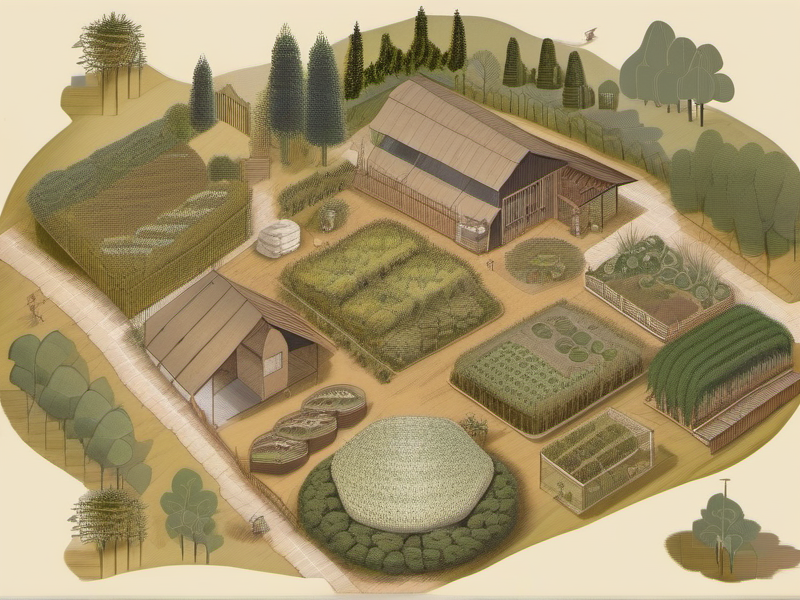
The USDA says you need 1.2 acres of conventional farmland per person. John Jeavons proved you need 4,000 square feet. Here's the exact planting plan, calorie math, and seasonal schedule to feed a family of four from one acre -- with no tractor, no tiller, and no grocery store.
The Lie of Large Acreage
Here is the number the industrial food system wants you to internalize: 1.2 acres per person.
That is the USDA's own estimate for the amount of conventional cropland required to feed one American for one year. For a family of four, that comes to 4.8 acres -- and that does not include the land for the cattle, the corn to feed the cattle, the soybeans to supplement the corn, the diesel to run the combines, or the highway miles between the field and your plate. Add the full supply chain and the number balloons to roughly 2.5 acres per person -- 10 acres for a family of four, if you insist on eating the standard American diet.
Most people hear those numbers and stop thinking. Ten acres. That is a small farm. You need a tractor, a barn, maybe a hired hand. Food sovereignty sounds romantic but impractical. Better to stay dependent. Better to keep driving to the grocery store.
This article exists to dismantle that arithmetic.
Because in 1972, a former management consultant named John Jeavons moved to a plot of hardpan clay in Willits, California, and began a forty-year experiment that would prove, with meticulous data, that 4,000 square feet -- roughly one-tenth of an acre -- can produce enough food for one person for an entire year. Not in theory. Not in a greenhouse. In open-air beds, using hand tools, rainwater, and compost.
Four thousand square feet per person. Sixteen thousand for a family of four. That is 0.37 acres.
We are going to work with a full acre -- 43,560 square feet -- because an acre gives you margins. It gives you room for a food forest that takes five years to reach full production. It gives you space for chickens, a pair of dairy goats, a composting operation, a root cellar, and a workshed. It gives you a buffer for bad years, pest years, drought years.
One acre is not the minimum. It is the comfortable number. The number where you stop worrying.
Here is how the math works.
Part I: The Calorie Equation
What a Family of Four Actually Needs
Before we design the acre, we need to define the target. The average adult requires approximately 2,000 calories per day. Children require less, but teenagers require more, and physical labor -- which this system demands -- pushes the number higher. For planning purposes, we use 2,200 calories per adult per day and assume a household of two adults and two children averaging 1,800 calories each.
Daily caloric requirement: (2 x 2,200) + (2 x 1,800) = 8,000 calories Annual caloric requirement: 8,000 x 365 = 2,920,000 caloriesCall it 2.9 million calories per year. That is the number. Every decision in this article works backward from it.
But calories alone will kill you slowly. A human body requires macronutrient balance: carbohydrates for energy, protein for tissue repair and immune function, and fat for hormone production, brain function, and fat-soluble vitamin absorption. The WHO recommends roughly 50-60% carbohydrates, 15-20% protein, and 20-30% fat. We will use those ratios as guardrails, not gospel.
We also need micronutrient density -- vitamins A, C, D, E, K, the full B complex, calcium, iron, zinc, magnesium, selenium. This is where the industrial model fails catastrophically. A conventional potato field can deliver millions of calories per acre, but if you eat nothing but potatoes, you will develop scurvy within three months. The one-acre plan must produce not just calories, but nutrition -- the full spectrum of what a human body requires to function at peak capacity for decades.
The Calorie Champions: Yield Per Acre
Not all crops are created equal. The following table represents approximate caloric yield per acre under good management in a temperate climate. These numbers are drawn from USDA crop yield data, university extension services, and documented results from biointensive practitioners.
| Crop | Yield (lbs/acre) | Calories per lb | Million Calories/Acre |
|---|---|---|---|
| Potatoes | 35,000-45,000 | 350 | 15.0-17.8 |
| Sweet Potatoes | 20,000-30,000 | 390 | 7.8-11.7 |
| Corn (dry grain) | 5,000-7,000 | 1,650 | 8.3-11.6 |
| Dry Beans | 1,200-1,600 | 1,550 | 1.9-2.5 |
| Winter Squash | 20,000-30,000 | 200 | 4.0-6.0 |
| Wheat | 2,500-3,500 | 1,520 | 3.8-5.3 |
| Sunflower Seeds | 1,200-1,800 | 2,630 | 3.2-4.7 |
| Cabbage | 30,000-40,000 | 110 | 3.3-4.4 |
| Hazelnuts (mature) | 1,500-2,500 | 2,840 | 4.3-7.1 |
| Jerusalem Artichokes | 15,000-20,000 | 330 | 5.0-6.6 |
The pattern is clear. Potatoes dominate. At 17.8 million calories per acre under irrigated conditions, a single acre of potatoes -- and nothing else -- could theoretically feed six people for a year on calories alone. The Irish knew this, which is why they bet their civilization on a single variety of Solanum tuberosum. They also learned the lesson of monoculture dependency in 1845, when Phytophthora infestans destroyed the crop and a million people starved.
We will not make that mistake. The one-acre plan uses polyculture -- many crops, many varieties, many layers -- precisely because resilience matters more than maximum theoretical yield.
Part II: The Jeavons Method -- Biointensive Fundamentals
Why 4,000 Square Feet Works
John Jeavons published How to Grow More Vegetables in 1974. It has been revised nine editions since. The central thesis, supported by decades of data collected at Ecology Action's research garden in Willits, is this: biointensive methods can produce two to six times the yield of conventional agriculture while using 67-88% less water, 50-100% less purchased fertilizer, and up to 99% less energy.
The system rests on eight principles:
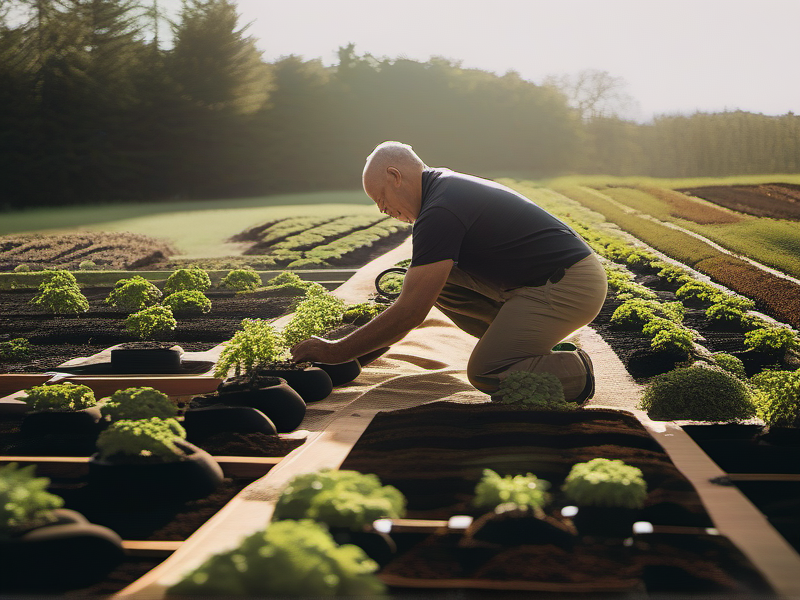
- Deep soil preparation. Double-dig beds to 24 inches. This doubles the root zone, improves drainage, and creates a soil structure that holds moisture and nutrients far better than plow-pan compaction. The first season is brutal labor. Every season after is maintenance.
- Composting. All biomass returns to the soil. Jeavons insists on a specific ratio: 60% of your growing area must be planted in carbon-rich crops -- grains, corn, sunflowers -- specifically to generate compost material. This is the part most beginners skip, and it is why most beginners fail within three years. The soil must eat before you can eat.
- Intensive planting. Seedlings are spaced in hexagonal patterns at distances just far enough for mature leaves to barely touch. This creates a living mulch -- a closed canopy that suppresses weeds, retains moisture, and creates a favorable microclimate at soil level. No rows. No bare earth. No wasted space.
- Companion planting. Certain plants grown in proximity create beneficial relationships -- nitrogen fixers beside heavy feeders, deep-rooted plants beside shallow-rooted plants, pest-repellent aromatics beside vulnerable crops.
- Carbon farming. That 60% compost crop ratio is not a suggestion. Jeavons calls it the "60-30-10 rule": 60% of bed space grows compost crops (carbon), 30% grows calorie crops (carbohydrates), and 10% grows everything else (vegetables for vitamins and minerals, plus income crops if you sell). Violate this ratio and the soil declines. Honor it and the soil improves every year.
- Calorie farming. The 30% dedicated to calorie crops is focused on root crops (potatoes, sweet potatoes, parsnips), grains (wheat, corn, amaranth), and legumes (dry beans, fava beans). These are your staples -- the crops that actually prevent starvation.
- Open-pollinated seeds. Saved from your own plants, adapted to your specific microclimate over generations. This eliminates seed dependency and creates cultivars perfectly suited to your soil, water, and temperature conditions.
- A whole-system approach. The garden is not separate from the house, the compost pile, the chickens, or the woodlot. Everything connects. Waste from one element becomes input for another.
The Math at Jeavons Scale
Let us apply the 60-30-10 rule to our one-acre plan.
One acre = 43,560 square feet. But not all of that is plantable. Subtract paths, structures, animal housing, a root cellar, composting area, and the house itself. Assume the house and outbuildings consume 5,000 square feet. Paths and infrastructure take another 3,500 square feet. That leaves us roughly 35,000 square feet of productive growing space.
Under the Jeavons model:
- 60% compost crops: 21,000 sq ft
- 30% calorie crops: 10,500 sq ft
- 10% vitamin/mineral/income crops: 3,500 sq ft
Now -- and this is critical -- the compost crops are not wasted space. Many of them are dual-purpose. Corn produces ears and stalks. Sunflowers produce seeds and biomass. Wheat produces grain and straw. Fava beans produce food and nitrogen and compost material. The 60% is doing double duty.
Let us calculate the calorie output of just the 30% calorie crop area (10,500 sq ft, or approximately one-quarter acre):
If we plant that quarter-acre to a mix of potatoes (40%), sweet potatoes (30%), dry beans (15%), and winter squash (15%), the calorie output at biointensive yields looks like this:
| Crop | Area (sq ft) | Approx. Yield (lbs) | Calories | |
|---|---|---|---|---|
| Potatoes | 4,200 | 3,500 | 1,225,000 | |
| Sweet Potatoes | 3,150 | 2,200 | 858,000 | |
| Dry Beans | 1,575 | 75 | 116,250 | |
| Winter Squash | 1,575 | 1,100 | 220,000 | |
| Total | 10,500 | 6,875 | 2,419,250 |
That is 2.4 million calories from the calorie crops alone -- 83% of our target. And we have not yet counted the corn, wheat, and sunflower seeds from the compost crop area, many of which are edible. We have not counted the garden vegetables. We have not counted eggs, goat milk, hazelnuts, or foraged wild foods.
The numbers work. They have always worked. The question was never arithmetic. It was design.
Part III: Designing the Acre -- Permaculture Zones
Thinking in Zones, Not Rows
Conventional agriculture thinks in rows. Permaculture thinks in zones. The concept was formalized by Bill Mollison and David Holmgren in Permaculture One (1978) and refined over the following decades by thousands of practitioners worldwide. The idea is simple: organize your landscape by frequency of human interaction. Things you touch every day go closest to the house. Things you touch once a year go farthest away.
On our one-acre plan, the zone map looks like this:
Zone 0: The House (2,000 sq ft footprint)
The house itself is an element of the system. South-facing windows provide passive solar heating. The kitchen door opens directly onto Zone 1. Greywater from sinks and showers is plumbed to irrigate fruit trees. A small attached greenhouse or cold frame extends the growing season by six to eight weeks on each end. The root cellar is dug into the north side of the foundation where the earth stays coolest.
The house is not separate from the farm. The house is the farm. Every design decision -- the orientation of the roof, the placement of windows, the slope of the land around the foundation -- either supports or undermines food production.
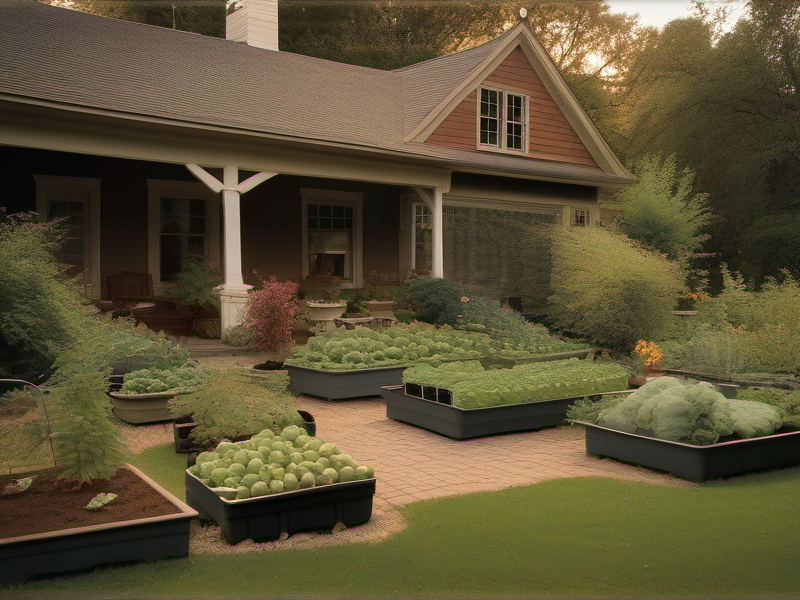
Zone 1: The Kitchen Garden (3,000 sq ft)
This is the land within thirty steps of your back door. You visit it multiple times per day. It contains:
Raised biointensive beds (2,000 sq ft total bed space). These are the Jeavons beds -- double-dug, 4 feet wide, intensively planted. They hold your highest-value, most-frequently-harvested crops:- Salad greens (lettuce, arugula, mesclun, spinach)
- Cooking greens (kale, chard, collards)
- Herbs (basil, cilantro, dill, parsley, rosemary, thyme, sage, oregano, mint)
- Alliums (scallions, garlic, shallots)
- Tomatoes (in season)
- Peppers (in season)
- Cucumbers and summer squash (in season)
These beds are succession-planted -- every two weeks, new sowings replace harvested crops. A single 4 x 25 foot bed of lettuce, replanted every 14 days, produces continuous salad greens for a family from April through November.
The herb spiral. A classic permaculture element -- a raised spiral of stone or brick, about 5 feet in diameter, that creates multiple microclimates (wet base, dry top, sunny south, shaded north) in a tiny footprint. Mediterranean herbs on top, moisture-loving herbs at the base. Cold frames and season extension. Two or three cold frames built against the south-facing wall of the house. These allow lettuce, spinach, and Asian greens to grow through winter in most temperate climates. Cost: scrap lumber and old windows. Value: fresh greens in January. Estimated calorie contribution from Zone 1: 150,000-200,000 calories/year. This zone is not a calorie zone. It is a nutrition zone. The vitamins, minerals, antioxidants, and phytochemicals from these daily greens and herbs are what keep the family healthy -- not merely alive, but thriving. You cannot get this from potatoes and corn.Zone 2: The Food Forest and Orchard (8,000 sq ft)
This is where the one-acre plan departs most radically from conventional agriculture. Zone 2 is a perennial polyculture -- a designed ecosystem of trees, shrubs, vines, herbaceous plants, ground covers, and root crops arranged in layers that mimic a natural forest.
The seven layers of a food forest:
- Canopy layer. Full-sized fruit and nut trees. On one acre, you have room for 3-5 standard or 6-10 semi-dwarf trees. Apple, pear, plum, cherry, or -- in the right climate -- peach, persimmon, or mulberry. These take 4-7 years to reach significant production but then yield for 30-50 years with minimal maintenance.
- Understory layer. Smaller trees that grow in the dappled light beneath the canopy. Hazelnuts are the star here -- Mark Shepard's restoration agriculture system at New Forest Farm in Viola, Wisconsin, is built around them. A mature hazelnut produces 10-25 pounds of nuts per year. At 628 calories per 100 grams, with 15% protein and 61% fat, hazelnuts are one of the most complete foods a temperate-climate farmer can grow. Plant 10 hazelnuts in the understory and you are looking at 100-250 pounds of nuts annually at maturity -- roughly 200,000-450,000 calories of high-quality fat and protein.
- Shrub layer. Blueberries, currants, gooseberries, elderberries, raspberries, blackberries. These produce relatively few calories but extraordinary nutrition -- vitamin C from currants rivals supplementation, elderberries are potent immune support, and blueberries are among the highest-antioxidant foods measured.
- Herbaceous layer. Comfrey (the permaculture workhorse -- produces massive biomass for compost, accumulates minerals from deep soil), rhubarb, asparagus, Good King Henry, sorrel, Turkish rocket. Many of these are the perennial crops we profiled in "9 Crops You Plant Exactly Once." Plant them once and harvest for decades.
- Ground cover layer. Strawberries, creeping thyme, white clover (nitrogen fixer), sweet potatoes (in warmer climates). The ground is never bare. Bare ground is bleeding ground -- losing moisture, losing topsoil, growing weeds.
- Vine layer. Grapes, kiwi (hardy varieties to zone 4), hops, scarlet runner beans, passionflower (in milder climates). These grow vertically on trellises, arbors, and the trees themselves, exploiting airspace that would otherwise produce nothing.
- Root layer (rhizosphere). Jerusalem artichokes, horseradish, groundnuts (Apios americana), skirret, garlic. These grow underground, occupying a niche that does not compete with the layers above.
The food forest takes time. In year one, you are planting small trees, bare-root shrubs, and establishing ground covers. Production is minimal. By year three, the shrub layer is producing. By year five, the understory trees begin to yield. By year eight to ten, the canopy trees come online and the system hits its stride.
Estimated calorie contribution from Zone 2 at maturity: 500,000-800,000 calories/year. This number increases every year as the system matures. By year fifteen, a well-designed food forest on 8,000 square feet can be producing more calories per square foot than the annual vegetable beds -- with almost zero annual labor input.Zone 3: The Main Crops (15,000 sq ft)
This is the field. The workhorse. The calorie engine. Zone 3 is where the biointensive beds produce the bulk of your carbohydrates, proteins, and fats.
This area is divided into beds following the Jeavons 60-30-10 model. Here is the allocation:
Compost crops (9,000 sq ft): - Corn (3,000 sq ft) -- dual purpose: ears for eating, stalks for compost - Sunflowers (2,000 sq ft) -- dual purpose: seeds for fat and protein, stalks for compost - Wheat or rye (2,000 sq ft) -- dual purpose: grain for flour, straw for compost and mulch - Fava beans (2,000 sq ft) -- triple purpose: beans for protein, biomass for compost, nitrogen fixation for soil Calorie crops (4,500 sq ft): - Potatoes (2,000 sq ft) - Sweet potatoes (1,000 sq ft) - Winter squash (1,000 sq ft) - Dry beans -- pinto, black, navy (500 sq ft) Vitamin and mineral crops (1,500 sq ft): - Carrots (400 sq ft) - Beets (300 sq ft) - Onions (300 sq ft) - Garlic (300 sq ft) - Turnips and rutabagas (200 sq ft)Let us run the calorie math for Zone 3.
Compost crops -- edible portion:| Crop | Area (sq ft) | Edible Yield (lbs) | Calories |
|---|---|---|---|
| Corn (ears) | 3,000 | 600 | 540,000 |
| Sunflower seeds | 2,000 | 150 | 395,000 |
| Wheat (grain) | 2,000 | 200 | 304,000 |
| Fava beans (dry) | 2,000 | 120 | 186,000 |
| Subtotal | 1,070 | 1,425,000 |
| Crop | Area (sq ft) | Yield (lbs) | Calories |
|---|---|---|---|
| Potatoes | 2,000 | 1,700 | 595,000 |
| Sweet Potatoes | 1,000 | 700 | 273,000 |
| Winter Squash | 1,000 | 700 | 140,000 |
| Dry Beans | 500 | 25 | 38,750 |
| Subtotal | 3,125 | 1,046,750 |
| Crop | Area (sq ft) | Yield (lbs) | Calories |
|---|---|---|---|
| Carrots | 400 | 250 | 47,500 |
| Beets | 300 | 200 | 38,000 |
| Onions | 300 | 200 | 40,000 |
| Garlic | 300 | 80 | 54,000 |
| Turnips/Rutabagas | 200 | 150 | 27,000 |
| Subtotal | 880 | 206,500 |
Zone 3 alone covers 92% of the family's annual calorie needs. And we still have two more zones, plus animal products.
Zone 4: The Semi-Wild and Animal Zone (6,000 sq ft)
Zone 4 is managed, not cultivated. It includes:
The chicken run and coop (1,500 sq ft). Six to eight laying hens -- heritage breeds like Rhode Island Reds, Plymouth Rocks, or Australorps that are hardy, dual-purpose, and productive. A healthy heritage hen lays 200-280 eggs per year. Six hens at 250 eggs each produce 1,500 eggs annually.Each egg contains approximately 72 calories, 6 grams of protein, and 5 grams of fat. That is 108,000 calories per year from eggs alone, plus 9,000 grams (20 pounds) of complete animal protein.
The chickens eat kitchen scraps, garden waste, weeds, slugs, and insects. Supplemental feed comes from the corn and sunflower seeds grown in Zone 3. Their manure -- composted, never fresh -- feeds the garden beds. The loop is closed.
The goat paddock (3,000 sq ft). Two Nigerian Dwarf dairy goats or one standard-sized doe (Nubian, Saanen, or Alpine). A good dairy goat produces three to six pounds of milk per day over a 305-day lactation period. Some exceptional does produce up to a gallon daily.One gallon of goat milk contains approximately 660 calories, 35 grams of fat, and 32 grams of protein. Over a 305-day lactation, a single doe producing three-quarters of a gallon per day yields:
- 0.75 gallons x 305 days = 229 gallons per year
- 229 gallons x 660 calories = 151,140 calories from milk
- Plus approximately 8,000 grams of fat and 7,300 grams of protein
Goat milk also makes cheese, yogurt, and kefir -- fermented dairy products that store without refrigeration and provide probiotics, calcium, and B vitamins. Two quarts of goat milk yields approximately one pound of chevre. Hard-pressed goat cheese stores for months.
The goats browse on weeds, brambles, and brush in Zone 4, plus hay grown on the property or sourced locally. Their manure goes to compost. Their kids, if you breed them, provide additional milk does or meat.
Forage and wild harvest area (1,500 sq ft). Elderberry hedgerows, wild garlic, nettles, dandelion, chicory, lamb's quarters, purslane. These are not planted -- they are encouraged. A semi-wild hedgerow produces food, medicine, wildlife habitat, and windbreak simultaneously. Estimated calorie contribution from Zone 4: 275,000-350,000 calories/year. But the real value is not calories. It is complete protein from eggs and dairy, fat from milk and cheese, and micronutrients from wild-harvested greens.Zone 5: The Wild Edge (2,560 sq ft)
The remaining strip along the property boundary. Unmanaged. This is the ecological anchor -- the zone that supports pollinators, predatory insects, birds, and fungal networks. You do not harvest from Zone 5. You observe. It teaches you what the land wants to grow, and that information flows backward into every design decision you make in Zones 1 through 4.
Zone 5 produces no countable calories. Its value is systemic. Without it, pest pressure increases, pollination decreases, and the soil food web fragments. With it, you have a functioning ecosystem rather than a garden under siege.
Part IV: The Full Calorie Audit
Let us assemble the complete picture.
| Source | Annual Calories | % of Target (2.9M) |
|---|---|---|
| Zone 1: Kitchen Garden | 175,000 | 6.0% |
| Zone 2: Food Forest (at maturity) | 650,000 | 22.4% |
| Zone 3: Main Crops | 2,678,250 | 92.4% |
| Zone 4: Eggs | 108,000 | 3.7% |
| Zone 4: Goat Milk | 151,140 | 5.2% |
| Zone 4: Forage/Wild | 30,000 | 1.0% |
| Total | 3,792,390 | 130.8% |
The system produces 130% of the family's caloric needs -- a 30% surplus. That surplus is not waste. It is:
- Insurance against crop failure, pest damage, drought, and bad years
- Seed stock for next year
- Feed for chickens and goats
- Trade goods for barter with neighbors
- Preserved food -- canned, dried, fermented, frozen -- for winter and emergencies
If you are producing exactly 100% of your calories, you are one hailstorm away from hunger. The 30% buffer is not luxury. It is the minimum margin of safety.
The Macronutrient Breakdown
Calories are necessary but insufficient. Here is the macronutrient profile of the one-acre plan:
Carbohydrates: The bulk comes from potatoes, sweet potatoes, winter squash, corn, wheat, and root vegetables. Total estimated carbohydrate production: 700-900 pounds of dry carbohydrate equivalent per year. At 4 calories per gram, that represents 1.3-1.6 million calories from carbohydrates -- roughly 45-55% of total production. Within the WHO guideline of 50-60%. Protein: Sources include dry beans (22% protein by weight), fava beans (26%), wheat (13%), corn (9%), sunflower seeds (21%), hazelnuts (15%), eggs (13%), and goat milk (3.3%). Total estimated protein production: 180-250 pounds per year. At 4 calories per gram, protein provides roughly 330,000-450,000 calories -- approximately 12-15% of production. The lower bound is adequate; the upper bound is comfortable. Supplementing with more bean production or an additional few hens pushes this into the 15-18% range easily. Fat: The most commonly deficient macronutrient in homestead diets. Without animal products or oil crops, a plant-based homestead struggles to produce enough fat. Our plan addresses this through:- Sunflower seeds: 51% fat, producing approximately 75 lbs of oil-rich seeds per year
- Hazelnuts: 61% fat, producing 100-250 lbs per year at maturity
- Goat milk: 3.5-5% butterfat, yielding roughly 30-50 lbs of butterfat annually
- Eggs: 5g fat per egg, totaling roughly 16 lbs per year
Total estimated fat production: 120-180 pounds per year. At 9 calories per gram, fat provides 490,000-735,000 calories -- approximately 17-25% of total production. This is within the WHO guideline of 20-30%, though the lower bound is tight. In practice, growing more sunflowers or adding a second dairy goat solves the fat question decisively.
Part V: The Protein Problem -- And Its Solutions
Protein anxiety is the most common objection to homestead food sovereignty. "Where do you get your protein?" is the question that stops more aspiring homesteaders than any other.
The answer is: everywhere.
Plant Protein Sources
Dry beans. Common beans yield 1,200-1,600 pounds per acre under good conditions. At 22% protein by dry weight, one acre of beans produces 264-352 pounds of pure protein. We are only planting 500 square feet of dry beans in our plan -- yielding roughly 25 pounds of dried beans, or 5.5 pounds of protein. But every other legume on the property is also fixing nitrogen and producing protein: fava beans, scarlet runner beans, snap peas, lentils. Amaranth and quinoa. If your climate supports them, these pseudocereals offer 13-16% protein with a more complete amino acid profile than wheat or corn. Amaranth yields 800-1,200 pounds per acre. Even 500 square feet of amaranth adds 10-15 pounds of high-quality protein. Sunflower seeds. At 21% protein, the 150 pounds of sunflower seeds from Zone 3 contribute roughly 31 pounds of protein. Hazelnuts. At 15% protein, 200 pounds of hazelnuts contribute 30 pounds of protein. The total plant protein from our one-acre plan: approximately 100-130 pounds per year.Animal Protein Sources
Eggs. Six hens producing 1,500 eggs per year contribute approximately 20 pounds of protein. Eggs are a complete protein -- containing all nine essential amino acids in bioavailable form. Goat milk. 229 gallons of goat milk at 32 grams of protein per gallon yields approximately 16 pounds of protein per year. Goat milk protein, like egg protein, is complete and highly bioavailable. If fermented into kefir or cheese, the protein becomes even more digestible. Total animal protein: approximately 36 pounds per year.Combined Protein Budget
Total protein production: 136-166 pounds per year, or 0.37-0.45 pounds per day for the household.
The RDA for protein is 0.36 grams per pound of body weight per day. For a 160-pound adult, that is 58 grams (0.13 lbs) per day. For our family of four (estimated combined body weight: 500 lbs), the daily requirement is approximately 180 grams, or 0.4 pounds.
Our plan produces 0.37-0.45 pounds of protein per day. The lower bound is tight. The upper bound is comfortable. The solution to any shortfall is straightforward: plant more beans, add two more hens, or allocate another 500 square feet to fava beans or lentils.
No one is going protein-deficient on this plan unless they refuse to eat beans. And if you refuse to eat beans, you are not serious about food sovereignty.
Part VI: The Fat Question
Fat is the macronutrient that most homestead plans underestimate. Carbohydrates are easy -- potatoes, squash, and grains practically grow themselves. Protein is manageable with beans and eggs. But fat requires deliberate planning.
A human body needs 44-78 grams of fat per day (based on a 2,000-calorie diet at 20-35% fat). For our family of four, that is roughly 150-250 grams per day, or 120-200 pounds per year.
Fat Sources on the One-Acre Plan
Sunflower seeds. The highest-yielding fat crop for temperate climates. At 51% fat by weight, 150 pounds of sunflower seeds yields roughly 76 pounds of fat. Sunflower seeds can be eaten raw, roasted, ground into butter, or pressed into oil. A simple hand-crank oil press extracts approximately 1 quart of oil from 5 pounds of seeds. That is 7.5 gallons of cooking oil per year from 2,000 square feet of sunflowers. Hazelnuts. At 61% fat, hazelnuts are essentially a fat crop that happens to also contain protein and carbohydrates. Two hundred pounds of hazelnuts (a conservative estimate for 10 mature trees) yields 122 pounds of fat. This is the richest fat source on the property -- calorie-dense, shelf-stable, and produced by trees that require no annual planting. Goat milk. At 3.5-5% butterfat, 229 gallons of goat milk contains approximately 30-50 pounds of butterfat. This can be skimmed and churned into butter, or left in the milk as whole-fat dairy. Eggs. 1,500 eggs at 5 grams of fat each produce 16.5 pounds of fat. Total fat production: 245-365 pounds per year.That is well above our requirement of 120-200 pounds. The surplus becomes cooking oil, stored nut butter, and aged cheese -- all of which represent concentrated, shelf-stable calories for winter and lean times.
This is why hazelnuts and sunflowers are non-negotiable in the one-acre plan. Without them, fat production drops to under 50 pounds per year -- dangerously below requirements. With them, fat is abundant. Mark Shepard understood this when he built his entire 106-acre restoration agriculture farm in Wisconsin around hazelnuts, chestnuts, and other nut crops. The lesson scales down perfectly to one acre.
Part VII: The Seasonal Schedule -- What to Plant When
A one-acre food system is not a single planting event. It is a continuous, overlapping, year-round cycle of sowing, transplanting, harvesting, preserving, and soil-building. The following calendar assumes a temperate climate with last spring frost around May 1 and first fall frost around October 15 -- roughly USDA Zone 5-6. Adjust forward or backward by two weeks per zone.
January -- February: The Planning and Propagation Season
Indoors: - Week 1-2 of January: Order seeds. Review last year's garden journal. Sketch bed rotations. - Week 3-4 of January: Start onion seeds under lights (10-12 weeks before transplant date) - Week 1-2 of February: Start pepper and eggplant seeds (8-10 weeks before transplant) - Week 3-4 of February: Start tomato, cabbage, broccoli, and cauliflower seeds indoors Outdoors: - Prune fruit trees and grape vines while dormant - Spread composted manure on resting beds (if ground is not frozen) - Repair cold frames, trellises, and fencing - Inventory stored food -- assess remaining root cellar supplies, canned goods, dried beans and grains Harvest from storage: Potatoes, sweet potatoes, winter squash, dried beans, canned vegetables, fermented vegetables, dried herbs, goat cheese. Cold frames may still produce spinach, mache, and claytonia.March: The Awakening
Indoors: - Start additional tomato and pepper seedlings - Start lettuce, kale, and chard seeds for early transplant Outdoors (as soon as soil can be worked): - Direct-sow peas (snow, snap, and shelling varieties) - Direct-sow spinach, lettuce, radishes, arugula, and turnips under row cover - Plant garlic if not planted the previous fall - Transplant onion seedlings into beds - Set out cold-hardy transplants (cabbage, broccoli, kale) under row cover - First succession sowing of lettuce and salad greens - Turn compost piles; begin building new piles from last year's stalks Animals: - Goat kidding season (if bred). Milk production begins ramping up. - Start incubating eggs if replacing or expanding the flock.April: Building Momentum
Outdoors: - Direct-sow beets, carrots, chard, and more lettuce (second succession) - Transplant additional brassicas - Direct-sow fava beans (cool-weather legume) - Plant seed potatoes (2-4 weeks before last frost) - Direct-sow annual flowers for pollinator support (calendula, phacelia, buckwheat) - Mulch established fruit trees and berry bushes - Plant new fruit trees, berry bushes, and hazelnut trees (bare-root season) Food forest: - Transplant comfrey root cuttings - Plant ground covers (strawberries, white clover) - Mulch heavily around newly planted trees Harvest: Asparagus spears (established beds), overwintered spinach, spring onions, fresh herbs from perennials (chives, sorrel, lovage). Eggs increasing as daylight lengthens.May: The Big Push
After last frost (approximately May 1): - Transplant tomatoes, peppers, eggplants, and basil - Direct-sow corn, dry beans, snap beans, summer squash, cucumbers, and sunflowers - Plant sweet potato slips - Direct-sow winter squash and pumpkins - Plant out any remaining warm-season seedlings - Third succession of lettuce and salad greens Ongoing: - Weed biointensive beds (should be minimal if beds are properly spaced) - Begin training cucumber and bean vines to trellises - Mulch, mulch, mulch -- straw from wheat, leaves, grass clippings, comfrey chop Harvest: Lettuce, spinach, radishes, peas, asparagus, rhubarb, strawberries, chives, green garlic. Goat milk production at peak. Egg production at or near peak.June: The Green Explosion
- Side-dress corn and heavy feeders with compost
- Succession sow beans (every 2 weeks for continuous harvest)
- Succession sow lettuce and salad greens (fourth round)
- Train tomatoes -- prune suckers, stake or cage
- Begin harvesting garlic scapes
- Thin carrots and beets
July: Peak Production Begins
- Final succession of bush beans
- Direct-sow fall brassicas (cabbage, kale, broccoli, Brussels sprouts) for autumn harvest
- Direct-sow fall carrots and beets
- Harvest and cure garlic bulbs
- Begin harvesting wheat (if planted the previous fall as winter wheat)
August: The Harvest Crescendo
- Continue fall brassica planting
- Harvest main-crop potatoes; cure and store
- Harvest dry beans as pods brown on plants
- Harvest sunflower heads; dry and thresh seeds
- Harvest corn; dry for cornmeal or store ears for feed
- Cut and stack wheat straw for mulch and animal bedding
September: The Pivot to Autumn
- Plant garlic (in colder zones, this is the traditional planting time -- cloves go in the ground 4-6 weeks before hard frost)
- Sow cover crops (crimson clover, winter rye, hairy vetch) on harvested beds
- Plant fall lettuce, spinach, and Asian greens in cold frames
- Harvest winter squash and cure in sun for 10 days
- Harvest sweet potatoes before frost; cure at 80-85F for 7-10 days
- Harvest hazelnuts as they drop
October: The Great Storage
- Dig remaining root crops and store in root cellar or in-ground clamps
- Harvest late cabbage; make sauerkraut in large crocks
- Final corn harvest; hang to dry
- Clean and put away trellises, row covers, and tools
- Compost all crop residue that is not diseased
- Spread final compost on beds for winter
- Ensure root cellar is stocked and organized
November -- December: The Quiet Season
- Spread leaf mulch on all beds 6-12 inches deep
- Final pruning of berry bushes
- Service and sharpen tools
- Review garden journal; note successes and failures
- Plan next year's rotations
- Process and organize seed inventory
- Slaughter old hens (if maintaining flock productivity); process and preserve the meat
The pantry, if managed correctly, carries the family from November through March with zero trips to any store.
Part VIII: The Dervaes Proof -- It Works at Even Smaller Scale
If you doubt that one acre can feed a family, consider the Dervaes family of Pasadena, California.
Jules Dervaes and his three adult children operated an urban homestead on one-fifth of an acre -- approximately 8,700 square feet, of which only about 4,000 square feet was actual growing space. The rest was house, driveway, and pathways.
From that postage-stamp lot, they produced over 6,000 pounds of food per year. That is 1,500 pounds per thousand square feet of growing space. They grew over 400 varieties of fruits, vegetables, and herbs. They kept chickens, ducks, goats, and bees. They generated over $20,000 per year in income from selling surplus produce to local restaurants.
The Dervaes operation was in Southern California -- a forgiving climate with a long growing season. But their yields were not climate-dependent. They were design-dependent. Every square inch was planned. Vertical growing, succession planting, intensive spacing, and relentless attention to soil health produced yields that conventional agriculture calls impossible.
Six thousand pounds of food from 4,000 square feet. Scale that to our 35,000 square feet of productive growing space and you get 52,500 pounds of food per year. We are not claiming that yield -- our temperate climate and mixed-use design will produce less per square foot than the Dervaes' intensive vegetable operation. But the order of magnitude is instructive.
One acre is not tight. One acre is generous.
Mark Shepard and Restoration Agriculture
At the other end of the scale spectrum, Mark Shepard's New Forest Farm occupies 106 acres in the rolling hills of southwestern Wisconsin. Shepard converted a conventional corn-and-soybean farm into a perennial polyculture based on the oak-savanna ecosystem native to the region.
His system -- which he calls "restoration agriculture" -- replaces annual row crops with chestnuts, hazelnuts, apples, grapes, raspberries, currants, asparagus, and pastured livestock. The key insight is that the native ecosystem of much of the eastern United States was not forest and not prairie but savanna -- widely spaced trees over a grass-and-shrub understory. Shepard's system mimics that pattern with productive species.
His data, published in Restoration Agriculture: Real-World Permaculture for Farmers (2013), demonstrates that a mature restoration agriculture system produces more total calories, more total nutrition, and more total economic value per acre than the corn-and-soybean rotation it replaced -- while simultaneously building topsoil, sequestering carbon, requiring no irrigation, no synthetic fertilizer, no pesticides, and no annual tillage.
The critical lesson from Shepard for our one-acre plan: the nut trees matter. Chestnuts and hazelnuts are the calorie backbone of any temperate-climate perennial food system. A mature chestnut tree can produce 50-100 pounds of nuts per year -- high-carbohydrate nuts that dry and store like grain. A hazelnut bush produces 10-25 pounds of high-fat, high-protein nuts. These are not garnishes. They are staple foods.
Our food forest in Zone 2, with its hazelnut understory, is a direct application of Shepard's principles at residential scale.
Part IX: The Preservation Imperative
Growing 3.8 million calories on one acre means nothing if half of it rots before you eat it. The industrial food system solved this problem with refrigerated trucking, controlled-atmosphere storage, and chemical preservatives. The homestead solves it with older -- and often superior -- methods.
The Root Cellar
A well-designed root cellar maintains 32-40 degrees Fahrenheit and 85-95% humidity year-round. In these conditions:
- Potatoes store 6-8 months
- Sweet potatoes store 4-6 months (prefer slightly warmer conditions, 55-60F)
- Winter squash stores 3-6 months (prefer cooler room temperature, 50-55F)
- Carrots store 4-6 months (in damp sand)
- Beets store 3-5 months (in damp sand)
- Turnips and rutabagas store 4-6 months
- Cabbage stores 3-4 months (hung upside down by roots)
- Onions store 6-10 months (in dry, ventilated area)
- Garlic stores 6-9 months
- Apples store 2-6 months (depending on variety -- late-season keepers last longest)
A family producing the quantities described in this article needs a root cellar of approximately 80-120 square feet. This can be as simple as a well-insulated room in the basement, a buried chest freezer (unplugged, with a vent), or a purpose-built underground chamber.
Canning
Water-bath canning handles high-acid foods: tomatoes, fruits, pickles, jams, jellies, and fermented vegetables. Pressure canning handles low-acid foods: beans, corn, soups, stews, and meat.
Expected canning output from the one-acre plan: - 50-80 quarts of canned tomatoes (whole, crushed, sauce) - 20-30 quarts of canned fruit (applesauce, pears, peaches) - 15-20 quarts of pickles - 10-15 quarts of jams and jellies - 10-20 quarts of pressure-canned beans, corn, and soups
That is 100-165 quarts of canned goods per year -- enough to provide one quart of preserved food per day from November through March, with surplus.
Fermentation
Sauerkraut, kimchi, fermented pickles, hot sauce, vinegar, kefir, yogurt, cheese. Fermentation preserves food without energy input (no freezer, no canning equipment) while increasing nutritional value. The lactic acid bacteria that drive fermentation produce B vitamins, break down anti-nutrients, and create a probiotic-rich food that supports gut health.
A 10-gallon crock of sauerkraut, made from 40-50 pounds of cabbage, yields approximately 80 servings and stores for 6-12 months in a cool cellar.
Drying
Herbs, beans, corn, sunflower seeds, tomatoes, peppers, fruit leather, mushrooms. Solar drying in August and September preserves hundreds of pounds of food with zero energy cost. A simple solar dehydrator -- a wooden box with a glass top, painted black inside, with screened vents -- reaches 130-150 degrees Fahrenheit on a sunny day.
Dried beans, corn, and grains store for 1-3 years in airtight containers. Dried herbs store for 1-2 years. This is the deep pantry -- the reserves that carry you through not just one winter, but through the bad year when the tomatoes get late blight and the potatoes fail.
Part X: The First Five Years -- A Realistic Timeline
The one-acre plan does not produce 3.8 million calories in year one. Anyone who tells you otherwise is selling something. Here is an honest timeline:
Year 1: Foundation
What you build: - Double-dig 50% of your biointensive beds (the rest can wait for year two) - Plant Zone 1 kitchen garden - Plant Zone 3 main crops on available beds - Plant fruit trees, hazelnuts, and berry bushes in Zone 2 (bare root, dormant season) - Build chicken coop; acquire 6-8 pullets - Build compost system (three-bin or tumbler) - Construct root cellar (or identify basement storage space) What you produce: Approximately 30-40% of your food. The garden produces well, but beds are limited. Fruit trees and hazelnuts produce nothing. The food forest is sticks in the ground. You are still learning your soil, your microclimate, your pest pressures. What you buy: Staple grains, cooking oils, dairy (unless you already have goats), fruit, and probably half your vegetables during the learning curve. Critical lesson: Keep a journal. Write down everything -- planting dates, germination rates, pest appearances, first and last frost dates, rainfall, yields. This data is worth more than any book.Year 2: Expansion
What you build: - Double-dig remaining beds - Expand Zone 3 to full planting area - Establish cover crop rotation on beds not in production - Acquire dairy goat(s) - Build season extension structures (cold frames, low tunnels) - Plant ground covers and herbaceous layer in Zone 2 What you produce: Approximately 50-60% of your food. Beds are more productive as soil improves. Compost system is now cycling. Chickens are established and laying steadily. Berry bushes produce first small harvests. What you buy: Cooking oils (sunflowers and hazelnuts not yet producing), some grain (wheat beds still building), occasional fruit.Year 3: The Turning Point
What you produce: Approximately 70-80% of your food. Soil biology is establishing. Biointensive beds are hitting their stride. Berry bushes producing well. First goat milk. Preservation pantry is stocked from last year's surplus. You start to notice that grocery trips are becoming infrequent. What you buy: Cooking oil, specialty items (coffee, chocolate, spices not growable in your climate), occasional grain.Year 4-5: Critical Mass
What you produce: 85-95% of your food. Hazelnuts begin producing small harvests (year 4-5 from planting). Understory trees producing. Fruit trees beginning to bear. Food forest starting to look like a forest. The system is beginning to generate surplus. What you buy: Coffee, tea, chocolate, olive oil, citrus, spices, salt, baking soda -- the tropicals and minerals you cannot produce in a temperate climate. These items might cost $50-80 per month.Year 7-10: Full Production
What you produce: 100%+ of your caloric needs. Hazelnuts at full production. Fruit trees bearing heavily. Food forest producing with minimal labor. The annual beds are easier to manage because the soil is alive, the beneficial insect populations are established, and you have a decade of microclimate data guiding every decision.Your grocery bill for a family of four: $50-100 per month, consisting entirely of items you cannot grow -- coffee, chocolate, citrus, olive oil, spices, salt, and the occasional indulgence.
Compare that to the USDA's estimate of $928 per month for a family of four on a "moderate" food plan. The one-acre plan saves roughly $10,000-$11,000 per year in grocery costs at full production. Over twenty years, that is $200,000 or more -- not counting inflation.
Part XI: The Labor Equation
This is the part where honesty matters more than enthusiasm.
A one-acre food system demands work. Significant work. Especially in the first three years. Here is a realistic time budget:
Peak Season (May through September)
- Daily: 2-3 hours. Morning harvest, watering (if no irrigation system), animal chores (feeding, milking, egg collection), weeding, succession planting.
- Weekly: One full day (6-8 hours). Major planting sessions, bed preparation, compost turning, preservation projects (canning, drying).
- Total: 20-30 hours per week during peak season.
Shoulder Season (March-April, October-November)
- Daily: 1-2 hours. Animal chores, cold frame management, harvest and storage.
- Weekly: Half-day sessions for major projects -- tree planting, bed preparation, root cellar organization.
- Total: 10-15 hours per week.
Winter (December through February)
- Daily: 30-60 minutes. Animal chores, cold frame check, firewood.
- Weekly: Tool maintenance, seed ordering, planning.
- Total: 5-8 hours per week.
Annual Total: Approximately 800-1,200 hours per year.
That is equivalent to a half-time job. For two adults sharing the work, it is 400-600 hours each -- roughly 8-12 hours per week averaged over the year.
Is this a lot of work? Yes. Is it more work than a desk job that pays for groceries? In raw hours, no. The average American works 1,800 hours per year at a job, then spends additional time commuting, shopping for food, and preparing meals from ingredients they did not grow.
The homesteader works 800-1,200 hours and skips the commute, the grocery store, and a significant portion of the healthcare system that profits from the diseases of the standard American diet.
The labor is real. But the labor is different. It is physical. It is outdoors. It is seasonal -- intense in summer, gentle in winter. It produces tangible results that you eat, share, and store. And it gets easier every year as perennial systems mature and annual beds improve.
No one said sovereignty was free. But the price is labor, not money. And labor is a currency you print yourself.
Part XII: Common Objections -- Answered
"What about climate? This only works in California."
The Dervaes family operated in Southern California. But John Jeavons' research garden is in Willits, California -- USDA Zone 8b, which gets hard frosts. Mark Shepard farms in Wisconsin -- Zone 4b, where winter temperatures reach -30F. Eliot Coleman grows year-round in Maine -- Zone 5b -- using nothing but unheated greenhouses and cold frames. The principles work in any temperate climate. The crop list changes, the calendar shifts, but the math holds.
In colder climates, emphasize: - Cold-hardy root crops (potatoes, parsnips, carrots, turnips) - Short-season corn varieties - Hardy fruit trees (apple, pear, plum, cherry) - Season extension (cold frames, low tunnels, greenhouses) - Heavy reliance on preservation (root cellar stores more in cold climates because winter temperatures cooperate)
In warmer climates, emphasize: - Sweet potatoes (calorie champions in long-season areas) - Multiple plantings per year (double or triple cropping) - Year-round fresh production - Tropical and subtropical perennials (citrus, avocado, mango, banana in Zones 9-11)
"What about pests and diseases? One bad year could wipe you out."
This is the monoculture fear applied to a polyculture system, and it does not hold. The Irish Potato Famine happened because an entire nation planted a single variety of a single crop. Our one-acre plan includes dozens of species across seven layers and five zones. If late blight hits the potatoes, you still have sweet potatoes, winter squash, corn, beans, sunflower seeds, hazelnuts, eggs, milk, and 30+ other food sources.
Polyculture is pest insurance. When you grow 50+ species, no single pest or disease can take down more than a fraction of your food supply. This is not theoretical -- it is the observed reality on every diversified homestead in the world.
Additionally, the food forest in Zone 2 and the wild edge in Zone 5 support populations of predatory insects, birds, and amphibians that actively suppress pest populations. Ladybugs eat aphids. Parasitic wasps destroy hornworms. Toads consume slugs. The farm becomes a functioning ecosystem with its own immune system.
"I don't have an acre. I have a quarter-acre suburban lot."
Then you have more than the Dervaes family worked with. A quarter-acre (10,890 sq ft) is sufficient for the kitchen garden, a scaled-down food forest, the main crop beds, and a small chicken flock. You will not have room for goats, and your calorie production will be approximately 40-50% of the full one-acre plan. Supplement with bulk-purchased grains and cooking oils, and you are still looking at a 60-70% reduction in grocery spending.
The key adjustments for small lots: - Go vertical: trellises, arbors, espalier fruit trees, stacking planters - Eliminate lawns entirely -- every square foot of grass is a square foot of food not produced - Maximize biointensive bed density - Focus on high-value crops: greens, herbs, tomatoes, berries -- the items that cost the most per pound at the grocery store - Use front yards, side yards, hell strips, and boulevard trees
"What about water? I can't irrigate an acre."
You do not need to irrigate an acre. The food forest in Zone 2 (8,000 sq ft), once established, requires minimal supplemental water -- deep-rooted trees and heavy mulch capture and retain rainfall effectively. Zone 4 and 5 require no irrigation at all.
The zones requiring regular water are Zone 1 (3,000 sq ft) and Zone 3 (15,000 sq ft) -- approximately 18,000 square feet total. On a property with average rainfall (30-40 inches per year), that water requirement can be significantly offset by:
- Rainwater harvesting from rooftops (1,000 sq ft of roof captures approximately 600 gallons per inch of rainfall -- a 30-inch rainfall year yields 18,000 gallons from the roof alone)
- Greywater recycling from household sinks and showers
- Heavy mulching (reduces water needs by 50-70%)
- Drip irrigation (reduces water use by 30-50% compared to overhead sprinklers)
- Swales and berms that capture and infiltrate rainfall on-site rather than allowing runoff
In drought-prone areas, shift the crop mix toward drought-tolerant species: sweet potatoes over regular potatoes, amaranth over corn, tepary beans over common beans, fig trees over apple trees. The plan adapts. The math still works.
"What about soil? My land is clay/sand/rock/contaminated."
Biointensive methods build soil. That is the entire point of the 60% compost crop ratio. John Jeavons started on hardpan clay in Willits. Within five years, his beds had 24 inches of rich, living topsoil.
If your soil is contaminated (a common concern in urban and suburban lots near old buildings or industrial sites), get a soil test before planting anything edible. Lead and heavy metals are the primary concerns. If contamination exists, build raised beds with imported soil for food production while using the contaminated ground for compost crops, flowers, and soil remediation plants (sunflowers are excellent heavy-metal accumulators).
If your soil is pure clay, double-digging with added compost will transform it within two to three seasons. If it is pure sand, the same process works -- compost adds the organic matter that sand lacks. The only soil that truly defeats gardening is solid rock -- and even then, raised beds filled with compost and topsoil work perfectly.
Start where you are. The soil improves. It always improves, as long as you keep feeding it.
Part XIII: The Economics of the Acre
Let us talk money.
Startup Costs (Year 1)
| Item | Estimated Cost |
|---|---|
| Seeds (first year, comprehensive) | $150-300 |
| Hand tools (broadfork, digging fork, hoe, rake, wheelbarrow) | $300-500 |
| Fruit trees (5-8 bare root) | $200-400 |
| Hazelnut bushes (10 bare root) | $150-250 |
| Berry bushes (15-20 bare root) | $100-200 |
| Chicken coop (DIY from reclaimed materials) | $200-400 |
| Laying hens (6-8 pullets) | $50-100 |
| Fencing (poultry and goat, 200 linear feet) | $300-600 |
| Compost bins (DIY) | $50-100 |
| Cold frames (2-3, DIY) | $100-200 |
| Soil amendments (first year only -- lime, rock phosphate, greensand) | $100-200 |
| Irrigation supplies (drip lines, rain barrels) | $200-400 |
| Total Year 1 | $1,900-3,650 |
Additional Costs (Years 2-3)
| Item | Estimated Cost |
|---|---|
| Dairy goat(s) | $200-500 |
| Goat shelter (DIY) | $200-400 |
| Milking supplies | $50-100 |
| Additional seeds (annual purchase) | $50-100/year |
| Canning equipment (jars, lids, pressure canner) | $200-400 |
| Root cellar construction (DIY) | $300-800 |
| Total Years 2-3 | $1,000-2,300 |
Total Investment Over 3 Years: $2,900-5,950
Call it $3,000-6,000. This is the total capital required to build a food system that will operate for decades with annual costs of $200-400 (seeds, canning lids, animal feed supplements, tool replacement).
Return on Investment
At full production (year 5+), the one-acre plan replaces approximately $10,000-11,000 in annual grocery spending. Even at the high end of startup costs ($6,000) and ongoing costs ($400/year), the system pays for itself in the first year of full production and generates a $9,600-10,600 annual "return" every year thereafter.
Over 20 years: approximately $190,000-$210,000 in avoided grocery costs, minus approximately $14,000 in total operating costs. Net savings: $176,000-$196,000.
This does not include the health savings from eating nutrient-dense, chemical-free food -- a number that is real but difficult to quantify. It does not include the value of surplus production sold or bartered. And it does not include the value of food security itself -- the knowledge that your family eats regardless of supply chain disruptions, inflation, or economic downturns.
Part XIV: The Invisible Harvest -- What the Numbers Do Not Capture
The calorie tables and cost analyses above tell a true but incomplete story. The one-acre plan produces things that do not fit in a spreadsheet.
Soil. Every year under biointensive management, the soil deepens, darkens, and comes alive. Earthworm counts increase. Fungal networks expand. Water infiltration improves. After a decade, you are standing on eighteen inches of topsoil that did not exist when you started. You did not buy this soil. You grew it. It is the most valuable thing on the property, and it is appreciating while every other asset depreciates. Seed. Open-pollinated varieties saved over ten years become locally adapted cultivars -- plants that know your soil, your rainfall, your frost dates. This is genetics written by your specific place. It cannot be purchased at any price. Knowledge. After five years of hands-on food production, you possess a body of practical knowledge that was commonplace three generations ago and is now vanishingly rare. You can read soil by smell. You know which weeds indicate pH imbalance. You can predict frost by watching the sky. This knowledge is portable, permanent, and recession-proof. Community. The homesteader with surplus eggs, fresh greens, and homemade cheese does not lack for friends or trading partners. Food is the oldest social currency. A productive garden creates relationships that a salary does not. Time. This sounds paradoxical -- the plan demands 800-1,200 hours of labor per year. But consider what it eliminates: commuting to grocery stores, scanning processed food labels, waiting in checkout lines, driving to restaurants, sitting in doctors' waiting rooms treating diet-related illness. The net time equation may be closer to neutral than it appears. And the quality of the time is incomparably different. An hour in the garden at dawn, hands in living soil, is not the same hour as an hour under fluorescent lights in a grocery aisle.Part XV: Starting Tomorrow
You do not need an acre to start. You do not need to quit your job, sell your house, or move to the country. You need a patch of ground and a willingness to begin.
If you have a balcony: Grow herbs, lettuce, and tomatoes in containers. Learn succession planting. Save seeds. Read Jeavons. This is kindergarten, and it matters. If you have a backyard: Convert 200 square feet of lawn to biointensive beds this spring. Grow potatoes, beans, kale, garlic, and tomatoes. Build a compost pile. Observe what grows well and what struggles. You will learn more in one season of actual growing than in a year of reading. If you have a quarter-acre: You have a serious food production unit. Follow the zone plan at reduced scale. Add chickens (check local ordinances). Plant three fruit trees and five hazelnut bushes this dormant season. In three years, you will be producing 30-40% of your own food. If you have an acre: You have everything you need. The plan in this article is your blueprint. Adapt it to your climate, your soil, your family's dietary preferences. Start with Zone 1 and Zone 3 in year one. Add animals in year two. Plant the food forest immediately -- the trees need time, and every year you delay is a year of production lost.The grocery store will still be there. It is not going anywhere. But your relationship to it is about to change. Instead of dependency, you will have choice. Instead of a weekly obligation, an occasional convenience. Instead of a bill you cannot control, a number that shrinks every year as your acre comes into its own.
One acre. Zero grocery bills. The math works. The method is proven. The only variable is whether you begin.
References and Further Reading
- Jeavons, John. How to Grow More Vegetables (and Fruits, Nuts, Berries, Grains, and Other Crops) Than You Ever Thought Possible on Less Land with Less Water Than You Can Imagine. 9th Edition. Ten Speed Press, 2017.
- Mollison, Bill. Permaculture: A Designers' Manual. Tagari Publications, 1988.
- Holmgren, David. Permaculture: Principles and Pathways Beyond Sustainability. Holmgren Design Services, 2002.
- Shepard, Mark. Restoration Agriculture: Real-World Permaculture for Farmers. Acres U.S.A., 2013.
- Coleman, Eliot. Four-Season Harvest: Organic Vegetables from Your Home Garden All Year Long. Chelsea Green Publishing, 1999.
- Coleman, Eliot. The Winter Harvest Handbook: Year-Round Vegetable Production Using Deep-Organic Techniques and Unheated Greenhouses. Chelsea Green Publishing, 2009.
- Bartholomew, Mel. All New Square Foot Gardening. Cool Springs Press, 2006.
- Toensmeier, Eric. Perennial Vegetables: From Artichokes to Zuiki Taro, A Gardener's Guide to Over 100 Delicious and Easy to Grow Edibles. Chelsea Green Publishing, 2007.
- Toensmeier, Eric. Paradise Lot: Two Plant Geeks, One-Tenth of an Acre, and the Making of an Edible Garden Oasis in the City. Chelsea Green Publishing, 2013.
- Falk, Ben. The Resilient Farm and Homestead: An Innovative Permaculture and Whole Systems Design Approach. Chelsea Green Publishing, 2013.
- Stamets, Paul. Mycelium Running: How Mushrooms Can Help Save the World. Ten Speed Press, 2005.
- United States Department of Agriculture, Economic Research Service. "Farmland Use and Value." USDA ERS, 2024.
- Ecology Action. "Biointensive Mini-Farming." growbiointensive.org.
- Walden Effect. "Calories Per Acre for Various Foods." waldeneffect.org.
- Food and Agriculture Organization of the United Nations. "Sweet Potato Production Statistics." FAOSTAT, 2024.
- Cornell University Small Farms Program. "Urban and Small-Scale Food Production." smallfarms.cornell.edu.
- Penn State Extension. "Season Extension Technologies for Vegetable Production." extension.psu.edu.
R. Halloway is a field correspondent for The Ancestral Forge. He has spent four years documenting small-scale food production systems across the eastern United States and maintains a one-acre research plot in the southern Appalachians.
Comments (0)
No comments yet.
Log in to comment.