The Memory of Generations: Teaching Children Skills No School Offers
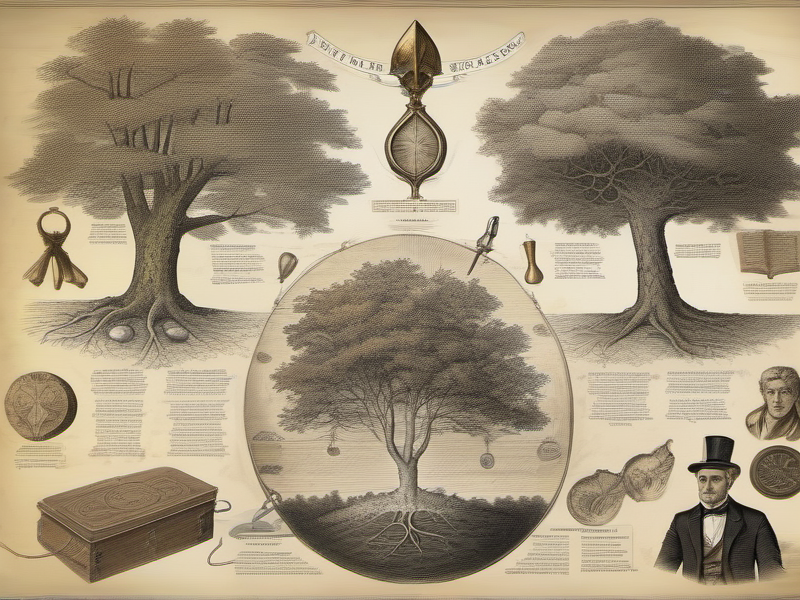
In 1890, a twelve-year-old child on a homestead in Nebraska could identify edible plants in a hundred-mile radius. She could butcher a chicken, preserve meat in salt, predict a storm by reading the sky, start a fire in rain, bake bread from hand-milled grain, set a snare for rabbit, treat a burn with a plantain poultice, stitch a wound with boiled thread, repair a fence, shoe a horse, milk a cow, make soap from rendered fat and wood ash, spin thread, dye cloth with walnut hull, and navigate by stars.
She was not exceptional. She was ordinary. These were not remarkable abilities. They were baseline competencies, as unremarkable and expected as the ability to read a text message is today. Every child in her community possessed them, because the survival of the household depended on every member contributing skilled labor from the earliest age at which they could be trusted to contribute without injuring themselves.
In 2026, a twelve-year-old in Omaha -- born less than a hundred miles from where that homesteader lived -- can identify ten popular social media influencers but not ten plants in her own backyard. She has never started a fire, sharpened a knife, grown a vegetable from seed, or preserved food for later consumption. She cannot sew a button, read a topographic map, identify the cardinal directions without a phone, or explain how the water reaches her tap. She spends an average of seven and a half hours per day looking at a screen [1]. She is not neglected. She is normal.
The distance between these two children is not measured in miles or years. It is measured in skills -- in the practical knowledge that was once transmitted from parent to child as naturally as language itself and that has now been almost entirely severed in the span of three generations.
This article is about that severance: how it happened, what was lost, and how to reverse it. It is not a nostalgic argument for returning to the 19th century. It is a practical argument for returning to competence.
Part I: The Extinction Rate
What the Data Shows
The loss of generational practical knowledge has been studied directly in indigenous communities and observed indirectly across industrialized populations. A 2013 study published in the Proceedings of the National Academy of Sciences documented the rate of traditional knowledge loss among the Tsimane people of Bolivia -- one of the few populations where traditional ecological knowledge could still be measured against a known baseline [2]. The findings were stark: younger generations possessed significantly less knowledge of plant uses, animal behavior, and land management than their parents and grandparents, despite living in the same environment and having access to the same natural resources. The knowledge was not being replaced by equivalent modern knowledge. It was simply disappearing.
In industrialized nations, the loss is more severe but harder to quantify because no baseline measurement was taken before the knowledge disappeared. We cannot run a controlled study on the skills of American children in 1900 because no one thought to measure what everyone already knew. But we can reconstruct the baseline from historical records.
The 1900 Baseline
What could a typical 12-year-old child in a rural American community do in 1900? The historical record -- drawn from homesteader diaries, agricultural extension records, Bureau of Labor Statistics child labor documentation, and oral histories -- provides a remarkably consistent picture [3][4][5]:
By age 4-5: - Keep a fire burning (add wood, manage coals, maintain heat) - Fetch water from a well or spring - Feed chickens and collect eggs - Identify and avoid common poisonous plants - Follow basic hygiene practices (handwashing, latrine use) - Sort and clean vegetables By age 6-8: - Milk a cow or goat - Weed and water a kitchen garden - Cook simple meals over a fire or wood stove (porridge, boiled vegetables, fried eggs) - Care for younger siblings - Identify at least 20 local wild plants (edible, medicinal, or dangerous) - Use basic hand tools (hammer, saw, hatchet) under supervision - Sew simple seams by hand - Split kindling with a hatchet - Basic animal husbandry (feeding, watering, leading livestock) - Forage for berries, nuts, and greens in season By age 9-12: - Plow and plant a field (with animal or by hand) - Butcher a chicken or rabbit - Preserve food by drying, salting, smoking, or pickling - Build and repair fences - Read weather patterns from cloud formations, wind, and barometric pressure changes - Navigate by sun position, star patterns, and landmark recognition - Start a fire using multiple methods (matches, flint, friction) - Fish with handmade tackle - Set snares and traps - Basic carpentry (shelving, simple repairs, door hanging) - Make soap, candles, and basic cleaning agents - Treat common injuries (cuts, burns, sprains, blisters) - Harness and drive a horse or mule team - Estimate distances, weights, and volumes without measuring instruments By age 14-16: - Full-spectrum animal husbandry (breeding, birthing assistance, castration, disease recognition) - Timber felling and processing (log selection, felling, bucking, splitting) - Complete food preservation cycle (harvest through storage to table) - Basic blacksmithing (tool sharpening, simple repairs) - Herbal medicine preparation and application - House and barn construction and repair - Financial management (barter calculation, crop yield estimation, household budgeting) - Complete self-sufficiency in the absence of adult supervision for extended periodsThis list is not aspirational. It is descriptive. These were standard skills possessed by ordinary children in ordinary communities. The children were not geniuses. The skills were not particularly difficult. They were simply the default consequence of growing up in a household where every member worked, where the work was visible, and where participation began as soon as the child could walk.
The 2026 Reality
The average American child today possesses essentially none of these skills. A survey of generational skill transfer published by HireAHelper in 2024 found that millennial parents were the least likely of any generation to report teaching their children practical skills in categories including cooking, basic home repair, automotive maintenance, and financial management [6]. Gen X parents performed somewhat better but still reported significantly less skill transfer than their Baby Boomer parents.
The survey documented specific gaps:
- Cooking from scratch: Only 39% of millennial parents reported regularly teaching their children to cook. Of those, the majority defined "cooking" as assembling pre-prepared ingredients, not working with raw materials.
- Basic repair skills: Less than 25% of parents under 45 reported teaching their children how to fix anything -- a leaky faucet, a torn garment, a broken chair leg.
- Automotive knowledge: Fewer than 15% of younger parents taught their children anything about vehicle maintenance.
- Financial skills: Less than 30% of millennial parents reported teaching children about budgeting, saving, or the value of money beyond the abstract.
And these survey numbers, bleak as they are, measure only what parents report. The actual skill levels of children are likely lower than parents perceive, because the parents themselves often lack the skills they claim to be transmitting.
What Replaced the Skills
The skills did not simply vanish. They were replaced -- by consumption.
The child who would have baked bread now eats bread purchased from a store. The child who would have preserved vegetables now eats vegetables from a can. The child who would have repaired clothing now buys new clothing when the old garments wear out. The child who would have built a shelf now buys a shelf from a catalog. The child who would have gathered firewood now adjusts a thermostat.
Every skill that was once produced by the household is now purchased from the market. This transition is often described as progress -- and in many ways it is. No one mourns the child labor of industrial-era coal mines or textile mills. But there is a categorical difference between exploitative child labor (which extracts value from children for the profit of others) and household skill training (which builds capacity within the child for their own benefit).
The industrial economy eliminated the first. The consumer economy eliminated the second. And no one noticed because the transition happened in slow motion -- one convenience at a time, one skill at a time, one generation at a time -- until we arrived at the present, where a 14-year-old who can identify 500 brand logos cannot identify 5 species of tree in her own neighborhood.
Part II: Why the Classroom Cannot Solve This
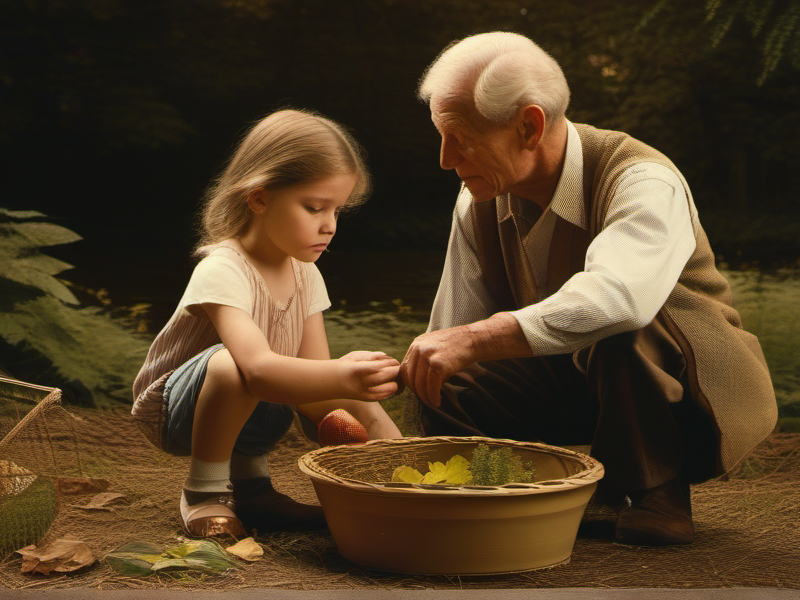
The intuitive response to skill loss is education: create a curriculum, build a class, teach the content. This is the reflex of a society that has outsourced learning to institutions for so long that it has forgotten any other model exists.
The institutional model cannot solve this problem. Here is why.
The Apprenticeship Model vs. the Classroom Model
For the vast majority of human history, practical skills were transmitted through apprenticeship -- a one-to-one or one-to-few relationship between a skilled adult and a learning child, embedded in the context of real work producing real outcomes.
The medieval guild system formalized this ancient pattern. An apprenticeship began at age 12 (sometimes younger for certain trades) and lasted five to seven years [7]. The apprentice lived in the master's household, ate at the master's table, and learned by doing real work alongside a skilled practitioner. The progression was structured: observation, assisted practice, supervised independent practice, and finally unsupervised mastery.
The critical features of this model were:
- Context: The learning occurred in the actual environment where the skill was used. The apprentice blacksmith learned at the forge, not in a classroom discussing the theory of metallurgy.
- Consequence: The work had real outcomes. A poorly made horseshoe would fail on the road. A badly joined timber would collapse. The feedback was immediate, tangible, and impossible to ignore.
- Duration: The seven-year apprenticeship allowed for slow, deep learning. The apprentice did not "cover" blacksmithing in a semester. They lived it for years, accumulating thousands of hours of practice.
- Embodiment: The knowledge was stored in the body -- in muscle memory, in calibrated hand-eye coordination, in the ability to judge temperature by color, consistency by feel, readiness by smell. This embodied knowledge cannot be transmitted by lecture or textbook.
- Relationship: The master-apprentice relationship provided mentorship, accountability, and a model of competent adulthood for the child to emulate.
The modern classroom inverts every one of these features:
- Decontextualization: Learning occurs in an artificial environment (a classroom) divorced from the setting where the skill would be applied. Children learn about agriculture from textbooks, not from soil.
- Absence of consequence: Academic failure carries abstract penalties (bad grades, parental disappointment) but no physical or material consequences. There is no horse that goes lame, no roof that leaks, no food that spoils.
- Compression: Complex skills are compressed into units of weeks or months. The assumption is that understanding can substitute for practice. It cannot.
- Abstraction: Knowledge is stored in the mind as information rather than in the body as capability. A student who can write an essay about woodworking cannot necessarily cut a straight board.
- Institutional relationship: The teacher-student relationship is professional, temporary, and bounded by institutional rules. It lacks the depth, duration, and personal investment of the master-apprentice relationship.
None of this means that classroom education is useless. It excels at transmitting abstract, symbolic, and theoretical knowledge -- mathematics, language, history, scientific principles. But it is structurally incapable of transmitting embodied practical skills. You cannot learn to sharpen a knife from a PowerPoint presentation.
The Unschooling Insight
John Holt, the American educator who coined the term "unschooling" in the 1970s, spent three decades observing how children actually learn versus how institutions assume they learn [8]. His conclusion was radical and, in retrospect, obvious: children learn best when they choose what to learn, when they learn in the context of real life, and when the learning serves a purpose they understand.
Holt observed that children in conventional schools learn to perform -- to produce answers that please teachers -- but they do not necessarily learn to understand or to do. A child who passes a test on plant biology may have no idea how to grow a tomato. A child who earns an A in home economics may not be able to cook dinner. The performance of learning is not the same as learning.
Holt argued that children's activities should be integrated with the life of the family: "The child will take part in activities quite naturally and will absorb an education" [8]. If the family keeps a garden, the child learns gardening. If the family preserves food, the child learns preservation. If the family repairs its own dwelling, the child learns repair. The skills are not taught as academic subjects. They are transmitted as life.
This is, of course, exactly how skills were transmitted for the previous 200,000 years of human existence. Holt was not proposing something new. He was describing what was lost and arguing for its recovery.
Why Schools Avoid Practical Skills
The absence of practical skills from modern curricula is not accidental. It reflects several structural factors:
Liability: Teaching a child to use a knife, start a fire, or operate hand tools creates liability exposure. Schools operate in a legal environment where injury lawsuits are a constant concern. The easiest way to eliminate risk is to eliminate activities that involve risk. Assessment: Practical skills are difficult to assess by standardized tests. You cannot bubble-in the correct way to sharpen a blade. Educational systems that are driven by standardized testing inevitably squeeze out content that cannot be tested by standardized methods. Teacher competence: Many teachers do not possess practical skills themselves. They are products of the same system that eliminated practical knowledge. You cannot teach what you do not know. Economic function: The modern educational system was designed during the industrial era to produce workers for an industrial economy. Workers who can follow instructions, sit still for eight hours, tolerate monotony, and defer to authority. Not workers who can think independently, solve novel problems, and produce value from raw materials. The factory needed compliant labor. The school provided it. The needs have changed. The system has not. Cultural values: In affluent societies, manual labor and practical skills are stigmatized. The cultural message is clear: successful people work with their minds, not their hands. Children absorb this message and devalue practical competence as a marker of lower social status. The irony is that in a genuine crisis -- a power outage, a supply chain disruption, a natural disaster -- the person who can start a fire, purify water, and cook a meal from stored ingredients is the most valuable person in the room.Part III: The Psychology of Competence
The benefits of practical skill acquisition are not limited to the utilitarian value of the skill itself. The process of learning to do something difficult with your hands produces measurable psychological changes that no amount of passive education can replicate.
Bandura's Self-Efficacy Theory
In 1977, Albert Bandura published one of the most influential papers in the history of psychology: "Self-Efficacy: Toward a Unifying Theory of Behavioral Change" [9]. Self-efficacy is the belief in one's capacity to execute the behaviors necessary to achieve a specific outcome. It is not self-esteem (a general feeling of self-worth). It is specific, measurable, and earned.
Bandura identified four sources of self-efficacy, ranked by potency:
- Mastery experiences: The most powerful source. Successfully completing a challenging task builds the belief that you can complete similar tasks in the future. Each success builds on previous successes, creating a positive feedback loop of increasing confidence and increasing capability.
- Vicarious experiences: Watching someone similar to yourself succeed at a task increases your belief that you can succeed at the same task. This is the mechanism through which apprenticeship works -- the apprentice watches the master, sees someone like themselves (or who they could become) performing the skill successfully, and internalizes the belief that the skill is attainable.
- Social persuasion: Being told by a credible person that you can succeed. This is the weakest of the verbal sources -- words cannot substitute for experience -- but encouragement from a competent mentor has measurable effects on performance.
- Physiological and emotional states: Interpreting physical arousal (racing heart, sweating hands) as excitement rather than fear increases perceived self-efficacy. Children who learn to associate the physical sensations of challenge with capability rather than danger become more resilient risk-takers.
The implications for skill training are direct. A child who learns to start a fire has done something difficult and dangerous under controlled conditions. The mastery experience -- "I did this thing that is hard and potentially scary, and I succeeded" -- produces a neurochemical reward (dopamine release in the striatum) that is qualitatively different from the reward of passive entertainment or academic performance [10].
The mastery is specific (I can start a fire) but the self-efficacy generalizes (I can do hard things). Research has consistently shown that self-efficacy built through mastery experiences transfers to other domains. A child who has learned to start a fire approaches the next unfamiliar challenge -- learning to sharpen a knife, learning to identify plants, learning to navigate by stars -- with the foundational belief that difficult things can be mastered through practice.
This is the psychological mechanism by which practical skills build general resilience. It is not the skill itself that matters most. It is the experience of mastery.
Flow and the Building of Competence
Mihaly Csikszentmihalyi's concept of flow, first articulated in 1975 and refined over the following decades, describes a psychological state of total absorption in an activity that is challenging but not overwhelming [11]. The conditions for flow are:
- The task is challenging enough to require full engagement but not so difficult as to cause frustration
- The individual has sufficient skill to engage meaningfully with the challenge
- There are clear goals and immediate feedback
- The individual has a sense of personal control over the activity
Practical skill-building in children creates ideal conditions for flow. Consider a child learning to whittle a spoon from a piece of green wood:
- The task is challenging: the wood resists the blade, the grain requires reading, the curves demand spatial reasoning
- The skill can be calibrated to the child's level: younger children shape rougher forms; older children achieve finer detail
- The goal is clear: produce a spoon that is functional
- The feedback is immediate: the blade either cuts cleanly or it does not; the shape either resembles a spoon or it does not
- The child is in control: the speed, the angle, the depth of cut are all under their direction
Csikszentmihalyi found that people emerge from flow experiences with "feelings of competence and efficacy" [11]. Flow is not just pleasant -- it is formative. The child who enters flow while carving a spoon is building neural pathways of concentration, spatial reasoning, and motor control that will serve them in every subsequent manual task they attempt.
Critically, flow cannot be experienced passively. You cannot achieve flow by watching a video of someone carving a spoon. You cannot achieve flow by reading about spoon carving. Flow requires active engagement with a challenging task. This is why screens -- which provide stimulation without challenge and engagement without consequence -- cannot substitute for practical skill-building.
The Screen Replacement
The average child ages 8-18 in the United States now spends approximately seven and a half hours per day on screens, excluding screen time required for schoolwork [1]. Forty-one percent of teenagers spend more than eight hours per day on screens. Approximately half of children under 2 are already engaging with screens [1].
This screen time directly displaces the time that would previously have been spent in practical activity. The seven hours a day that a pioneer child spent working alongside adults -- learning through observation, participation, and practice -- are now spent consuming digital content that requires no physical skill, produces no tangible outcome, and builds no mastery experience.
The neurological effects are measurable. A large Canadian study of 3-year-olds found that children who spent 2 or more hours per day on screens were 30-90% more likely to show behavioral issues, nearly twice as likely to struggle with vocabulary, and significantly more likely to miss key developmental milestones compared to peers who stayed under an hour [12].
The mechanism is not mysterious. The developing brain learns what it practices. A brain that practices tapping glass for seven hours a day becomes very good at tapping glass. A brain that practices gripping tools, reading terrain, judging distances, reading facial expressions during face-to-face interaction, and calibrating force against resistance develops a fundamentally different architecture -- one built for agency rather than consumption.
Part IV: The Practical Curriculum
What follows is not a school curriculum. It is a framework for integrating practical skill development into the daily life of a family. It is organized by age group, and it assumes that the teaching adults possess or are willing to acquire the skills themselves. If you do not know how to do these things, learn alongside your children. The co-learning is itself a valuable model.
Ages 3-5: The Foundation
The goals at this age are not skill mastery but skill exposure. The child is learning that work exists, that adults do it, that it produces real outcomes, and that the child is welcome to participate.
Core activities:- Kitchen participation: Standing on a step stool at the counter while an adult cooks. Washing vegetables. Tearing lettuce. Stirring batter. Cracking eggs (expect mess; accept mess). Measuring ingredients into cups. The child learns: food comes from ingredients that are transformed by work.
- Garden participation: Watering plants with a small watering can. Dropping seeds into holes. Pulling weeds (with guidance on which plants to pull). Digging in dirt with a small trowel. Harvesting ripe vegetables and fruit. The child learns: food comes from soil, water, and time.
- Animal care: Feeding chickens, collecting eggs (if the family keeps poultry). Filling a water bowl for a dog. Brushing a horse or goat (under supervision). The child learns: other living things depend on human care.
- Fire observation: Sitting with an adult at a campfire or woodstove. Watching the adult build, light, and tend the fire. Learning the safety perimeter (the distance they must maintain). Learning the sound and smell of different stages of combustion. No active fire management at this age -- only observation and proximity.
- Tool exposure: Hammering nails into soft wood with a lightweight hammer. Using a hand drill to make holes. Turning screws with a manual screwdriver. Cutting soft materials (playdough, soft food) with a butter knife, progressing to a serrated child-safe knife [13]. The child learns: tools are extensions of the hand. Tools do what hands cannot.
- Nature awareness: Regular time outdoors in all weather. Naming plants, insects, birds, and animals encountered. Collecting natural materials (stones, leaves, feathers, seed pods). Walking on uneven terrain. Wading in streams. The child learns: the natural world is the primary world. The house is secondary.
- The child participates in real work, not simulated work. They are not pretending to cook -- they are actually cooking, with real ingredients that will be eaten.
- Mess is not a failure. Mess is evidence of participation.
- Speed is irrelevant. A 4-year-old takes twenty minutes to crack three eggs. This is not inefficient. It is training.
- The adult narrates what they are doing and why. "I'm adding wood now because the fire is getting low. See how the coals are orange? When they turn gray, we need more wood."
Ages 6-8: First Competencies
At this age, the child transitions from participant to practitioner. They begin performing tasks independently, with supervision but without hands-on assistance.
Core skills to develop:- Knife use: Introduction to a fixed-blade knife. Proper grip. Cutting away from the body. Whittling a point on a stick. Cutting cordage. Slicing vegetables for cooking. This is the skill that most modern parents resist most strongly and that most traditional cultures introduced earliest. A sharp knife in trained hands is safer than a dull knife in untrained hands. Train the hands [13].
- Fire starting: With matches first, then with a ferro rod (ferrocerium striker). Gathering tinder (dry grass, birch bark, cedar shavings). Building a fire lay (teepee, log cabin, lean-to). Lighting the tinder. Feeding the fire from tinder to kindling to fuel wood. Extinguishing the fire safely. The child should be able to start a fire unassisted by age 8 in dry conditions.
- Cooking from scratch: Not assembling ingredients -- transforming them. Making bread from flour, water, salt, and yeast. Cooking rice or oats on a stove. Frying an egg. Making soup from raw vegetables and bones. Using a woodstove or campfire as a heat source (not just a gas or electric stove).
- Garden management: Planting from seed (not transplants). Spacing. Weeding. Watering on a schedule. Identifying common garden pests. Harvesting at the correct time. Saving seeds from open-pollinated varieties for next year's planting.
- Basic sewing: Threading a needle. Running stitch. Backstitch. Sewing a button. Mending a tear. These are survival skills, not hobbies. The child who can repair a torn garment has extended its useful life by months or years.
- Knot tying: Square knot, bowline, clove hitch, taut-line hitch, sheet bend. Six fundamental knots that cover 90% of practical applications: securing loads, setting up tarps and shelters, tying boats, joining lines of different diameters.
- Water management: Understanding where household water comes from (well, municipal supply, rainwater collection). Identifying natural water sources. Basic understanding of water purification (boiling, filtering). The child should understand that clean water is not automatic -- it requires infrastructure and maintenance.
- Animal husbandry: Daily care of livestock (feeding, watering, mucking). Recognizing basic signs of animal illness (lethargy, loss of appetite, abnormal feces). Egg collection and sorting. Milking (goat or cow, depending on family livestock).
- Navigation: Reading a compass. Orienting a paper map. Identifying cardinal directions by sun position (east in the morning, west in the evening). Identifying the North Star. Following a trail. Navigating from a known point to a destination using landmarks.
- The child performs the task independently under supervision. The adult does not intervene unless safety is at risk. Mistakes are allowed and discussed afterward.
- Each skill is practiced repeatedly over weeks and months, not taught in a single session and moved on from.
- The skills produce real outcomes that the family uses. The bread is eaten. The fire heats the room. The mended shirt is worn.
- Failure is framed as information, not as defeat. "The fire went out because the kindling was too wet. What would you do differently next time?"
Ages 9-12: Working Competence
This is the age of capability. By the end of this period, the child should be able to maintain a household for a weekend in the absence of adults. Not perfectly, not efficiently, but functionally. Food on the table. Fire in the stove. Animals fed and watered. Basic first aid administered. This was the standard in 1900, and there is no biological reason it cannot be the standard now.
Core skills to develop:- Food preservation: Drying herbs and vegetables. Water-bath canning of high-acid foods (tomatoes, pickles, fruit preserves). Fermentation (sauerkraut, kimchi, yogurt). Salt-curing meat. Smoking meat and fish. These skills require understanding of food safety, but the underlying processes are simple and have been performed by children for millennia.
- Butchering: Beginning with a chicken or rabbit -- the simplest and least emotionally challenging animals to process. The complete sequence: humane dispatch, scalding and plucking (poultry) or skinning (rabbit), evisceration, cleaning, and portioning. This is not gratuitous. A child who understands where meat comes from has a fundamentally different relationship with food than a child who believes chicken originates in plastic-wrapped trays.
- Shelter building: Constructing a basic lean-to or debris hut from forest materials. Setting up a canvas or tarp shelter. Understanding the principles of insulation, drainage, and wind protection. Basic carpentry: measuring, marking, sawing straight lines, driving nails, drilling holes, assembling simple joints (butt joint, lap joint).
- Tool maintenance: Sharpening knives and axes with a whetstone. Replacing a broken handle on a hatchet or hammer. Cleaning and oiling hand tools for storage. Filing saw teeth. The child learns that tools are investments that require maintenance, not disposable consumer goods.
- Weather reading: Identifying cloud types (cumulus, stratus, cumulonimbus, cirrus) and their weather implications. Reading wind direction and speed. Understanding barometric pressure changes. Recognizing the signs of approaching storms. This is not academic meteorology -- it is the practical skill of reading the sky to plan the day's work.
- First aid: Wound cleaning and bandaging. Splinting a suspected fracture. Treating burns (cool water, clean dressing). Recognizing signs of infection (heat, redness, swelling, pus). Treating hypothermia (remove wet clothing, insulate, warm gradually). Treating heat exhaustion (shade, cool water, rest). Recognizing and responding to anaphylaxis (if the child carries an EpiPen, they should know how to use it by this age). CPR basics.
- Herbal medicine basics: Identifying at least 10 common medicinal plants in the local ecosystem. Preparing a simple tea (infusion) from dried herbs. Making a poultice from fresh plantain leaf for insect stings and minor wounds. Understanding the concept of contraindications (some herbs interact with medications; some are not safe for children or pregnant women).
- Financial literacy: Not abstract economics -- practical budgeting. If the family sells eggs, garden produce, or handmade goods, the child participates in pricing, sales, record-keeping, and profit calculation. If not, the child manages a small personal budget (allowance or earnings from chores) and makes purchasing decisions with real money.
- Advanced fire skills: Fire starting in adverse conditions (wind, rain, damp materials). Fire starting with a bow drill (friction fire). Fire management for different purposes (cooking fire vs. heating fire vs. signal fire). Understanding fire safety in wooded environments: clearing a fire ring, managing sparks, complete extinguishment protocol.
Ages 13-16: Emerging Independence
At this age, the transition is from working competence to functional independence. The child is not a small adult, but they are approaching the threshold of capability that was historically considered the beginning of adult contribution.
Core skills to develop:- Complete food cycle management: Planning, planting, tending, harvesting, preserving, storing, preparing, and serving food from a garden or small farm. Understanding crop rotation, soil amendment (composting, cover cropping, manuring), pest management (companion planting, physical barriers, biological controls), and seed saving.
- Livestock management: Breeding decisions, gestation monitoring, birth assistance, neonatal care, disease prevention (vaccination, deworming), pasture rotation, hay management, winter feeding programs. If the family keeps large livestock (cattle, horses), the child should be able to manage daily care independently.
- Construction and repair: Building a simple structure (toolshed, chicken coop, raised bed, cold frame) from raw materials. Roofing basics (shingle, metal, or thatch). Plumbing basics (pipe joining, leak repair, faucet replacement). Electrical basics (circuit identification, fuse/breaker management, wire stripping and connection). These skills do not make the child a licensed contractor. They make the child someone who can keep a home functional.
- Mechanical maintenance: Engine maintenance for common power equipment (lawn mower, chainsaw, generator, vehicle). Oil changes. Air filter replacement. Spark plug replacement. Belt inspection and replacement. Tire changing. Basic troubleshooting (won't start: check fuel, check spark, check air).
- Advanced herbal medicine: Making tinctures, glycerites, salves, and infused oils. Understanding extraction methods (alcohol, glycerin, oil, water) and which solvents extract which compound classes. Maintaining a home apothecary with preparations for common ailments: digestive upset, respiratory congestion, skin inflammation, minor pain, insomnia, anxiety.
- Communication and leadership: Teaching younger children the skills they have mastered. Leading a work team (siblings or peers) in a project. Making decisions under time pressure. Delegating tasks based on the capabilities of the team members.
- Long-term planning: Understanding seasonal cycles and planning work accordingly. Maintaining a household calendar. Budgeting for annual expenses (seed, feed, fuel, maintenance). Setting goals and tracking progress toward them.
Part V: The Methodology -- How to Teach Without Teaching
The most effective skill transmission does not look like teaching. It looks like living.
The "Alongside" Method
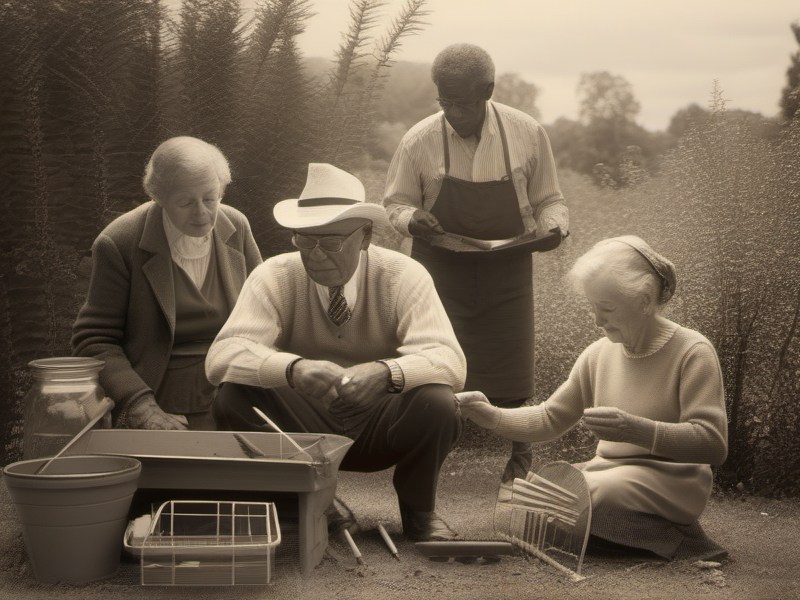
The single most important principle of skill transmission to children is proximity. The child must be physically present while the adult performs the work. Not watching a video of the work. Not reading about the work. Standing beside the adult, breathing the same air, hearing the real sounds, smelling the real smells, feeling the real temperature.
This is not passive observation. It is environmental immersion. The child's mirror neurons fire in patterns that match the adult's motor sequences. The child's vestibular system calibrates to the physical forces involved. The child's olfactory memory stores the smell of pine resin, hot metal, rising bread, fermented vegetables, wet soil after rain.
None of this happens through a screen.
The practical implementation is simple: bring your children to the work. If you are splitting wood, they stand at a safe distance and watch. Then they stack the split wood. Then they position the rounds on the block. Then, when their coordination and strength are sufficient, they swing the maul. The progression takes years. That is the point.
The "Invitation, Not Instruction" Approach
Children are biologically programmed to resist coercion and to pursue interest. This is not a design flaw -- it is an adaptation. A child who can only learn what they are forced to learn is a child who cannot adapt to novel environments. A child who follows their own curiosity is a child who will explore, experiment, and innovate.
The practical application: do not announce "Today we are going to learn how to identify edible plants." Instead, take a walk. Stop at a plant. Say, "This is yarrow. Your great-grandmother made tea from the flowers for fevers. See how the leaves look like tiny ferns?" If the child is interested, continue. If not, walk on. The information has been offered. It will either take root or it will not. If it does not take root today, offer it again next season. Children circle back to information when they are developmentally ready for it.
This approach requires patience that the institutional model does not demand. Schools operate on calendars. Nature operates on readiness. The two are not compatible.
The "Real Stakes" Principle
A skill learned without consequences is a skill learned superficially. The reason apprenticeship produced masters and classrooms produce students is that the apprentice's work had real consequences. A badly forged horseshoe caused a horse to go lame. A poorly joined barrel leaked. The feedback was not a grade on a paper -- it was a failure in the real world that required a real response.
For children, the real stakes should be age-appropriate but genuine:
- The 5-year-old who forgets to water the garden sees wilted plants. Not a lecture about responsibility -- wilted plants. The connection between action and consequence is direct and visible.
- The 8-year-old who builds a fire that goes out has a cold evening. Not a punishment -- a cold evening. Next time, they gather more dry tinder.
- The 12-year-old who over-salts the canned pickles produces pickles that nobody wants to eat. The family's winter supply is diminished. The consequence is not abstract -- it is real, personal, and motivating.
These are not harsh consequences. They are natural consequences. They are the consequences that taught every human being who ever lived before the invention of institutional schooling.
The "No Rescue" Boundary
The hardest part of teaching children practical skills is restraining the adult impulse to intervene. When a child is struggling to start a fire and the tinder keeps crumbling, the adult instinct is to step in, fix it, and demonstrate the correct technique. This is efficient. It is also destructive.
The struggle is the training. The frustration is the signal that the brain is reorganizing to solve the problem. If the adult intervenes at the moment of maximum cognitive effort, they deprive the child of the mastery experience that Bandura identified as the most powerful source of self-efficacy [9].
The rule: do not rescue a child from a problem that will not injure them. Let the fire go out. Let the bread fail. Let the knot slip. Then ask: "What happened? What would you try differently?" The child who solves the problem themselves -- even if it takes three times as long as the adult's intervention would have -- gains something that no amount of instruction can provide: the lived knowledge that they can figure things out.
There are exceptions. Safety overrides pedagogy. A child heading toward a genuinely dangerous outcome (a falling tree, an out-of-control fire, a serious cut) is rescued immediately and the teaching happens afterward. But the threshold for intervention should be much higher than most modern parents are comfortable with. A small cut is not an emergency. A burned fingertip is not a crisis. These minor injuries are the body's most effective teachers.
Part VI: The Generational Contract
There is a concept in traditional cultures that has no precise equivalent in modern Western thought. The Japanese call it dentou -- the handing down. The Latin root is tradere -- to hand over, from which we get the word "tradition." It is the idea that each generation holds knowledge in trust for the next, and that the failure to transmit that knowledge is a breach of an unspoken contract.
Your great-grandparents held up their end of the contract. They taught their children how to survive, how to produce, how to maintain, how to repair. Those children taught their children some of what they knew, but less, because the economy no longer demanded it. And those children -- our parents -- taught us less still, because the consumer economy had replaced self-production so thoroughly that the skills seemed unnecessary.
Now we stand at the end of a broken chain, holding the frayed end, and we can see what was lost.
The Recovery Is Possible
The knowledge is not gone. It is diminished but not extinct. It survives in:
- Books: The old agricultural extension bulletins, the 19th-century household manuals, the Foxfire series (which recorded Appalachian folk knowledge in the 1960s and 70s before the last generation of practitioners died), the military survival manuals, the scout handbooks.
- People: In every community there are still individuals -- usually elderly -- who possess fragments of the old knowledge. The 85-year-old woman who still cans tomatoes. The 90-year-old man who can read the sky. The 70-year-old farmer who still sharpens his own tools. These people are a non-renewable resource. When they die, their embodied knowledge dies with them unless someone has asked them to teach it.
- Practice communities: Homesteading groups, permaculture communities, traditional crafts guilds, heritage breed associations, wilderness skills schools, and maker spaces. These communities are actively recovering and practicing the old skills, and many welcome families with children.
- Your own hands: The skills are not magic. They are physical actions that can be learned by any human body with functional hands, eyes, and a brain. You do not need a special talent. You need practice. If you cannot start a fire, learn to start a fire. If you cannot sharpen a knife, learn to sharpen a knife. If you cannot grow a tomato, learn to grow a tomato. Then teach your children what you have learned. You will not be an expert. You do not need to be an expert. You need to be a beginner who is willing to practice in front of your children, to fail in front of your children, and to persist in front of your children.
The last point is perhaps the most important. Children do not need perfect teachers. They need present teachers -- adults who are visibly engaged in the process of learning and doing, who model persistence through difficulty, who demonstrate that competence is earned through practice and not granted by credentials.
What Is at Stake
The argument for teaching children practical skills is not merely nostalgic, nor is it merely practical. It is existential.
A population that cannot feed itself is dependent. A population that cannot repair its own infrastructure is vulnerable. A population that cannot produce goods from raw materials is captive to supply chains that can be disrupted by a pandemic, a war, a natural disaster, or an economic crisis.
We have already seen what happens when supply chains break. In 2020, grocery store shelves emptied within days. Meat processing plants closed. Seeds sold out across the country as millions of people tried to grow food for the first time in their lives -- and most of them failed, because they lacked the skills that their great-grandparents considered basic [14].
The next disruption will come. It may be economic, climatic, political, or epidemiological. The children who have been taught to produce, preserve, build, and repair will navigate it from a position of competence. The children who have been taught only to consume will navigate it from a position of helplessness.
This is not a hypothetical. It is a certainty. The only variable is timing.
The Minimum Viable Skill Set
If the full curriculum outlined above seems overwhelming -- and it is, taken all at once -- start with the minimum viable skill set. These are the five skills that provide the highest ratio of survival value to learning time:
- Fire: The ability to start, maintain, and safely extinguish a fire using available materials. This single skill provides warmth, cooking capability, water purification, light, signaling, and psychological comfort. It is the foundation of all other self-sufficiency skills.
- Water: The ability to identify, collect, and purify water from natural sources. Boiling (which requires fire), filtering through sand and charcoal, and basic solar disinfection. Without clean water, nothing else matters.
- Food: The ability to grow, forage, hunt, or fish for food, and to preserve it for storage. Start with a garden. Even a 4x4 raised bed producing tomatoes, beans, squash, and herbs teaches the fundamental cycle of planting, tending, harvesting, and saving seed.
- Shelter: The ability to construct or maintain a weather-resistant enclosure. This begins with setting up a tarp and progresses to basic carpentry. The child who can keep rain off their head can survive almost anything.
- First Aid: The ability to stop bleeding, stabilize a fracture, treat a burn, and recognize when professional medical care is needed. This does not require paramedic training. It requires a basic first aid kit, a calm temperament, and practice with simulated scenarios.
A child who possesses these five skills by age 12 is better prepared for an uncertain future than 95% of the adult population of any industrialized nation. That is not an aspiration. That is a measurable, achievable, and historically normal standard of competence.
Part VII: Beginning Tomorrow
The distance between the twelve-year-old on the Nebraska homestead in 1890 and the twelve-year-old in Omaha in 2026 is exactly three generations. One hundred and thirty-six years. Less than two human lifetimes. In that span, a civilization went from universal practical competence to universal practical dependence.
The reversal does not require three generations. It requires one.
It requires one family deciding that screens will occupy two hours of the day, not seven. That the remaining five hours will be spent outside, in the kitchen, in the garden, in the workshop, at the forge, at the hearting fire, with hands in soil and tools in hand and animals underfoot.
It requires one adult deciding that they will learn alongside their children -- that the absence of their own skill is not a disqualification but a starting condition. That they will burn the first loaf of bread, fail to start the first fire, kill the first tomato plant, and persist.
It requires one child discovering that their hands can make things. That the world responds to their effort. That competence is earned, not downloaded. That the feeling of starting a fire in the rain -- the primal, wordless satisfaction of producing warmth and light from raw material and knowledge -- is unlike any sensation that a screen will ever provide.
This is not a political argument. It is not a left or right position. It is not a rejection of modernity. It is a statement about what human children need to become capable adults: the experience of doing real things that have real consequences in the real world.
Your great-grandparents understood this. They did not need research papers to tell them. They simply lived it, and their children lived it, and the knowledge flowed like water downhill from one generation to the next -- until the pipe was cut.
It is time to reconnect it.
Start tomorrow. Pick one skill. Any skill. And do it with a child.
The memory of generations is not stored in books. It is stored in hands. And hands that do not practice forget.
References
[1] Monster Math / Lurie Children's Hospital / CDC. "Screen Time Statistics for Children, 2024-2025." Compiled from National Health and Nutrition Examination Survey (NHANES) data and Kaiser Family Foundation media use studies. Average daily screen time for children ages 8-18: 7.5 hours. 41% of teenagers exceed 8 hours daily. 49% of children ages 0-2 engage with screens.
[2] Reyes-Garcia, V., et al. "Evidence of Traditional Knowledge Loss Among a Contemporary Indigenous Society." Proceedings of the National Academy of Sciences, 110(30): 12081-12086, 2013. PMC 3837211.
[3] Bureau of Labor Statistics. "History of Child Labor in the United States -- Part 1: Little Children Working." Monthly Labor Review, 2017. Documents the scope and nature of child labor in agricultural and domestic settings, 1850-1920.
[4] Job Carr Museum. "A Day in the Life of a Pioneer Child: Morning Routines, Tacoma in the 1870s." Historical reconstruction from primary sources, 2023.
[5] Christian Science Monitor. "What Kids Did on the Western Frontier." Historical feature, 1998. Based on homesteader diaries and oral histories from the Nebraska, Kansas, and Dakota territories.
[6] HireAHelper. "Generational Knowledge Gaps: How Skill Sets Change with Age." Survey of 1,000+ American parents across generational cohorts, 2024. Documents differential rates of skill transmission from Boomers through Millennials.
[7] Brewminate / UK House of Commons Library. "The Medieval Guild: Apprentice, Journeyman, and Master." Historical analysis of guild apprenticeship structures in England and Continental Europe, 12th-17th centuries. Apprenticeships typically began at age 12 and lasted 5-7 years.
[8] Holt, J.C. Instead of Education: Ways to Help People Do Things Better. E.P. Dutton, 1976. See also: Holt, J.C. How Children Learn. Revised edition, Da Capo Press, 1995. The philosophical foundation of unschooling: children learn best through self-directed engagement with real-world activities integrated into family life.
[9] Bandura, A. "Self-Efficacy: Toward a Unifying Theory of Behavioral Change." Psychological Review, 84(2): 191-215, 1977. The foundational paper identifying mastery experiences as the most potent source of self-efficacy.
[10] Wise, R.A. "Dopamine, Learning and Motivation." Nature Reviews Neuroscience, 5(6): 483-494, 2004. Documents the neurochemical reward pathway activated by mastery experiences: dopamine release in the striatum following successful completion of challenging tasks.
[11] Csikszentmihalyi, M. Flow: The Psychology of Optimal Experience. Harper & Row, 1990. Originally presented in Beyond Boredom and Anxiety (1975). Defines flow as total immersion in an optimally challenging activity, producing feelings of competence and intrinsic motivation.
[12] Madigan, S., et al. "Association Between Screen Time and Children's Performance on a Developmental Screening Test." JAMA Pediatrics, 173(3): 244-250, 2019. Canadian cohort study of 2,441 children ages 2-5. Children with 2+ hours daily screen time at 36 months showed significantly worse developmental outcomes at 60 months.
[13] American Knife and Tool Institute. "Kids and Knives: Teaching Children Knife Safety." Educational guide for age-appropriate introduction to cutting tools. Butter knife at age 2-3, supervised serrated knife at 4-6, metal knife with instruction at 7-9, progressive independence at 10+.
[14] Held, L. "COVID-19 Launched a Gardening Boom. Will It Last?" Civil Eats, August 2020. Documents the 200-300% increase in seed sales during the first months of the COVID-19 pandemic and the subsequent high failure rate among first-time gardeners lacking basic horticultural skills.
Comments (0)
No comments yet.
Log in to comment.