Gravity as a Battery: How Elevation Differences Store Energy for Your Homestead
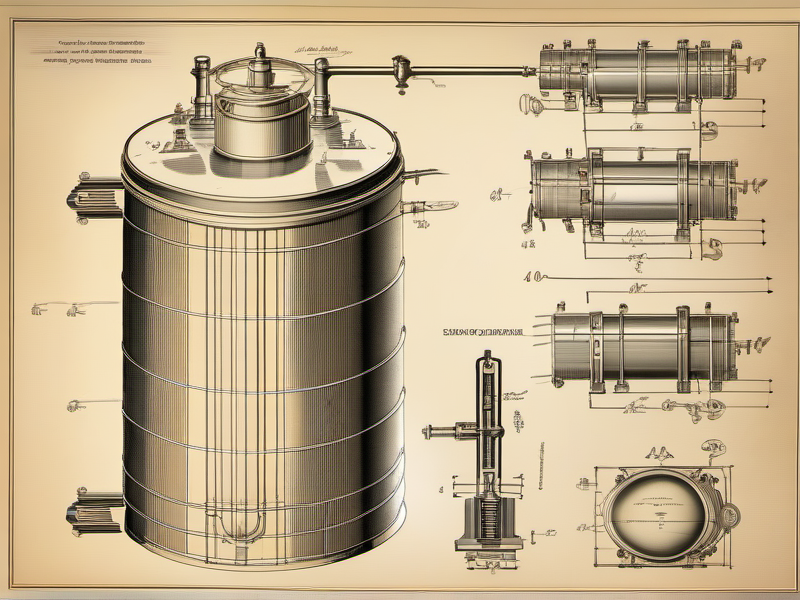
Every hill on your property is a battery. Every stream is a generator. Pumped-storage hydroelectricity powers 95% of the world's grid-scale energy storage -- and the same physics works at homestead scale. Here's how to store energy without lithium, cobalt, or a single battery cell.
Part I: The Lithium Delusion
You have been sold a lie wrapped in a glossy spec sheet.
The lie says this: to store the energy your solar panels produce during the day so that you can use it at night, you must purchase a bank of lithium-ion batteries manufactured from cobalt mined by children in the Democratic Republic of the Congo, refined in Chinese chemical plants, shipped across two oceans in a diesel-burning container vessel, and installed in your basement by a certified technician who charges $150 per hour. The batteries will cost you $8,000 to $15,000 for a modest 10-kWh system. They will degrade to 80% of their original capacity within 10 years. They will require a Battery Management System -- a circuit board you cannot repair -- to prevent thermal runaway, which is a polite term for "your basement catches fire." And when they die, they will become hazardous waste that no landfill in your county will accept.
That is the modern solution to energy storage. It is elegant, compact, and utterly dependent on a global supply chain that could fracture at any point between the mine in Kolwezi and the UPS truck in your driveway.
There is another solution. It is 150 years old. It requires no rare minerals, no circuit boards, no firmware updates, and no supply chain longer than the distance between your upper pasture and your lower pond. It stores energy as the weight of water held at height. It returns that energy as the kinetic force of water falling through a pipe. Its round-trip efficiency is 70-85%. Its degradation rate over 50 years is effectively zero. Its maintenance requirements are a wrench, a strainer, and the ability to walk uphill.
That solution is pumped-storage hydroelectricity -- the same technology that stores 95% of the world's grid-scale energy, scaled down from a utility with a billion-dollar budget to a homesteader with a slope, a shovel, and a few hundred dollars in pipe fittings.
The modern off-grid community has been conditioned to think in terms of battery banks, charge controllers, and amp-hours. These are useful concepts, but they are not the only concepts. Before the first lead-acid cell was commercialized in 1859, before the first dynamo was built, before the word "electricity" entered common usage, civilizations stored energy as mass at height. They called it a dam. They called it a millpond. They called it a cistern on a hill. They did not call it a battery, because the word had not been invented yet. But that is exactly what it was.
This article will teach you the physics, the engineering, and the step-by-step protocol to build your own gravity battery. It will not require a engineering degree. It will not require a permit in most rural jurisdictions. It will require you to understand a single equation -- E equals m times g times h -- and to own a tape measure, a garden hose, and enough ambition to dig.
Part II: The Oldest Battery on Earth -- A History of Stored Water
The principle of storing energy as elevated water is older than written language. It is, in a meaningful sense, the first energy technology that humans deliberately engineered.
The Roman Precedent
The Roman aqueduct system, at its peak, delivered approximately 1.2 million cubic meters of water per day to the city of Rome through eleven major aqueducts spanning a combined length of over 500 kilometers [1]. The system required no pumps. It exploited a gradient -- a carefully surveyed fall of a few millimeters per horizontal meter -- to move water from mountain springs to city fountains by gravity alone. The engineers who designed these systems understood, implicitly, that water at height contains stored work. Every drop that reached Rome carried with it the potential energy of its elevation above the city. When that water turned a millstone at the base of the Janiculum Hill, it was converting gravitational potential into mechanical work -- the same conversion that a modern micro-hydro turbine performs.
The Barbegal watermill complex near Arles, France, built in the 2nd century AD, is the most dramatic surviving example. Sixteen overshot waterwheels, arranged in two parallel cascades of eight, ground grain using the energy of water falling through a total vertical drop of approximately 18 meters [2]. The complex produced an estimated 4.5 tonnes of flour per day -- enough to feed the 12,500 inhabitants of Roman Arelate. It was, functionally, a gravity-powered factory.
The Medieval Millpond
The medieval period refined the concept further. By the Domesday Book survey of 1086, England alone recorded 5,624 watermills [3]. Most operated on a simple but effective storage principle: a dam impounded a stream overnight, creating a millpond. At dawn, the miller opened the sluice gate, and the stored water flowed through the wheel, grinding grain until the pond drained. This is pumped storage without the pump -- the stream itself did the work of refilling the reservoir. But the principle is identical: store water at height during a period of surplus (nighttime flow), release it during a period of demand (the workday).
The Cornish Water Balance
The copper and tin mines of 19th-century Cornwall invented a gravity-storage device of startling elegance: the water-balanced incline. A large bucket at the top of a shaft was filled with water. Its weight, descending through the shaft, hauled a loaded ore car up a parallel track. At the bottom, the bucket was emptied and hauled back up by the next descending load. The system required no steam engine, no coal, and no fuel of any kind beyond the water piped from a surface reservoir. Some Cornish mines operated water-balanced hoists for decades with maintenance costs that amounted to greasing the cables and replacing the buckets [4].
The Birth of Pumped Storage
The first purpose-built pumped-storage hydroelectric facility was constructed in 1907 in the canton of Glarus, Switzerland -- the Engeweiher station. Swiss engineers recognized that the Alpine terrain offered enormous vertical drops and that surplus hydroelectric power during off-peak hours could be used to pump water uphill, storing energy for peak demand. The concept spread through the Alps, then to Scandinavia, then to the world [5].
By the 1960s, pumped storage had become the dominant form of grid-scale energy storage. Today, the International Hydropower Association reports a global installed capacity of approximately 200 GW, with over 9,000 GWh of energy storage capacity worldwide [6]. This represents over 94% of all installed grid-scale energy storage on the planet -- dwarfing lithium-ion, compressed air, and every other technology combined.
The largest single facility is the Fengning Pumped Storage Power Station in Hebei Province, China, with a generating capacity of 3,600 MW, which surpassed the Bath County Pumped Storage Station in Virginia -- previously the world's largest -- in 2023 [7]. Bath County, operated by Dominion Energy and FirstEnergy, still generates 3,003 MW from six reversible turbine-generator units, each rated at approximately 500 MW. Its upper and lower reservoirs are separated by 380 meters (1,260 feet) of vertical drop. Its upper reservoir holds 43.9 million cubic meters of water. When all six units are generating, the facility can power roughly 750,000 homes. The station was built between 1977 and 1985 at a cost of $1.6 billion, and after four decades of continuous operation, its civil works -- the dams, tunnels, and penstocks -- show no significant degradation [8].
That is the key number. Four decades. No degradation. Try saying that about a lithium battery pack.
Why You Have Not Heard of This
The reason pumped storage is invisible to the homesteading community is not technical. It is cultural. The off-grid industry is dominated by companies that sell batteries and solar panels. Their economic incentive is to convince you that energy storage requires a product you must purchase from them, repeatedly, every 10 to 15 years. Gravity storage requires a one-time investment in civil works -- pipes, tanks, earthwork -- and then it runs for decades on water and physics. There is no recurring revenue model. There is no subscription. There is no firmware update that bricks your system until you pay for the upgrade.
This does not mean gravity storage is appropriate for every homestead. It is not. It requires elevation change. It requires water. It requires space. But for the millions of rural properties that have a hill, a stream, or even a well and a slope, it is the most durable, the most repairable, and the most independent energy storage technology available.

Part III: The Physics of Potential -- One Equation to Rule Them All
The energy stored in a mass of water elevated to a height h above a reference point is given by the most fundamental equation in gravitational mechanics:
E = m x g x hWhere:
- E = energy stored, in joules (J)
- m = mass of water, in kilograms (kg)
- g = gravitational acceleration, 9.81 m/s² at sea level
- h = vertical height difference between upper and lower reservoir, in meters (m)
This equation is not an approximation. It is not a model. It is a direct consequence of Newtonian mechanics, verified to extraordinary precision by every physics experiment conducted since 1687. It tells you, with absolute certainty, how much energy you can store in a given volume of water at a given height.
Converting to Practical Units
One liter of water has a mass of exactly one kilogram. One joule is one watt-second. One kilowatt-hour (kWh) equals 3,600,000 joules.
Therefore:
E (kWh) = (V x h x 9.81) / 3,600,000Where V is the volume of water in liters and h is the vertical drop in meters.
Let us work through the math at scales that matter to a homesteader.
Example 1: The Modest System
A 10,000-liter tank (approximately 2,642 US gallons) elevated 10 meters above a lower reservoir:
E = (10,000 x 10 x 9.81) / 3,600,000 = 0.273 kWh
That is approximately 273 watt-hours -- enough to run a 100-watt load for 2.7 hours, or five LED bulbs at 10 watts each for 5.5 hours. Not impressive. Not useless, either. That is an evening of light when the grid is down and the batteries are dead.
Example 2: The Working Homestead
A 50,000-liter reservoir (approximately 13,209 US gallons) at 20 meters of head:
E = (50,000 x 20 x 9.81) / 3,600,000 = 2.725 kWh
That is nearly three kilowatt-hours -- enough to run a modern efficient refrigerator for 24 hours, or to power a laptop, LED lighting, and a radio for an entire night.
Example 3: The Serious Installation
A 200,000-liter reservoir (approximately 52,834 US gallons -- a modest farm pond) at 30 meters of head:
E = (200,000 x 30 x 9.81) / 3,600,000 = 16.35 kWh
Now we are in meaningful territory. Sixteen kilowatt-hours is comparable to a Tesla Powerwall 2 (13.5 kWh usable). It is enough to run a full household overnight, including a well pump, lighting, a chest freezer, and communications equipment. And unlike the Powerwall, this system does not degrade. It does not require replacement. The water does not wear out.
The Critical Variable: Head Height
Notice that in the equation, height (h) appears as a simple multiplier. Doubling the height doubles the energy stored for the same volume of water. Doubling the volume also doubles the energy, but volume is expensive -- you need bigger tanks, more excavation, more water. Height is free. A hill is a hill. A cliff is a cliff. The terrain you already own determines how effective your gravity battery will be.
This is why site selection matters more than any other variable. A property with 50 meters of elevation change between a ridge and a valley floor can store five times the energy of a property with 10 meters of change, using the same volume of water. Before you buy a single pipe fitting, walk your land with a topographic map and identify the maximum vertical drop you can exploit.
Measuring Head Height
There are three field methods for measuring the vertical drop between your proposed upper and lower reservoir sites:
Method 1: Water Level (Cost: $5). Fill a clear garden hose with water, ensuring no air bubbles. Hold one end at the upper site and the other at the lower site. The water will find its own level. Measure the vertical distance between the water surface in the hose at the upper end and the hose end at the lower site. This is your head. Accuracy: ±5 cm over 100 meters of horizontal distance. Method 2: Clinometer and Tape (Cost: $30). A clinometer measures the angle of slope. Multiply the sine of the angle by the horizontal distance to get the vertical drop. A smartphone inclinometer app works in a pinch. Accuracy: ±3% for slopes under 30 degrees. Method 3: GPS or Survey-Grade Altimeter (Cost: $0 if you already own a smartphone). Smartphone GPS altitude readings are accurate to approximately ±3 meters under open sky. For a rough initial assessment, this is sufficient. For final design, use Method 1 or hire a surveyor.Power Output: Flow Rate Matters
The equation above tells you how much total energy is stored. But power -- the rate at which you can extract that energy -- depends on flow rate. The power equation is:
P (watts) = Q x h x g x nWhere:
- Q = flow rate in liters per second (L/s)
- h = head height in meters
- g = 9.81 m/s²
- n = turbine efficiency (typically 0.60 to 0.85)
P = 5 x 20 x 9.81 x 0.70 = 686 watts
At that power output, a 50,000-liter upper reservoir would drain in 10,000 seconds (2.78 hours), delivering approximately 1.9 kWh of usable electricity.
If you want higher power, you need higher flow rate -- which means larger pipes and a larger turbine. If you want longer duration, you need more water -- a bigger reservoir. The two variables are independent. You can design for high power / short duration (like a backup for a well pump startup surge) or low power / long duration (like overnight LED lighting and refrigeration).
Round-Trip Efficiency
No energy storage system is 100% efficient. Energy is lost at two conversion points: pumping water uphill and generating electricity as water flows back down.
- Pump efficiency (electrical to hydraulic): 60-80%, depending on pump type and operating point
- Turbine efficiency (hydraulic to electrical): 65-85%, depending on turbine type and head
- Net round-trip efficiency: 39-68% for homestead-scale systems; 70-85% for well-designed utility-scale systems
The U.S. National Renewable Energy Laboratory (NREL) reports a central estimate of 80% round-trip efficiency for utility-scale pumped hydro [9]. At homestead scale, expect 50-65% with good equipment and proper pipe sizing. This is lower than lithium-ion batteries (85-95% round-trip) but higher than lead-acid batteries (75-85%) and dramatically higher than hydrogen electrolysis-to-fuel-cell systems (30-40%).
The critical advantage is not in efficiency per cycle -- it is in cycle life. A lithium battery loses capacity with every charge-discharge cycle. After 3,000-5,000 cycles (roughly 10-15 years of daily cycling), it must be replaced. A gravity battery loses no capacity. Ever. The thousand-and-first cycle delivers the same energy as the first. The ten-thousandth cycle delivers the same energy as the first. The pipes may need repainting. The turbine bearings may need greasing. The water does not care how many times you have lifted it.
Part IV: Turbine Selection -- Pelton, Turgo, and Crossflow
The turbine converts the kinetic energy of falling water into rotational energy, which a generator converts into electricity. Selecting the right turbine type for your site conditions is the single most important equipment decision you will make.
The Pelton Wheel
Invented by Lester Pelton in 1878 during the California Gold Rush, the Pelton wheel is an impulse turbine designed for high-head, low-flow sites. A high-pressure jet of water strikes a series of split buckets mounted on a wheel, transferring nearly all of its kinetic energy to the wheel before exiting at near-zero velocity. The bucket design -- with a central ridge that splits the jet and deflects it back on itself at nearly 180 degrees -- is a masterpiece of mechanical engineering that achieves efficiencies of 85-92% at design flow [10].
Ideal conditions: Head above 20 meters. Flow rate 0.5 to 10 L/s per jet. The Pelton is the workhorse of micro-hydro in mountainous terrain. If you have a steep hillside or a cliff, this is your turbine. Homestead application: A single-jet Pelton wheel running at 30 meters of head and 3 L/s flow, with 80% efficiency, produces:P = 3 x 30 x 9.81 x 0.80 = 706 watts continuous
That is 17 kWh per day -- more than the average US household's daily consumption of approximately 30 kWh, and more than sufficient for an off-grid homestead running efficient appliances.
Cost: PowerSpout, a New Zealand manufacturer that sells direct to DIY customers, offers Pelton turbines (their PLT model) starting at approximately $1,500-$2,500 USD depending on configuration. These units are rated for heads of 3-130 meters and flows of 0.25-8 L/s per turbine, with efficiencies up to 60% at the turbine output [11]. Multiple units can be stacked on a single penstock for higher output.The Turgo Wheel
The Turgo turbine is a modified impulse turbine in which the water jet strikes the buckets at an angle (typically 20 degrees from the plane of the wheel) rather than tangentially as in the Pelton. This allows the Turgo to handle higher flow rates at lower heads, because the entering and exiting water do not interfere with each other. Turgo turbines operate efficiently at heads from 10 to 50 meters and can handle flows up to 20 L/s per runner.
Homestead application: If your site has moderate head (10-25 meters) and a reliable stream with flow rates above 5 L/s, the Turgo is likely your best option. It is more forgiving of variable flow conditions than the Pelton and requires less precise nozzle alignment.Turgo turbine efficiency under optimal conditions has been observed at over 80% at a speed ratio of approximately 0.46, which is excellent for pico- and micro-hydro applications [12].
The Crossflow (Banki-Michell) Turbine
For low-head sites (3-15 meters) with relatively high flow rates (10-100 L/s), the crossflow turbine is the appropriate choice. Water enters through a rectangular inlet at the top of a cylindrical drum composed of curved blades, passes through the blades twice (hence "crossflow"), and exits at the bottom. Efficiency is lower than Pelton or Turgo (65-80%), but the crossflow has two decisive advantages at low head: it is self-cleaning (debris passes through rather than jamming), and it can be built from simple materials in a workshop.
Homestead application: If you have a wide, shallow stream with only 5 meters of drop across your property, the crossflow turbine allows you to extract useful power where Pelton and Turgo cannot operate. A 5-meter head with 20 L/s flow at 70% efficiency produces:P = 20 x 5 x 9.81 x 0.70 = 687 watts
The Pump-as-Turbine (PAT) Option
For the budget-conscious homesteader, there is a fourth option: using a centrifugal pump in reverse as a turbine. When water is forced through a centrifugal pump backwards -- entering through the discharge port and exiting through the suction port -- the impeller spins the motor shaft, generating electricity. Efficiency is 50-70% -- lower than a purpose-built turbine, but the cost is dramatically lower. A used 1-HP centrifugal pump from a surplus dealer costs $50-$150. Pair it with a permanent-magnet DC motor or an induction generator, and you have a functional turbine for under $200.
The disadvantage is that a PAT operates efficiently only at a narrow range of head and flow. Outside that range, efficiency drops rapidly. For a pumped-storage system where flow and head are controlled and constant, this is less of a problem than for a run-of-river installation with variable flow.
Part V: Penstock Design -- The Pipe That Makes or Breaks the System
The penstock is the pipe that carries water from the upper reservoir to the turbine. It is the artery of your gravity battery, and its design determines whether you lose 5% of your energy to friction or 40%.
Pipe Sizing: The Velocity Rule
The governing principle of penstock design is to keep water velocity below 2 meters per second (approximately 6.6 feet per second) in the pipe. Above this velocity, friction losses increase rapidly, turbulence becomes significant, and water hammer -- the destructive pressure surge caused by sudden flow changes -- becomes dangerous.
The relationship between flow rate, velocity, and pipe diameter is:
Q = A x vWhere Q is flow rate (m³/s), A is the cross-sectional area of the pipe (m²), and v is velocity (m/s).
For a circular pipe: A = pi x (d/2)²
Rearranging to solve for minimum pipe diameter:
d = sqrt(4Q / (pi x v_max)) Example: For a flow rate of 5 L/s (0.005 m³/s) and a maximum velocity of 1.5 m/s:d = sqrt(4 x 0.005 / (3.14159 x 1.5)) = sqrt(0.00424) = 0.0652 m = 65 mm
The nearest standard pipe size is 75 mm (3 inches). Always round up to the next standard size. Undersizing the penstock is the single most common mistake in micro-hydro installations.
Friction Losses: The Hazen-Williams Equation
Friction between the flowing water and the pipe wall consumes energy. The Hazen-Williams equation calculates this loss:
h_f = (10.67 x L x Q^1.852) / (C^1.852 x d^4.87)Where:
- h_f = head loss due to friction (meters)
- L = pipe length (meters)
- Q = flow rate (m³/s)
- C = roughness coefficient (150 for HDPE, 140 for PVC, 120 for old steel)
- d = pipe internal diameter (meters)
h_f = (10.67 x 200 x 0.005^1.852) / (150^1.852 x 0.075^4.87)
Working through the numbers: h_f is approximately 3.4 meters. On a 20-meter gross head, that is a 17% friction loss -- too high. Stepping up to 100 mm (4-inch) pipe reduces the loss to approximately 0.7 meters (3.5%), which is excellent.
This calculation illustrates why penstock design matters more than turbine selection. A 90%-efficient Pelton turbine on a poorly sized penstock that loses 30% of its head to friction delivers worse performance than a 65%-efficient crossflow turbine on a properly sized penstock with 5% friction loss.
Pipe Materials
HDPE (High-Density Polyethylene): The best all-around choice for homestead penstocks. Flexible, corrosion-resistant, UV-stable in black formulations, and available in continuous coils up to 300 meters, eliminating joints. Pressure ratings of 10-16 bar (145-232 psi) cover most micro-hydro applications. Hazen-Williams C-factor: 150. Cost: approximately $2-$5 per meter for 75-100 mm diameter. PVC (Schedule 40 or SDR-21): Cheaper than HDPE but rigid, requiring joints every 6 meters. Joint failures are the leading cause of penstock leaks in PVC installations. Do not use PVC on the turbine outlet side where vibration can crack cemented joints. Hazen-Williams C-factor: 140. Cost: approximately $1-$3 per meter for 75-100 mm diameter. Steel: Necessary only for high-pressure applications (head above 50 meters) or where the penstock is exposed to mechanical damage. Heavy, expensive, and subject to corrosion without coating. Hazen-Williams C-factor: 120 (new), dropping to 80-100 over decades as rust roughens the interior. Cost: $5-$15 per meter depending on diameter and wall thickness.Penstock Routing
Route the penstock to minimize total length. Every meter of pipe adds friction loss. A straight downhill run is ideal. If the terrain requires horizontal runs, keep them as short as possible and maintain a continuous downhill slope -- no low points where air can accumulate and create blockages.
Include the following fittings:
- Shut-off valve at the upper reservoir outlet
- Trash screen at the reservoir intake (6 mm mesh minimum)
- Air release valve at any high point in the route
- Drain valve at any low point
- Pressure gauge at the turbine inlet (to verify actual operating head)
Part VI: The Complete Homestead Gravity Battery -- Design and Construction
This section provides a complete protocol for designing and building a pumped-storage gravity battery for a typical rural homestead. The system is sized for a 5-kWh daily storage capacity -- enough to power lighting, refrigeration, a well pump, communications equipment, and a laptop through a 12-hour overnight period.
Design Parameters
- Daily energy storage target: 5 kWh
- Available head: 25 meters (a moderate hill -- not unusual on rural properties with rolling terrain)
- Required water volume: Solving E = (V x h x g) / 3,600,000 for V: V = (5 x 3,600,000) / (25 x 9.81) = 73,394 liters (approximately 19,389 US gallons)
- Turbine efficiency assumed: 75%
- Pump efficiency assumed: 70%
- Gross storage required (accounting for losses): 5 kWh / (0.75 x 0.70) = 9.52 kWh gross pumping energy input; volume increases to approximately 139,900 liters to account for round-trip losses. In practice, size the upper reservoir at 80,000-100,000 liters and accept a usable output of 4-5.5 kWh depending on actual equipment efficiency.
Bill of Materials
| Item | Specification | Estimated Cost |
|---|---|---|
| Upper reservoir | 4x IBC totes (1,000 L each) on graded platform, plus excavated pond with 40-mil EPDM liner, total 80,000 L | $1,200-$2,500 |
| Lower reservoir | Excavated pond with liner, or existing stream/pond | $500-$1,500 |
| Penstock (upper to turbine) | 300 m HDPE, 100 mm diameter, PN10 | $900-$1,500 |
| Pump supply pipe (lower to upper) | 300 m HDPE, 75 mm diameter, PN16 | $600-$1,000 |
| Turbine | PowerSpout PLT or Turgo, configured for 25 m head | $1,500-$2,500 |
| Pump | Grundfos SQFlex or Lorentz PS2 solar submersible, 1.5 kW | $1,200-$2,000 |
| Valves, fittings, screen | Assorted PVC/HDPE fittings | $200-$400 |
| Electrical | Rectifier, charge controller, dump load, wiring | $300-$600 |
| Control system | Float switches, pressure sensor, load diverter | $200-$400 |
| Total | $6,600-$12,400 |
This cost range is comparable to a 10-kWh lithium battery system ($8,000-$15,000 installed), but the gravity system lasts 50+ years versus 10-15 years for lithium. Over a 30-year horizon, the gravity battery costs one-third to one-fifth as much per kWh stored.
Construction Protocol
Step 1: Site Survey and Layout (Day 1)Walk the route from the proposed upper reservoir site to the lower reservoir site with a water level or clinometer. Measure and record the vertical drop at multiple points. Map the penstock route, noting terrain obstacles, tree roots, and rock outcrops. Mark the turbine location at the lowest practical point, ensuring adequate drainage for the tailrace (the water exit from the turbine).
Step 2: Excavate the Upper Reservoir (Days 2-5)On a level or gently sloping area at the top of your hill, excavate a shallow basin. For an 80,000-liter reservoir at 1 meter depth, you need 80 square meters of surface area -- approximately 9 x 9 meters. Compact the soil. Remove rocks and roots. Line with 40-mil EPDM rubber pond liner, overlapping the edges by at least 0.5 meters. Anchor the liner with a ring of gravel or sandbags. Install the penstock intake pipe through the liner at the lowest point, sealed with a proper bulkhead fitting and a trash screen.
For systems using IBC totes as the upper reservoir: set them on a graded, compacted platform at the highest accessible point. Connect them in parallel with 50 mm HDPE manifold pipe. Each IBC holds 1,000 liters. For 10,000 liters of quick-response storage, use 10 totes. This approach is faster to install than an excavated pond but stores less water.
Step 3: Prepare the Lower Reservoir (Days 2-5, concurrent with Step 2)The lower reservoir must hold at least as much water as the upper reservoir. If you have an existing pond or stream with adequate flow rights, this step is free. Otherwise, excavate and line as above. The lower reservoir must be below the turbine outlet to ensure free drainage from the tailrace. Install the pump intake pipe with a strainer (foot valve with screen) at least 300 mm above the bottom to avoid pumping sediment.
Step 4: Lay the Penstock (Days 6-8)Trench or surface-lay the HDPE penstock from the upper reservoir to the turbine site. Maintain a continuous downhill slope -- no sags, no flat spots. If surface-laying, secure the pipe to stakes every 3 meters to prevent movement. If trenching, bury to a depth of at least 300 mm to protect from UV, foot traffic, and frost (in cold climates, bury below the frost line or drain the system seasonally).
Install the air release valve at the highest point in the penstock route. Install the drain valve at the lowest point. Install the shut-off valve at the upper reservoir outlet.
Step 5: Lay the Pump Supply Pipe (Days 6-8, concurrent with Step 4)Run a separate pipe from the lower reservoir to the upper reservoir for the pump. This pipe can be smaller diameter than the penstock because pumping flow rates are typically lower (you pump over a longer period at lower flow to refill the upper reservoir). A 75 mm pipe is adequate for most homestead systems.
Step 6: Install the Turbine (Day 9)Mount the turbine on a concrete pad or heavy timber frame at the base of the penstock route. Connect the penstock to the turbine inlet using a flexible coupling (reinforced rubber hose, 300 mm length) to absorb vibration. Connect the tailrace pipe from the turbine outlet to the lower reservoir. Use reinforced rubber hose for the first meter of tailrace to prevent vibration damage to rigid pipe.
Wire the turbine output to a rectifier (if the generator produces AC) or directly to a charge controller (if DC). Connect the charge controller to your battery bank or directly to a DC bus. Install a dump load -- a heating element or resistor bank that absorbs excess power when batteries are full and no loads are running. The dump load prevents the turbine from overspeeding under no-load conditions.
Step 7: Install the Pump (Day 10)Lower the submersible pump into the lower reservoir. Connect the pump outlet to the pump supply pipe. Wire the pump to a solar charge controller or load diverter configured to run the pump only when surplus solar or wind energy is available -- that is, when the battery bank is full and there is generation capacity to spare.
The logic is simple: during the day, your solar panels charge your batteries. When the batteries are full, excess solar power runs the pump, lifting water to the upper reservoir. At night, or during cloudy days when solar production drops, you open the turbine valve and generate electricity from the stored water.
Step 8: Install Controls (Day 11)- Upper reservoir float switch: Wired to shut off the pump when the upper reservoir is full (prevents overflow) and to open the pump when the reservoir drops below 80% capacity.
- Lower reservoir float switch: Wired to shut off the pump when the lower reservoir drops below minimum level (prevents dry running, which destroys the pump).
- Turbine inlet valve: Manually operated for simple systems; motorized and controller-operated for automated systems. Some homesteaders use a simple ball valve and open it by hand each evening. Others invest in a 12V motorized valve and a timer.
- Pressure gauge: At the turbine inlet. Reads the actual operating head. If it reads significantly less than expected, you have a blockage, a leak, or undersized pipe.
Fill the upper reservoir using the pump. Time the fill cycle and measure the pump's power consumption with a watt meter. Calculate actual pump efficiency. Open the turbine valve and measure the generator's power output at the rectifier or charge controller. Calculate actual turbine efficiency. Multiply the two to get your real-world round-trip efficiency. Adjust nozzle size (on Pelton turbines) or flow rate (via valve position) to optimize.
Run the system overnight. Log the upper reservoir level every hour. Log the battery voltage or load consumption. By morning, you will know your system's true capacity and can adjust your operating protocol accordingly.
Operational Protocol: Daily Cycle
Daytime (6 hours of surplus solar, typical): Pump runs at 2 L/s using 1.0 kW of surplus solar power. In 6 hours, pumps 43,200 liters to the upper reservoir. At 70% pump efficiency, stores approximately 2.1 kWh of hydraulic energy. Nighttime (12 hours): Turbine runs at 1 L/s (to stretch the stored water over a longer period) through 25 meters of head at 75% efficiency, producing approximately 184 watts continuous. Over 12 hours, delivers approximately 2.2 kWh to the battery bank or loads.This covers: 5 LED lights at 10W each for 12 hours (0.6 kWh), an efficient chest freezer cycling 8 hours (0.4 kWh), a laptop charging (0.06 kWh), a radio (0.05 kWh), and a well pump running 30 minutes (0.5 kWh). Total: approximately 1.6 kWh, with a margin for losses and surges.
Part VII: The Budget Build -- A Gravity Battery for Under $500
Not every homesteader has $10,000 for a full pumped-storage system. The following protocol builds a functional gravity battery for under $500, suitable for emergency backup lighting and communications.
The $500 System
- Upper reservoir: 2x used IBC totes ($30 each) placed on an existing hillside, retaining wall, or elevated platform. Total capacity: 2,000 liters.
- Head: Minimum 5 meters (16 feet). This can be achieved with a 5-meter elevation change on a slope, or by placing the IBC totes on a sturdy platform or rooftop.
- Penstock: 30 meters of 50 mm (2-inch) HDPE or PVC pipe ($40-$60).
- Turbine: A used centrifugal pump ($50-$100) operated in reverse (PAT -- pump as turbine). Pair with a permanent-magnet DC motor ($30-$50) or use the pump's existing induction motor with a capacitor bank for self-excitation.
- Pump: A 12V RV water pump ($40-$60) powered by a small solar panel during the day, or hand-pumped using a salvaged hand pump.
- Electrical: Bridge rectifier ($5), 12V charge controller ($20), dump load resistor ($10), wiring ($20).
- Lower reservoir: A 55-gallon drum or existing pond/stream ($0-$20).
Performance of the $500 System
Energy stored: (2,000 x 5 x 9.81) / 3,600,000 = 0.027 kWh (27 watt-hours)
At 50% round-trip efficiency (typical for a PAT system): 13.6 usable watt-hours.
That is enough to run a single 5-watt LED bulb for 2.7 hours, or to charge a phone (10 Wh battery) once, or to run a hand-held radio for several evenings.
This is not a primary power system. It is a proof-of-concept and an emergency backup. Its value is not in the watts it produces -- it is in the knowledge it instills. Once you have built a gravity battery, you understand the physics viscerally. You understand that head height is everything. You understand that pipe diameter matters. You understand that the same principle scales from a bucket on a shelf to a dam the size of a county.
And when you are ready to scale up, you do not need to buy a new technology. You need bigger pipes, more water, and more hill. The physics does not change.
Part VIII: Advanced Considerations
Seasonal Operation in Cold Climates
In regions where winter temperatures drop below freezing, exposed water systems are vulnerable to ice damage. Three strategies mitigate this:
- Drain-down design: Configure the system so that all water drains from the penstock and turbine housing when not in active use. Use an automatic drain valve at the lowest point of the penstock. This allows winter operation during daylight hours (when you fill and drain the system within a single day) while preventing overnight freeze damage.
- Buried penstock: Bury the penstock below the local frost line (4-6 feet in the northern United States, 2-3 feet in the southern United States). The upper and lower reservoirs present more challenge -- consider insulated covers or submersed intakes that draw water from below the ice layer.
- Glycol loop (closed system): For very cold climates, use a sealed, closed-loop system with a water-glycol mixture (30% propylene glycol by volume) as the working fluid. This prevents freezing to approximately -15 degrees Celsius. The glycol slightly increases viscosity and friction losses (approximately 10% penalty), but eliminates freeze risk. Ensure the glycol is food-grade propylene glycol, not automotive ethylene glycol, which is toxic.
Water Rights and Permits
In most US states, impounding water in a pond under 10,000 liters requires no permit. Larger reservoirs may require state dam safety review. Pumped-storage systems that recirculate the same water between two closed tanks do not consume water and generally do not trigger water-rights adjudication. However, if you draw from and return water to a natural stream, you may need a water-use permit, particularly in western states governed by prior-appropriation doctrine [13].
Check with your state's Department of Environmental Quality or equivalent before building. In most rural counties with no zoning, small-scale water impoundments for agricultural or domestic use are exempt from review. But know your jurisdiction. The last thing you need is a bureaucrat with a clipboard telling you to drain your battery.
Combining Gravity Storage with Existing Battery Banks
Gravity storage and lithium/lead-acid batteries are not mutually exclusive. The optimal hybrid system uses a small battery bank (2-5 kWh) for high-frequency, short-duration loads (surge capacity for well pump startup, motor inrush currents) and gravity storage for long-duration, low-power overnight loads (lighting, refrigeration, communications). The battery handles the peaks; gravity handles the plateau. This extends battery life by reducing daily cycle depth, which is the primary driver of lithium battery degradation.
Natural-Flow Micro-Hydro vs. Pumped Storage
If your property has a year-round stream with reliable flow, you may not need pumped storage at all. A run-of-river micro-hydro turbine operates 24 hours per day, producing continuous baseline power. Even a modest stream -- 5 L/s at 10 meters of head -- produces:
P = 5 x 10 x 9.81 x 0.70 = 343 watts continuous = 8.2 kWh per day
That exceeds most homestead needs without any storage at all. The stream is both the generator and the battery. Pumped storage becomes relevant when you have intermittent renewable generation (solar, wind) and need to time-shift energy from production hours to consumption hours. If you have continuous hydro, you are already storing energy -- the watershed is your reservoir, and gravity is doing the work for free.
Part IX: Case Studies -- Real Systems, Real Numbers
Case Study 1: The Appalachian Homestead
A property in western North Carolina with 35 meters of elevation change between a spring-fed ridge and a valley cabin. The owner installed a 5,000-liter upper tank (used polyethylene water tank, $200) connected to a PowerSpout PLT Pelton turbine by 150 meters of 75 mm HDPE penstock. A 12V Shurflo pump, powered by a 400-watt solar array, refills the upper tank during sunny hours. The system produces approximately 400 watts at peak flow and stores approximately 0.48 kWh per tank cycle. The owner runs three cycles per day during summer (when solar surplus is abundant), storing approximately 1.0 kWh of usable energy for nighttime use. Total system cost: $3,800. Operating for four years with no component failures.
Case Study 2: The Australian Farm Dam Conversion
A study by the University of New South Wales identified over 30,000 sites across Australia where existing agricultural dams could be paired to create micro-pumped-hydro energy storage systems. The average identified site could provide approximately 2 kW of power and 30 kWh of usable energy storage -- enough to back up a South Australian home for 40 hours. The researchers estimated that converting existing farm dams is 30% cheaper per kWh than installing equivalent lithium-ion battery capacity, with dramatically longer asset life [14].
Case Study 3: The New Zealand Community System
The Jacksons Creek project in New Zealand uses a purpose-built upper reservoir holding 2.5 million liters, connected to a lower reservoir by 235 meters of head. The system generates an estimated 60 MWh per year -- approximately 30% of its theoretical maximum capacity (the remainder lost to friction, efficiency, and operational constraints). The project was designed to support a rural community's grid-independence goals and demonstrates that pumped storage is viable at the community scale without utility-grade infrastructure [15].
Part X: Maintenance -- The 50-Year System
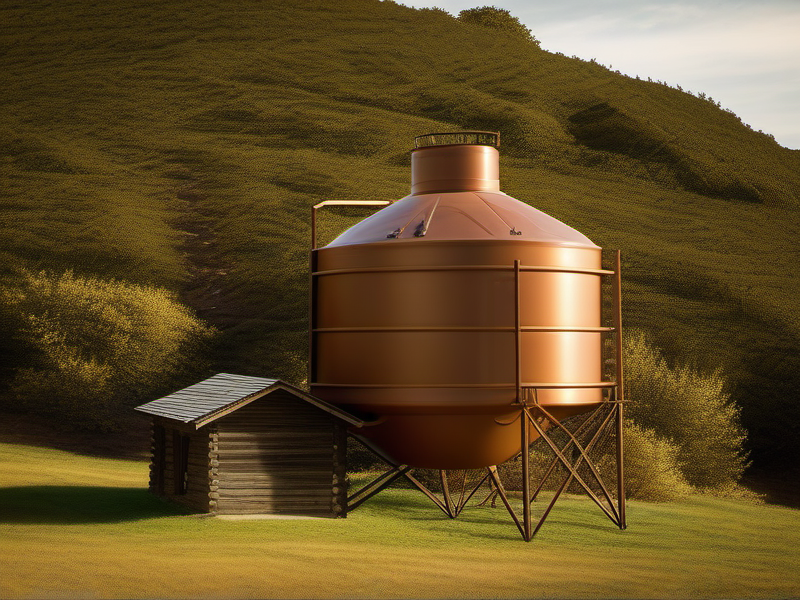
One of the most common objections to gravity storage is maintenance burden. The objection is misplaced. A well-designed gravity battery has fewer moving parts than a lawn mower and requires less annual maintenance than a diesel generator, a battery bank, or a septic system.
Monthly Tasks (15 minutes each)
Clean the intake screen. The trash screen at the upper reservoir inlet collects leaves, algae, and debris. Left uncleaned, it restricts flow and reduces turbine output. Remove the screen, brush it clean, and replace. Time: 5 minutes. Inspect the penstock for leaks. Walk the penstock route and visually inspect all exposed pipe and joints. Listen for hissing at pressure. Check the ground beneath buried sections for soft spots or unusual vegetation (which indicates a slow leak providing moisture). Time: 10 minutes. Check the float switches. Manually activate each float switch to verify that it triggers the pump shutoff or alarm. Float switches are the most failure-prone component in the system -- the moving parts corrode, the contacts oxidize, and the floats occasionally crack and fill with water. Replace at the first sign of malfunction. Cost of a replacement float switch: $8-$15.Seasonal Tasks (1-2 hours, twice per year)
Spring commissioning (if the system was drained for winter): Inspect all pipe joints. Check valve operation. Fill the system slowly and watch for leaks. Verify pump and turbine function before relying on the system for energy production. Fall winterization (in freezing climates): Drain all pipes and the turbine housing. Open all drain valves. Remove and store float switches and pressure gauges indoors. If the reservoir is above ground, drain it or ensure it is rated for ice expansion. Turbine inspection: Remove the turbine runner and inspect the buckets (Pelton) or blades (Turgo/crossflow) for erosion, scoring, or debris damage. Sand particles in the water supply are the primary cause of runner erosion. If your water source contains suspended sediment, install a settling basin upstream of the intake screen -- a simple tank with a slow flow-through velocity that allows particles to settle before water enters the penstock. Runner replacement is rare (every 15-30 years for most micro-hydro turbines) but bearings should be inspected annually and greased or replaced as needed.Long-Term Component Lifespan
| Component | Expected Lifespan | Replacement Cost |
|---|---|---|
| HDPE penstock | 50-100 years | $900-$1,500 |
| PVC penstock | 25-50 years | $600-$1,000 |
| Pelton/Turgo runner | 20-40 years | $500-$1,200 |
| Generator/alternator | 15-25 years | $300-$800 |
| Submersible pump | 10-20 years | $800-$2,000 |
| Float switches | 3-7 years | $8-$15 each |
| Bearings (turbine) | 5-10 years | $20-$50 |
| Valves | 15-30 years | $20-$80 each |
| EPDM pond liner | 30-50 years | $200-$500 |
Compare these lifespans to a lithium battery bank: 10-15 years, $8,000-$15,000 replacement. Over a 50-year operational horizon, a gravity battery requires approximately $3,000-$6,000 in cumulative component replacements. A lithium battery bank, replaced three to four times, costs $24,000-$60,000 over the same period.
The economics are not close. They are not even in the same category.
Troubleshooting Common Problems
Problem: Turbine output lower than calculated. Causes: (1) Penstock partially blocked -- check screen and flush the pipe by opening the drain valve at full flow for 30 seconds. (2) Air lock in the penstock -- open the air release valve at the highest point. (3) Pipe undersized or friction losses higher than calculated -- verify pipe diameter and check for crimps, sharp bends, or partially closed valves. (4) Turbine nozzle partially blocked -- remove and clean. (5) Generator brushes worn (if brush-type) -- inspect and replace. Problem: Pump fails to fill upper reservoir. Causes: (1) Foot valve stuck closed or strainer clogged -- pull pump and inspect. (2) Pump impeller worn -- check flow rate against pump curve. (3) Air leak in suction line -- tighten fittings and check for cracks. (4) Insufficient power to pump -- verify solar array output and check charge controller settings. Problem: Upper reservoir overflows despite float switch. Causes: (1) Float switch failed in the "on" position -- replace. (2) Float switch installed at wrong height -- adjust mounting. (3) Electrical relay stuck -- inspect and replace. Problem: Water appears in penstock trench or around buried pipe. Cause: Pipe joint failure or pipe damage. Excavate the suspected area, locate the leak, and repair with a compression coupling or replace the damaged section. For HDPE pipe, use electrofusion couplings for a permanent repair.Part XI: Conclusion -- The Hill Is the Battery
Every technology fails eventually. Circuit boards corrode. Electrolytes dry out. Software becomes incompatible with hardware that no longer exists. The history of energy technology is a graveyard of ingenious solutions that lasted a decade and then required replacement by the next ingenious solution.
Gravity does not fail. Water does not expire. A properly built dam lasts centuries. The Roman aqueducts still stand, two thousand years after the engineers who designed them turned to dust. The physics have not changed. The equation has not been updated. E still equals m times g times h, and it will equal m times g times h when the last lithium mine is exhausted and the last battery factory has closed its doors.
You do not need to build a system the size of Bath County. You do not need 380 meters of head or 43 million cubic meters of water. You need a hill. You need a pipe. You need the understanding that the elevation difference between your upper pasture and your lower field is not just a topographic inconvenience -- it is stored energy, waiting to be harvested.
The modern world has convinced you that energy storage is complicated, expensive, and requires products manufactured on the other side of the planet. That is true only if you define energy storage as a box of chemicals with a warranty card. If you define it as mass at height -- the oldest engineering concept in human civilization -- then energy storage is as simple and as permanent as the ground beneath your feet.
Build your gravity battery. Start small. A pair of IBC totes on a hillside and a garden hose with a DC pump. Watch the water rise in the morning and fall in the evening. Feel the turbine hum. See the light come on. Then scale up. Add more pipe. Add more water. Add more hill.
The Ancestors did not wait for the next shipment from the factory. They looked at the landscape, they identified the resource, and they built. The hill is the battery. It always has been.
References
[1] Aicher, P.J. Guide to the Aqueducts of Ancient Rome. Bolchazy-Carducci Publishers, 1995.
[2] Leveau, P. "The Barbegal water mill in its environment: archaeology and the economic and social history of antiquity." Journal of Roman Archaeology, 9, 137-153, 1996.
[3] Holt, R. The Mills of Medieval England. Blackwell, 1988.
[4] Barton, D.B. A History of Copper Mining in Cornwall and Devon. D. Bradford Barton Ltd., 1968.
[5] Rehman, S., et al. "Pumped hydro energy storage system: a technological review." Renewable and Sustainable Energy Reviews, 44, 586-598, 2015.
[6] International Hydropower Association. 2024 World Hydropower Outlook. IHA, London, 2024.
[7] Fengning Pumped Storage Power Station, State Grid Corporation of China. Operational capacity report, 2023.
[8] Dominion Energy. "Bath County Pumped Storage Station: Technical Specifications." dominionenergy.com. Accessed 2026.
[9] National Renewable Energy Laboratory (NREL). 2024 Annual Technology Baseline: Pumped Storage Hydropower. U.S. Department of Energy, 2024.
[10] Pelton, L.A. U.S. Patent No. 233,692. "Water Wheel." Filed 1880. Historical context in Daugherty, R.L. Hydraulic Turbines. McGraw-Hill, 1920.
[11] PowerSpout. "PLT Pelton Turbine Product Specifications." powerspout.com. Accessed 2026.
[12] Williamson, S.J., et al. "Experimental investigation of a pico-scale Turgo turbine." Proceedings of the Institution of Mechanical Engineers, Part A: Journal of Power and Energy, 227(8), 893-903, 2013.
[13] Getches, D.H. Water Law in a Nutshell. West Academic Publishing, 5th edition, 2009.
[14] Stocks, M., et al. "Global atlas of closed-loop pumped hydro energy storage." Joule, 5(1), 270-284, 2021. See also UNSW Newsroom, "Farm dams can be converted into renewable energy storage systems: study," September 2023.
[15] Renewables First. "Jacksons Creek Community Pumped Storage Project: Case Study." renewablesfirst.co.uk. Accessed 2026.
[16] Hunt, J.D., et al. "Global resource potential of seasonal pumped-storage for energy and water storage." Nature Communications, 11, 947, 2020.
[17] Gimeno-Gutierrez, M., and Lacal-Arantegui, R. "Assessment of the European potential for pumped hydropower energy storage." JRC Scientific and Policy Reports, European Commission, 2013.
[18] Kapoor, F. "Micro-Hydropower Systems: A Buyer's Guide." Natural Resources Canada, 2004.
[19] Harvey, A. Micro-Hydro Design Manual: A Guide to Small-Scale Water Power Schemes. Practical Action Publishing, 1993.
[20] Paish, O. "Small hydro power: technology and current status." Renewable and Sustainable Energy Reviews, 6(6), 537-556, 2002.
Comments (0)
No comments yet.
Log in to comment.