Forgotten Seeds: Why Heirloom Varieties Are the Last Line of Defense Against Famine
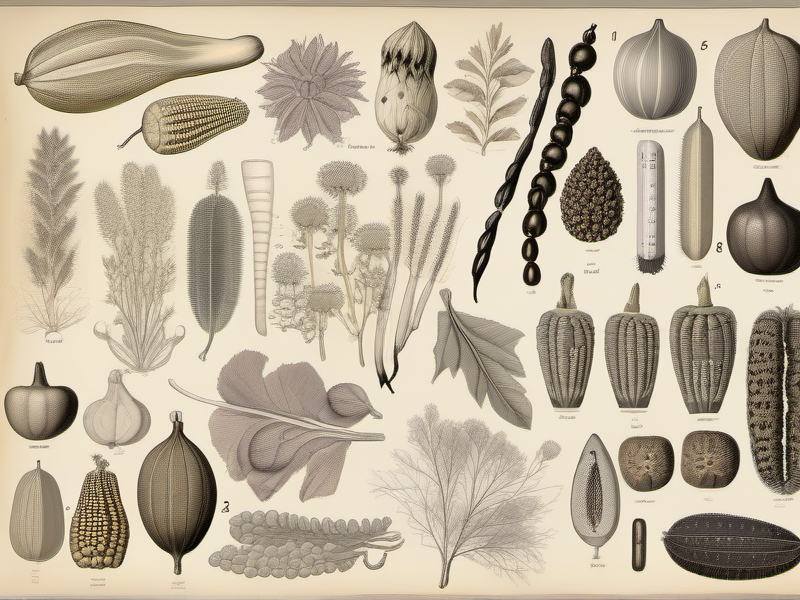
In 1903, commercial seed catalogs offered 408 varieties of garden pea. By 1983, only 25 remained. The consolidation of the global seed supply into the hands of four corporations is the greatest unrecognized threat to food security. Here is why heirloom seeds matter -- and how to save them.
Part I: The Vanishing
In 1903, a USDA horticulturist named W.W. Tracy published a comprehensive inventory of commercially available vegetable seed varieties in the United States. The document was not glamorous. It was a list -- a bureaucratic accounting of what American seed companies were selling to American gardeners and farmers.
The numbers in Tracy's inventory are staggering by modern standards:
| Crop | Varieties Available (1903) | Varieties Available (1983) | Percent Lost |
|---|---|---|---|
| Garden pea | 408 | 25 | 93.9% |
| Lettuce | 497 | 36 | 92.8% |
| Tomato | 408 | 79 | 80.6% |
| Sweet corn | 307 | 12 | 96.1% |
| Cabbage | 544 | 28 | 94.9% |
| Squash | 341 | 40 | 88.3% |
| Beet | 288 | 17 | 94.1% |
| Radish | 463 | 27 | 94.2% |
| Cucumber | 285 | 16 | 94.4% |
| Muskmelon | 338 | 27 | 92.0% |
A 1983 study conducted by the Rural Advancement Fund International (RAFI, now the ETC Group) compared Tracy's 1903 inventory with the holdings of the National Seed Storage Laboratory (NSSL). The conclusion: of the 7,098 named varieties available in 1903, approximately 93% could no longer be found in any commercial seed catalog or institutional collection. They were, for practical purposes, extinct.
This finding has been contested. In 2009, researchers at the University of Georgia published a reanalysis arguing that the 1983 study contained methodological errors. They pointed out that Tracy himself acknowledged that many "varieties" in 1903 were identical seeds sold under different names by competing companies -- a practice called "renaming" that was endemic in the early seed trade. When duplicate names were removed, the actual loss of distinct genetic lines was significantly lower.
This is true, and it matters. But it does not change the fundamental trajectory. Even by the most conservative estimates, the number of commercially available vegetable varieties in the United States declined by at least 50-60% between 1903 and 2000. The FAO's own assessment concludes that approximately 75% of crop genetic diversity has been lost globally since the early 20th century. Whether the number is 75% or 50%, the direction is unmistakable: genetic diversity in food crops is collapsing, and it has been collapsing for over a century.
The question is why.
Part II: The Consolidation
The answer begins with a merger.
In 2018, the German chemical and pharmaceutical giant Bayer AG completed its $63 billion acquisition of Monsanto -- at the time, the world's largest seed company. The deal created the single most powerful entity in global agriculture, controlling approximately 29% of the world's commercial seed supply and 24% of the world's pesticide market.
But Bayer-Monsanto is not alone. The global seed market is dominated by four corporations:
| Company | Headquarters | Estimated Global Seed Market Share |
|---|---|---|
| Bayer (formerly Monsanto) | Leverkusen, Germany | 23-29% |
| Corteva Agriscience (formerly DowDuPont) | Wilmington, Delaware | 17-21% |
| Syngenta (owned by ChemChina/CNAC) | Basel, Switzerland | 7-9% |
| BASF | Ludwigshafen, Germany | 5-7% |
Together, these four companies control more than 60% of the global commercial seed market. For commodity crops -- corn, soy, cotton, canola -- the concentration is even more extreme. In the US corn seed market, Bayer and Corteva together control roughly 70% of sales.
The consolidation has accelerated dramatically since the 1990s. In 1996, there were over 600 independent seed companies in the United States. The Independent Professional Seed Association, which represented small and mid-size seed companies, had approximately 300 members at its founding in 1989. By 2024, that number had dropped to roughly 100.
This consolidation matters for three reasons:
1. Reduced variety
Large seed companies optimize for scale, uniformity, and marketability. They discontinue varieties that do not sell in large enough volumes to justify production. A tomato variety that performs brilliantly in the clay soils of the Ozarks but has no market in California gets dropped. A lettuce that bolts slowly in Vermont's short summers but wilts in Arizona gets eliminated. Every discontinued variety is a genetic library burned.
Between 1984 and 2004, the number of non-hybrid, open-pollinated vegetable varieties offered by the six largest US seed companies declined by an estimated 25-35%. The varieties that replaced them were overwhelmingly F1 hybrids -- and hybrids, as we will see, have a fatal flaw.
2. Intellectual property capture
Since the US Supreme Court's 1980 ruling in Diamond v. Chakrabarty (which held that living organisms could be patented), seed companies have aggressively pursued intellectual property protections for their varieties. Utility patents on seeds now cover not just genetically engineered traits but also conventionally bred characteristics. A 2023 USDA report highlighted that restrictive intellectual property regimes are "stifling small, independent, and public seed breeding programs."
When a corporation patents a seed variety, it becomes illegal to save seeds from that variety and replant them without a license. This transforms farming from a self-renewing biological process into a subscription service. The farmer must buy new seed every year. Independence is replaced by dependence. And the corporation has a structural incentive to discontinue non-patented varieties that compete with its patented ones.
3. Genetic narrowing
The ultimate consequence of consolidation is genetic uniformity. When four companies control the majority of seed sales, and those companies each offer a limited range of high-performing hybrid varieties, the gene pool planted across millions of acres narrows to a handful of elite genetic lines.
This is not hypothetical. It is measured. According to the FAO, fewer than 150 of the roughly 7,000 plant species once cultivated by humans are now grown commercially. Just four crops -- rice, wheat, maize, and potato -- provide approximately 60% of humanity's plant-based calories. Within those four crops, the number of planted varieties has been declining for decades.
The risk of genetic uniformity is not theoretical either. History has taught the lesson repeatedly, and the tuition has been paid in lives.
Part III: The Lessons of Monoculture
Ireland, 1845-1852
In the early 19th century, Ireland's population of approximately 8 million was heavily dependent on a single crop: the potato. But not just any potato -- the Lumper, a high-yielding, nutritionally adequate, cold-tolerant variety that grew well in Ireland's poor soil and wet climate. The Lumper was planted so widely that it constituted the overwhelming majority of Irish potato acreage.
The Lumper had a flaw. Like all potatoes propagated vegetatively (from tuber cuttings rather than seed), every Lumper plant was a genetic clone of every other Lumper plant. There was no genetic diversity. No variation in disease resistance. When Phytophthora infestans -- the water mold that causes late blight -- arrived in Ireland in 1845 (likely on infected tubers imported from the Americas), every Lumper plant was equally susceptible.
The blight did not merely reduce the harvest. It destroyed it. In 1845, approximately one-third of the potato crop was lost. In 1846, the destruction was nearly total -- three-quarters or more. The blight returned in 1848 and again in 1849.
The consequences are well known: approximately 1 million people died of starvation and related diseases. Another 1.5-2 million emigrated. Ireland's population dropped by 20-25% in seven years. It has never recovered -- Ireland's current population (approximately 5 million) is still below its pre-famine level.
The proximate cause was a pathogen. The ultimate cause was genetic uniformity.
United States, 1970
In 1970, a mutant strain of the fungus Bipolaris maydis (Southern corn leaf blight, Race T) swept through the American Corn Belt. The pathogen exploited a specific genetic vulnerability: T-cytoplasm, a mitochondrial trait that had been bred into nearly 85% of all commercial corn hybrids because it made hybrid seed production cheaper (T-cytoplasm produced male-sterile plants, eliminating the need for manual detasseling).
In a single season, Race T destroyed approximately 15% of the US corn crop -- roughly 710 million bushels. Some southern states lost 50-100% of their corn. The economic damage exceeded $1 billion in 1970 dollars (approximately $8 billion today).
The corn blight of 1970 was a direct consequence of genetic uniformity imposed by the hybrid seed industry. Eighty-five percent of the nation's corn shared an identical mitochondrial genome. One pathogen found the key, and every lock was the same.
The response was swift: seed companies abandoned T-cytoplasm and diversified their cytoplasmic genetics. But the underlying dynamic -- the tendency of commercial agriculture to converge on a narrow genetic base for economic efficiency -- has not changed. If anything, it has accelerated.
The Next Failure
The question is not whether genetic uniformity will cause another catastrophic crop failure. It is when. The FAO's Global Plan of Action for the Conservation and Sustainable Utilization of Plant Genetic Resources for Food and Agriculture explicitly identifies genetic erosion as a primary threat to global food security. The UN Convention on Biological Diversity has repeatedly warned that the loss of crop genetic diversity reduces humanity's capacity to adapt to climate change, emerging pests, and novel diseases.
The defense against this risk is not technology. It is diversity. And diversity is stored in seeds.
Part IV: What Heirloom Seeds Are (and What F1 Hybrids Are Not)
Open-Pollinated Seeds
An open-pollinated (OP) seed is produced by plants that are pollinated naturally -- by wind, insects, birds, or other natural vectors. When you save seed from an open-pollinated plant and replant it, the offspring are genetically similar to the parent. Not identical (sexual reproduction introduces some variation), but recognizably the same variety.
This is the normal state of affairs. For 10,000 years of agriculture, every seed was open-pollinated. Farmers selected the best plants each year -- the most productive, the most disease-resistant, the best-tasting, the best-adapted to local conditions -- saved their seeds, and planted them the following year. Over generations, this created locally adapted varieties called landraces -- populations of genetically related plants that were specifically tuned to the soil, climate, rainfall, daylength, and pest pressures of a particular region.
A tomato variety that has been grown and selected in the clay soils and hot summers of central Tennessee for 80 years is not the same tomato that was originally planted. It has been optimized by natural and human selection for those specific conditions. It carries genetic resistance to the diseases common in that region. It matures at the right time for that growing season. It tolerates that soil pH and that rainfall pattern. This genetic adaptation cannot be purchased. It can only be inherited.
Heirloom Seeds
The term "heirloom" is not precisely defined, but the general consensus among seed savers and plant breeders is that an heirloom variety meets three criteria:
- Open-pollinated. It breeds true from saved seed.
- Old. Most definitions require at least 50 years of documented cultivation, though some set the threshold at pre-1945 (before the hybridization revolution) or pre-1951 (before the passage of the Plant Variety Protection Act).
- Culturally transmitted. It has been maintained and passed down through families, communities, or regional seed networks, not by commercial seed companies.
Heirloom varieties often have names that tell their stories: Mortgage Lifter (a tomato bred by a West Virginia radiator repairman named Radiator Charlie in the 1930s, who sold the plants for $1 each and paid off his $6,000 mortgage in six years), Cherokee Purple (believed to have originated with the Cherokee people before 1890), Moon and Stars watermelon (named for the yellow spots on its dark green rind, thought to have been developed by the Amish), Costata Romanesco (a fluted Italian zucchini that predates commercial hybrid squash by centuries).
These are not museum pieces. They are functional genetic technology -- plant lines that encode specific solutions to specific environmental challenges, maintained by continuous human selection over decades or centuries.
F1 Hybrids
An F1 (first filial generation) hybrid is the offspring of a deliberate cross between two genetically distinct parent lines. The parent lines are inbred (self-pollinated for many generations to achieve genetic uniformity), and the cross between them produces offspring with "hybrid vigor" -- a phenomenon in which the hybrid outperforms both parents in traits like yield, uniformity, growth rate, and disease resistance.
F1 hybrids revolutionized commercial agriculture beginning in the 1930s with hybrid corn, and they now dominate the commercial seed market for most vegetable crops. Their advantages are real:
- Higher yield. F1 hybrids typically outyield open-pollinated varieties by 15-40% under optimal conditions.
- Uniformity. Every F1 plant is genetically near-identical. This matters for commercial growers who need uniform size, color, and maturity for machine harvesting and retail display.
- Disease resistance. Breeders can stack specific disease-resistance genes into hybrid parents, producing offspring resistant to multiple pathogens simultaneously.
- Vigor. Heterosis (hybrid vigor) produces larger, faster-growing, more robust plants.
But F1 hybrids have one critical, structural, irredeemable flaw: you cannot save their seeds.
When you plant seeds from an F1 hybrid, the resulting F2 generation segregates. The uniform genetic package breaks apart. Some F2 plants resemble one grandparent. Some resemble the other. Some are tall, some short. Some are productive, some are runts. Some are disease-resistant, some are not. The F2 generation is a genetic lottery. The uniformity that made the F1 valuable disappears in a single generation.
This means that F1 hybrid seeds must be purchased new every season. The farmer or gardener cannot close the loop. Independence is structurally impossible. The hybrid is a genetic rental, not a genetic purchase.
For the seed industry, this is the perfect product. For the food system, it is a single point of failure.
Part V: The Man Who Died for Seeds
The story of seed saving has one figure who towers above all others, and his story is the most extraordinary and tragic in the history of agricultural science.
Nikolai Ivanovich Vavilov was born in Moscow in 1887, the son of a cloth merchant. He studied agronomy at the Moscow Agricultural Academy and developed a consuming interest in the origin and distribution of cultivated plants. Between 1916 and 1940, Vavilov led over 100 botanical expeditions to 64 countries on five continents, collecting seeds, tubers, and plant specimens with a fervor that bordered on obsession.
Vavilov was not collecting for beauty or curiosity. He was building an insurance policy for the species.
He understood -- decades before the concepts of genetic erosion and biodiversity loss entered the scientific lexicon -- that the future of human food security depended on maintaining the widest possible genetic base of crop plants. He theorized (correctly) that the regions of greatest genetic diversity for each crop were the regions where that crop had originated or been cultivated for the longest time. He called these regions "centers of origin" -- a concept that remains foundational in plant genetics.
By the late 1930s, Vavilov had assembled the world's first and largest seed bank at the All-Union Institute of Plant Industry in Leningrad (now St. Petersburg). The collection contained approximately 370,000 seed accessions, representing thousands of species and varieties from every inhabited continent.
Then came Trofim Lysenko.
Lysenko was a Soviet agronomist who rejected Mendelian genetics -- the foundation of modern biology -- in favor of a pseudoscientific theory called "Lysenkoism," which held that organisms could pass acquired characteristics to their offspring. Lysenko's theories were scientifically baseless, but they aligned with Marxist ideology (the idea that environment, not heredity, determines biological outcomes), and Stalin embraced them.
Vavilov publicly opposed Lysenko. This was a death sentence.
In August 1940, while collecting seeds in Ukraine, Vavilov was arrested by the NKVD (the Soviet secret police). He was charged with espionage and "wrecking" Soviet agriculture. After a show trial, he was sentenced to death, later commuted to 20 years in prison. He was sent to the Saratov labor camp, where conditions were brutal.
Nikolai Vavilov -- the man who had spent his life collecting seeds to prevent famine -- died of starvation in prison on January 26, 1943. He was 55 years old.
The Siege
While Vavilov rotted in the gulag, his life's work faced its own existential test.
On September 8, 1941, German forces completed their encirclement of Leningrad, beginning one of the most devastating sieges in human history. For 872 days -- nearly two and a half years -- the city was cut off from supply. Approximately 1 million civilians died, mostly from starvation.
Inside the besieged city, in the basement of the All-Union Institute of Plant Industry, sat Vavilov's seed collection: 370,000 accessions, including tons of edible seeds, tubers, nuts, and grains. It was, quite literally, the only food in the building.
Twelve of Vavilov's scientists -- botanists, geneticists, and curators -- barricaded themselves inside the institute and guarded the collection around the clock. They protected it from German incendiary bombs, from rats, from looters, and from their own hunger.
One by one, the scientists died. Not from the bombs. Not from disease. From starvation.
Alexander Stchukin, the curator of the peanut collection, died at his desk, surrounded by bags of peanuts that he refused to eat. Dmitri Ivanov, the rice specialist, died surrounded by thousands of packets of rice. Liliya Rodina, who protected the oat collection, starved to death guarding oats.
In total, at least nine of the institute's staff members died of starvation during the siege rather than eat a single seed from the collection they were sworn to protect.
They understood something that the rest of the world was slow to learn: that a seed is not just food for today. It is the potential for food for every day that follows. Eating the collection would have fed a few people for a few weeks. Preserving it ensured that thousands of plant varieties would survive to be planted, bred, and harvested for generations.
After the siege was lifted in 1944, approximately 80% of the Soviet Union's cultivated acreage was sown with varieties derived from Vavilov's collection. The sacrifice was not symbolic. It was mathematically, agriculturally, and historically consequential.
Part VI: The Svalbard Vault and the Architecture of Backup
Vavilov's institute still exists, now called the N.I. Vavilov Research Institute of Plant Industry. Its collection has grown to over 320,000 accessions. But it is no longer the world's primary seed backup.
That distinction belongs to the Svalbard Global Seed Vault, a facility built into the permafrost of a mountainside on the Norwegian Arctic island of Spitsbergen, approximately 800 miles from the North Pole.
The vault opened in February 2008. It was designed as the ultimate failsafe -- a backup for the world's gene banks, not a replacement for them. If a national gene bank is destroyed by war, natural disaster, equipment failure, or political instability (all of which have happened), duplicate samples stored in Svalbard ensure that the genetic material survives.
The Numbers
| Metric | Value |
|---|---|
| Seed samples stored | Over 1,300,000 (as of 2025) |
| Plant species represented | Over 6,000 |
| Depositing institutions | 127 (from every continent except Antarctica) |
| Maximum capacity | 4.5 million samples |
| Temperature | -18 degrees C (-0.4 degrees F) |
| Annual operating cost | Approximately $300,000 |
The composition of the vault reflects the global food system's priorities: 69% of stored seeds are cereal grains (rice, wheat, corn, barley, millet). 9% are legumes (beans, lentils, chickpeas). The remaining 22% encompasses nearly 6,000 species of fruits, vegetables, herbs, and other plants.
The largest single collections are rice (over 150,000 samples), wheat (over 150,000 samples), and barley (close to 80,000 samples). These three crops -- which together feed approximately half the world's population -- are the most extensively backed up.
The First Withdrawal
In 2015, the International Center for Agricultural Research in the Dry Areas (ICARDA) -- a gene bank headquartered in Aleppo, Syria -- became the first institution to make a withdrawal from Svalbard. The Syrian civil war had forced ICARDA to evacuate its Aleppo facility, and much of its irreplaceable collection of drought-resistant wheat, barley, and lentil varieties was at risk. Seeds retrieved from Svalbard were used to re-establish the collection at new facilities in Morocco and Lebanon.
This single event validated the vault's entire purpose. The cost of building and operating Svalbard is trivial compared to the value of the genetic material it protects. A single drought-resistant wheat variety, bred over millennia by farmers in the Fertile Crescent and preserved in Svalbard, could be the difference between food security and famine for millions of people as climate change reshapes global agriculture.
Svalbard Is Not Enough
But Svalbard has limitations. It is a backup, not a living repository. Seeds in Svalbard are stored in frozen stasis. They are not being grown, selected, adapted, or improved. They are genetic snapshots, preserved at the moment of deposit.
Living agriculture requires living seeds -- seeds that are planted, grown, harvested, and replanted every year, adapting in real time to changing conditions. This is what seed savers do, and no vault can replace it.
Svalbard protects against catastrophic loss. Seed saving protects against slow erosion. Both are necessary. Neither is sufficient alone.
Part VII: The Science of Seed Saving
Seed saving is both simpler and more nuanced than most people expect. The basic principle is straightforward: let a plant mature, collect its seeds, dry them, store them, and plant them next year. But the details matter enormously, because poor technique can destroy germination viability, introduce disease, or (in the case of cross-pollinating crops) produce offspring that do not resemble the parent.
Step 1: Know Your Pollination Type
Before you can save seeds successfully, you must understand how your plant is pollinated:
Self-pollinating crops: The flower fertilizes itself before it opens, or shortly after. Cross-pollination is rare. Seeds saved from self-pollinating crops will come true to type with minimal effort.Self-pollinating vegetables include: tomatoes, peppers, beans, peas, lettuce, and eggplant.
Cross-pollinating crops: The flower requires (or strongly prefers) pollen from a different plant of the same species. If multiple varieties of a cross-pollinating crop grow near each other, they will cross-pollinate and the resulting seeds will be hybrids (not F1 commercial hybrids, but uncontrolled crosses that may not resemble either parent).Cross-pollinating vegetables include: corn, squash, cucumbers, melons, beets, chard, carrots, onions, brassicas (cabbage, broccoli, kale, Brussels sprouts, cauliflower), and spinach.
Isolation requirements for cross-pollinating crops:To save true-to-type seeds from cross-pollinating crops, you must isolate varieties to prevent cross-pollination. Isolation methods include:
- Distance. Grow only one variety of each cross-pollinating species, or separate varieties by the recommended isolation distance (typically 1/4 to 1 mile for wind-pollinated crops like corn and beets, or 1/8 to 1/2 mile for insect-pollinated crops like squash and cucumbers). For home gardeners, this is often impractical.
- Time. Plant different varieties of the same species at different times so they do not flower simultaneously. This works for crops with a defined flowering window.
- Physical barriers. Cover plants or flower clusters with fine mesh bags (row cover fabric, organza bags, or cheesecloth) to exclude pollinators. For crops that require insect pollination (squash, cucumbers), hand-pollinate by transferring pollen with a small paintbrush, then cover the pollinated flower to prevent subsequent cross-pollination.
- Grow only one variety. The simplest approach. If you grow only one variety of each cross-pollinating species, there is nothing to cross with.
Step 2: Select the Best Plants
Seed saving is plant breeding. Every time you choose which plants to save seed from, you are selecting the genetics that will define next year's crop. Choose poorly and your variety degrades. Choose well and it improves.
Selection criteria: - Vigor. Save seed from the strongest, healthiest plants -- not the first to bolt, not the runts, not the ones that needed extra attention. - Productivity. The plant that produced the most fruit, the largest roots, the heaviest yield. - Disease resistance. If one plant in a row stayed healthy while its neighbors succumbed to blight or mildew, save seed from that plant. - True to type. The plant should exhibit the characteristics of the variety -- correct fruit shape, color, size, flavor, and growth habit. - Adaptation. Over multiple years, you are selecting for adaptation to your specific conditions -- your soil, your climate, your water, your pests. This is the most powerful aspect of seed saving: you are creating a variety that is optimized for your garden.
How many plants to save from: Genetic diversity matters. Saving seed from a single plant creates a genetic bottleneck -- inbreeding depression can appear within a few generations, manifesting as reduced vigor, lower yields, and increased disease susceptibility. For self-pollinating crops, save seed from at least 5-10 plants. For cross-pollinating crops, save from at least 20-50 plants to maintain adequate genetic diversity.Step 3: Harvest and Process Seeds
Seed processing falls into two categories: dry processing and wet processing.
Dry Processing (for seeds that mature in pods, husks, or seed heads)Crops: beans, peas, lettuce, onions, carrots, brassicas, corn, herbs (basil, dill, cilantro), sunflowers, and most flowers.
Method: 1. Allow seeds to mature fully on the plant. For beans and peas, this means leaving the pods on the plant until they are dry, brown, and rattling. For lettuce, allow the seed stalk to dry until the fluffy seed heads are ready to shatter. For onions, leave the seed heads until the capsules split open. 2. Harvest the dried seed heads, pods, or stalks. Cut the entire seed stalk and place it in a paper bag or onto a clean sheet or tarp. 3. Thresh. Break open the pods or seed heads to release the seeds. For beans, this can be done by hand. For finer seeds (lettuce, carrots, onions), rub the dried seed heads between your hands over a bowl. 4. Winnow. Separate seeds from chaff. Pour the threshed material from one bowl to another in front of a gentle breeze (a fan on low setting works) or blow gently across the surface. The lighter chaff blows away; the heavier seeds drop into the receiving bowl. 5. Final drying. Spread cleaned seeds in a single layer on a screen or plate and allow to air-dry for 3-7 additional days in a warm, dry location. Seeds should feel completely dry and hard -- they should not bend or feel spongy.
Wet Processing (for seeds embedded in fruit flesh)Crops: tomatoes, cucumbers, melons, squash, peppers, and eggplant.
Method: 1. Allow the fruit to reach full maturity on the plant. For tomatoes, this means fully ripe, almost overripe. For cucumbers and squash, allow the fruit to remain on the vine well past eating stage -- cucumbers should turn yellow-orange, summer squash should develop a hard rind. 2. Cut the fruit open and scoop out the seeds with their surrounding gel or pulp. 3. Fermentation (for tomatoes and cucumbers). Place the seed pulp in a glass jar with a few tablespoons of water. Cover loosely (not airtight -- gases need to escape) and set in a warm location (70-80 degrees F) for 2-4 days. A layer of mold will form on the surface. This is normal and desirable. The fermentation process breaks down the gelatinous coating on the seeds (which contains germination-inhibiting compounds) and kills many seed-borne diseases, including bacterial speck, bacterial canker, and early blight.
After 2-4 days, when the surface is covered with mold and the mixture smells sour, add water to the jar and stir. Viable seeds sink to the bottom. Dead seeds, pulp, and mold float. Pour off the floating material. Repeat the rinsing process 3-4 times until the water runs mostly clear and only clean seeds remain at the bottom.
- No fermentation needed (for peppers, melons, squash). Simply scrape seeds from the fruit, rinse in a strainer under running water to remove clinging flesh, and spread to dry.
- Dry the cleaned seeds in a single layer on a screen, plate, or coffee filter. Do not use paper towels -- seeds stick to them. Dry for 5-7 days in a warm, dry location away from direct sunlight. Seeds are ready for storage when they snap cleanly when bent (large seeds) or shatter when pressed with a fingernail (small seeds).
Step 4: Store Seeds Properly
The enemies of seed viability are heat, humidity, and time. Minimize all three.
Temperature: Cool is better. Every 10-degree F reduction in storage temperature roughly doubles the viability lifespan of most seeds. Room temperature (68-72 degrees F) is acceptable for 1-3 years. A refrigerator (35-40 degrees F) extends viability to 5-10 years. A freezer (0 degrees F) can preserve seeds for decades. Root cellar temperature (40-55 degrees F) is a good middle ground. Humidity: Dry is essential. Seed moisture content should be below 8% for safe storage. The practical test: seeds should be so dry that they shatter or snap when broken, not bend. For long-term storage, add a desiccant packet (silica gel or 1 tablespoon of powdered milk wrapped in tissue paper) to each storage container. Containers: Airtight glass jars (mason jars with lids), mylar bags with oxygen absorbers, or sealed envelopes inside a sealed jar. Avoid plastic bags (they are not truly airtight) and paper envelopes for long-term storage (they absorb and release moisture with ambient humidity changes). Label everything. Write the variety name, source plant description, date of harvest, and any selection notes. In ten years, you will not remember which jar contains Cherokee Purple and which contains Brandywine. Label now.Seed Viability by Crop
| Crop | Expected Viability (years, optimal storage) |
|---|---|
| Onion, parsnip, salsify | 1-2 |
| Corn, pepper, spinach | 2-3 |
| Bean, carrot, pea, leek | 3-4 |
| Beet, brassicas, tomato, squash, pumpkin | 4-5 |
| Cucumber, lettuce, melon, radish, sunflower | 5-7 |
| Celery | 5-8 |
These are conservative estimates for seeds stored at room temperature. Refrigerated or frozen storage extends these ranges significantly.
Part VIII: Building a Seed Library
A seed library is a community resource where members can check out seeds, grow them, save seeds from their harvest, and return seeds to the library for others to use. It is the biological equivalent of a lending library -- a commons that grows richer with every cycle of use.
How to Start a Seed Library
- Start small. Begin with 10-20 varieties of easy-to-save crops: tomatoes, peppers, beans, peas, lettuce. These are all self-pollinating, produce seed in their first year, and require no special isolation or processing techniques.
- Source seed. Contact regional seed companies that specialize in open-pollinated and heirloom varieties. In the US, reliable sources include Seed Savers Exchange (Decorah, Iowa), Baker Creek Heirloom Seeds (Mansfield, Missouri), Southern Exposure Seed Exchange (Mineral, Virginia), and Fedco Seeds (Clinton, Maine). Purchase or request donations of regionally adapted varieties.
- Package and label. Divide bulk seed into small envelopes or packets (50-100 seeds per packet for small-seeded crops, 20-30 for large-seeded crops). Label each packet with variety name, botanical name, planting instructions, isolation requirements, and seed-saving instructions.
- Find a host. Public libraries are the most natural partners -- many already host seed libraries. Community centers, churches, food co-ops, and farmers' markets are also good options. The host provides a visible, accessible location and a basic checkout system.
- Educate. The biggest barrier to seed saving is not skill -- it is confidence. Most people have never saved seeds and do not believe they can do it. Hold workshops. Write one-page instruction sheets for each crop. Mentor new savers through their first season.
- Grow the collection. As members return saved seeds, the library's collection expands and diversifies. Over time, returned seeds carry local adaptation -- the tomatoes that thrived in your community's soil and climate become the tomatoes that future growers will plant. The library becomes a living genetic repository, not just a distribution point.
The Legal Landscape
Seed libraries operate in a legal gray area in some jurisdictions. In 2014, the Pennsylvania Department of Agriculture sent a letter to a seed library in Mechanicsburg, Pennsylvania, informing them that distributing unlabeled, untested seeds violated the state's Seed Act. The incident generated national media coverage and significant backlash. Several states subsequently passed "seed library exemption" laws that explicitly exempted non-commercial seed sharing from seed labeling and testing requirements.
As of 2025, the legal environment for seed libraries is broadly permissive in most US states, but varies. Check your state's seed laws before establishing a formal seed library. The Sustainable Economies Law Center publishes a regularly updated guide to seed library legal issues.
Part IX: The Corporations vs. the Commons
The tension between corporate seed ownership and community seed sovereignty is not abstract. It plays out in courtrooms, legislatures, and fields around the world.
The Monsanto Lawsuits
Between 1997 and 2016, Monsanto (now Bayer) filed over 140 lawsuits against American farmers for alleged patent infringement related to the company's genetically engineered, Roundup Ready soybean and corn seeds. The most famous case was Monsanto v. Schmeiser (2004, Supreme Court of Canada), in which Saskatchewan canola farmer Percy Schmeiser was found to have Roundup Ready canola growing in his fields without a license. Schmeiser claimed the patented genes arrived through wind-blown pollen contamination from neighboring fields. The court found in Monsanto's favor, ruling that Schmeiser had knowingly cultivated the transgenic plants regardless of how they arrived.
The case established a chilling precedent: a farmer can be held liable for patent infringement even if patented genetic material arrives on their farm without their consent. In a world where pollen cannot be confined to property lines, this places every farmer growing non-patented varieties adjacent to patented ones at legal risk.
The Push for Seed Sovereignty
In response to corporate consolidation and IP capture, a global seed sovereignty movement has emerged. Key organizations include:
- Seed Savers Exchange (USA): Founded in 1975 by Diane Ott Wheatley and Kent Whealy, SSE maintains a collection of over 20,000 heirloom and open-pollinated plant varieties at its Heritage Farm in Decorah, Iowa. It is the largest non-governmental seed bank in the United States.
- Navdanya (India): Founded by Vandana Shiva in 1991, Navdanya has established 150+ community seed banks across India, conserving over 5,000 crop varieties.
- La Via Campesina (International): A global peasant movement representing over 200 million small-scale farmers in 81 countries, advocating for the right of farmers to save, use, exchange, and sell farm-saved seed.
- Open Source Seed Initiative (USA): Modeled on open-source software, OSSI develops and releases crop varieties with a pledge that they will never be patented or otherwise legally restricted. Seeds bearing the OSSI pledge can be freely saved, shared, and bred.
These organizations represent a fundamentally different philosophy of seed ownership: that seeds are a common heritage of humanity, not a commodity to be monopolized. This is not a radical position. It is the position that prevailed for 10,000 years of agriculture, until the last 50.
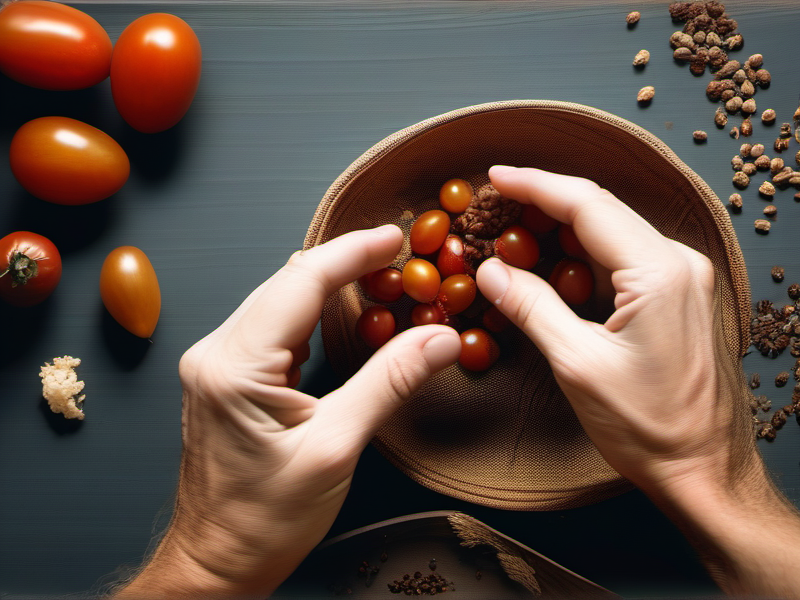
Part X: What You Can Do -- A Practical Seed Saving Calendar
The First-Year Starter Plan
If you have never saved seeds, start with these five crops in your first year. All are self-pollinating, produce seed in their first growing season, and require no isolation:
- Tomatoes. Grow at least one heirloom variety (Cherokee Purple, Brandywine, Black Krim, Amish Paste -- whatever appeals to you). Allow 2-3 fruits per plant to reach full ripeness. Wet-process with fermentation. Dry and store.
- Beans (dry or snap). Grow an heirloom pole or bush bean (Jacob's Cattle, Vermont Cranberry, Cherokee Trail of Tears, Lazy Housewife). Allow pods to dry on the vine. Shell, winnow, and store.
- Peas. Same as beans. Grow a heritage variety (Tom Thumb, Lincoln, Blue Podded Shelling). Let pods dry. Shell and store.
- Lettuce. Grow a heading or loose-leaf heirloom (Tennis Ball, Grandpa Admire's, Forellenschluss). Instead of harvesting the whole plant, allow one plant to bolt, flower, and set seed. Harvest the dried seed heads. Thresh and winnow.
- Peppers. Grow an heirloom sweet or hot pepper (Jimmy Nardello, Fish Pepper, Buena Mulata). Allow 2-3 fruits to ripen fully (until they are wrinkled on the plant). Scrape out seeds, rinse, and dry.
By the end of your first season, you will have saved seed from five crops. You will have learned the basics of seed maturation, harvest, processing, and storage. And you will have broken the cycle of purchasing new seed every year for those five crops. Permanently.
Second Year and Beyond
Expand to more challenging crops:
- Squash and cucumbers. Cross-pollinating. Grow only one variety per species (one butternut, one acorn -- but note that butternut is Cucurbita moschata and acorn is Cucurbita pepo, so they will not cross). Or hand-pollinate and isolate.
- Corn. Wind-pollinated. Requires large populations (at least 200 plants) for adequate genetic diversity, and isolation from other corn varieties by at least 1/4 mile. Not practical for most home gardeners. Participate in a community seed-saving project instead.
- Biennials (carrots, beets, onions, parsnips). These crops produce seed in their second year. First year: grow the crop. Select the best roots. Store them in a root cellar over winter. Second year: replant the stored roots in spring. They will bolt, flower, and set seed. Harvest and process.
- Brassicas (cabbage, broccoli, kale). Biennial (some varieties). Cross-pollinate readily with other brassicas. Require isolation or caging with introduced pollinators. Advanced seed saving.
The 10-Year Seed Library
If you save seed from 5 crops per year, expanding by 2-3 crops each subsequent year, within a decade you will have:
- A personal seed library of 25-40 varieties, all adapted to your specific growing conditions.
- Complete seed independence for the majority of your garden -- no annual purchases required for staple crops.
- A surplus of seed to share with neighbors, contribute to a community seed library, or trade with other seed savers.
- Unique local varieties that exist nowhere else -- plants that carry the genetic memory of your soil, your climate, and your selection.
This is not a hobby. This is infrastructure. Biological infrastructure that regenerates itself, costs nothing to maintain, and appreciates in value with every passing season.
Part XI: The Taste of Memory
There is another dimension to heirloom seeds that the language of genetics and food security does not fully capture. It is the dimension of taste.
Modern commercial tomato varieties -- the ones bred for shipping durability, uniform size, and shelf life -- are engineered to look like tomatoes. They do not taste like tomatoes. A study published in Science in 2017 by Tieman et al. analyzed the volatile compound profiles of 398 modern and heirloom tomato varieties. The researchers found that modern commercial varieties had significantly lower concentrations of 13 flavor-associated volatile compounds, including those responsible for the characteristic "tomato" flavor. The reason: decades of breeding for yield and appearance had inadvertently selected against the genes responsible for flavor, because those genes were not being measured.
Brandywine tomatoes taste different from Better Boy not because of terroir or mysticism. They taste different because they contain measurably different concentrations of 2-methylbutanal, 6-methyl-5-hepten-2-one, and geranylacetone -- compounds that the human olfactory system perceives as "rich," "complex," and "tomato-like."
The same principle applies across crops. Heirloom lettuce varieties like Forellenschluss and Tennis Ball have flavor profiles -- bitterness, sweetness, mineral notes -- that modern iceberg and romaine cultivars have lost. Heirloom beans like Jacob's Cattle and Calypso have distinct flavors (earthy, nutty, creamy) that commercial navy beans and pinto beans do not approach. Heirloom melons like Jenny Lind and Charentais produce a fragrance so intense that a single ripe fruit perfumes an entire room.
These flavors are encoded in the plant's genetics. They are the product of selection by generations of gardeners and farmers who valued taste above all else -- because for most of human history, nobody was selecting for "ability to survive three weeks in a distribution warehouse." The gardener ate the tomato from the vine. If it was not delicious, the seeds were not saved. If it was extraordinary, the seeds were saved, shared, and named.
Every heirloom variety name is a human story. Someone grew this plant. Someone tasted it. Someone decided it was worth remembering. And then they saved the seeds and passed them on, sometimes for centuries, sometimes through wars and famines and migrations, because the taste was worth preserving.
When we lose a variety, we do not just lose a genotype. We lose a human relationship with that genotype -- a sensory memory, a cultural artifact, a record of someone's judgment that this particular plant was good enough to carry forward into the future.
This is what the four corporations cannot replicate. They can patent a gene. They can trademark a name. They can optimize a yield curve. They cannot manufacture the accumulated taste memory of a Cherokee grandmother who selected this purple tomato, year after year, from a garden in the Southern Appalachians before anyone alive today was born.
Part XII: The Arithmetic of Survival
Let us return to the numbers.
Four corporations control 60%+ of the global seed market. Fewer than 150 crop species are commercially cultivated out of 7,000 once used. Four crops provide 60% of humanity's plant calories. The FAO estimates 75% of crop genetic diversity has been lost since 1900. The Svalbard Vault holds 1.3 million samples but has a capacity of 4.5 million -- it is less than one-third full, and the collection rate is not keeping pace with the rate of genetic erosion in farmers' fields.
Now consider: global temperatures are projected to rise 1.5-4.5 degrees C by 2100. Precipitation patterns are shifting. New pest and disease pressures are emerging as climate zones move poleward. The crops that feed 8 billion people were bred for the climate of the 20th century. They may not perform in the climate of the 21st.
The genes that will save us -- the drought tolerance, the heat resistance, the novel disease resistance, the shortened growing seasons, the tolerance of poor soils -- are not in the seed catalogs of four multinational corporations. They are in the landrace varieties of small farmers in the Andes, the Himalayas, the Ethiopian highlands, and the gardens of seed savers in Vermont and Tennessee and Oregon. They are in the seeds that nobody has patented because nobody has thought them valuable enough to patent. Yet.
Every seed you save is a vote against genetic erosion. Every variety you maintain is a thread in a safety net that the industrial food system is slowly cutting away. Every seed you share strengthens a community's biological resilience in a way that no government program, no corporate initiative, and no technological breakthrough can match.
The math is simple. The industrial seed system is a narrowing funnel. The seed-saving movement is a widening one. We need both -- commercial agriculture to feed the world today, and seed diversity to feed the world tomorrow. But only one of those two systems is under threat of extinction, and it is not the commercial one.
Save the seeds. Share the seeds. Plant the seeds. Let them adapt to your soil, your water, your sunlight. And then save them again.
This is not nostalgia. This is survival arithmetic.
Part XIII: The Climate Change Equation
There is an urgency to seed saving that was not present even twenty years ago. Climate change is not a future scenario. It is a present reality, and its impact on agriculture is already measurable.
Shifting Growing Zones
The USDA Plant Hardiness Zone Map was updated in 2023 for the first time since 2012. The new map reflects a measurable shift: approximately half of the country moved into a warmer half-zone. Areas that were zone 6a became zone 6b. Areas that were zone 7b became zone 8a. The frost-free growing season in the contiguous United States has lengthened by an average of 15 days since 1980.
This sounds benign. It is not. Warmer winters mean earlier bloom dates for fruit trees -- but late frosts have not disappeared. They simply arrive after trees have already bloomed, destroying the crop. Warmer summers mean longer heat waves, which exceed the thermal tolerance of many crops. Corn pollination fails above 95 degrees F. Tomato fruit set drops sharply above 90 degrees F. Bean blossoms abort in extreme heat.
The varieties that will thrive in the climate of 2040 or 2060 do not exist in commercial seed catalogs today. They exist as latent genetic potential in the global gene pool -- in the drought-adapted landraces of the Sahel, in the heat-tolerant beans of central Mexico, in the short-season grains of Scandinavia, and in the thousands of locally adapted varieties maintained by seed savers.
The Breeding Bottleneck
Commercial plant breeding is a $16 billion per year industry. It is overwhelmingly focused on a handful of commodity crops (corn, soy, wheat, cotton, canola) and a narrow range of horticultural crops (tomatoes, peppers, lettuce, cucumbers). The breeding goals are consistent: higher yield, disease resistance, uniformity, and shippability.
Climate adaptation is conspicuously absent from this list. Commercial breeders are not selecting for tolerance to novel climate stresses because their economic model does not reward it. A tomato variety that yields 10% less but tolerates 100-degree heat waves is commercially unviable -- today. In twenty years, when heat waves are the norm rather than the exception, that same variety may be the only tomato that produces at all.
This is the breeding bottleneck: the varieties we need for the future are not being bred by the companies that dominate the present. They are being maintained -- often unknowingly -- by small-scale seed savers, heritage farmers, and indigenous communities whose landraces carry untested genetic responses to conditions that commercial varieties have never faced.
Every heirloom variety in your garden is a potential source of climate-adaptive genes. The Cherokee Purple tomato, bred in the heat of the Southern Appalachians, may carry heat tolerance alleles that no commercial breeding program has evaluated. The Aunt Ruby's German Green, selected over decades in German and American gardens, may harbor disease resistance genes that have never been cataloged. We do not know what we have until we need it. And we are beginning to need it.
What the Gardener Can Do
You do not need a genetics degree to contribute to climate adaptation. You need patience, observation, and a willingness to let natural selection work.
Practice mass selection. Grow 20-50 plants of an heirloom variety. At the end of the season, identify the 5-10 plants that performed best under the conditions they experienced -- including any weather extremes. Save seed only from those plants. Replant the following year. Repeat. Over 5-10 generations, you are selecting for adaptation to your specific microclimate, including whatever climate shifts are occurring in real time. Grow in stress conditions. Do not irrigate everything. Do not coddle every plant. Allow some plants to experience moderate drought, heat, or cold. The plants that survive and produce under stress are the ones whose genetics you want to carry forward. The ones that die were not suited to your conditions. That is not failure. That is selection. Grow diverse varieties. Plant three or four heirloom tomato varieties instead of one. Grow five different bean varieties instead of two. Diversity is insurance. If one variety fails in an unusual season, another may succeed. Over time, you identify which varieties are most resilient in your specific environment -- and those become the foundation of your seed library. Share widely. Your climate is not everyone's climate. The variety that struggles in your hot, humid garden may thrive in your friend's cooler, drier one. The more broadly a variety is distributed, the more environments are selecting on it simultaneously, and the more likely it is that some population will survive whatever comes next.Part XIV: The Seed as an Act of Faith
This article has been, by design, an argument built on numbers: percentages of genetic erosion, market shares of corporations, protein contents of larvae, yield curves of vegetables, and viability windows of stored seeds. Numbers are convincing. They are also incomplete.
There is a dimension of seed saving that numbers cannot reach. It is the dimension of continuity -- the unbroken chain of human hands that connects the seed in your jar to the farmer who first selected it, possibly centuries ago.
When you plant a Mortgage Lifter tomato, you are planting something that M.C. Byles bred in the 1930s in Logan, West Virginia. You are joining a chain that includes every gardener who grew that tomato, saved its seed, and passed it on for 90 years. When you plant a Cherokee Trail of Tears bean, you are planting something that accompanied the Cherokee people on the forced march from their homeland in the Southeast to Oklahoma in 1838-1839. The beans survived the trail. The people who carried them wanted you -- a stranger they would never meet, living in a future they could not imagine -- to have food.
Every heirloom seed is a message from the past. The message is: this was good. This was worth saving. This fed us, and we hope it feeds you.
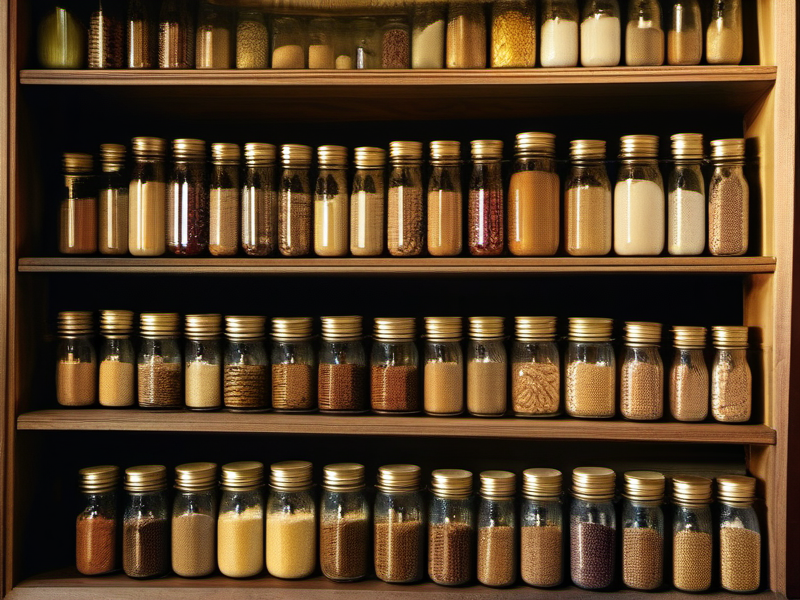
Saving seeds is an act of faith in the future. You dry the seeds, label the jar, and put it on the shelf, knowing that you may not be the one who plants them. Your children might. Your grandchildren might. A neighbor you have not yet met might. The seed does not care who plants it. It only asks to be planted.
The corporations cannot offer this. They offer a transaction: money for seed, one season at a time, no continuity, no inheritance, no faith. The heirloom seed offers something the market cannot price: a relationship with time itself.
Save the seeds. Share the seeds. Plant the seeds. Let them adapt. And then save them again.
This is not nostalgia. This is survival arithmetic.
References
- Tracy, W.W. (1903). American Varieties of Vegetables for the Years 1901 and 1902. USDA Bureau of Plant Industry, Bulletin No. 21.
- Fowler, C., & Mooney, P. (1990). Shattering: Food, Politics, and the Loss of Genetic Diversity. University of Arizona Press.
- Heald, P.J., & Chapman, S. (2009). Veggie tales: Pernicious myths about patents, innovation, and crop diversity in the twentieth century. University of Illinois Law Review, 2012, 1051-1102.
- FAO. (2010). The Second Report on the State of the World's Plant Genetic Resources for Food and Agriculture. Food and Agriculture Organization of the United Nations, Rome.
- ETC Group. (2022). Food Barons 2022: Crisis Profiteering, Digitalization and Shifting Power. ETC Group.
- Tieman, D., et al. (2017). A chemical genetic roadmap to improved tomato flavor. Science, 355(6323), 391-394.
- National Research Council. (1972). Genetic Vulnerability of Major Crops. National Academy of Sciences.
- Nazarea, V.D. (2005). Heirloom Seeds and Their Keepers: Marginality and Memory in the Conservation of Biological Diversity. University of Arizona Press.
- Nabhan, G.P. (2009). Where Our Food Comes From: Retracing Nikolay Vavilov's Quest to End Famine. Island Press.
- Pringle, P. (2008). The Murder of Nikolai Vavilov: The Story of Stalin's Persecution of One of the Great Scientists of the Twentieth Century. Simon & Schuster.
- USDA Economic Research Service. (2023). America's Seed Fund: Concentration, Innovation, and Access in the U.S. Seed Industry. USDA.
- Svalbard Global Seed Vault. (2025). Annual Report 2024. Crop Trust / Norwegian Ministry of Agriculture and Food.
- Ashworth, S. (2002). Seed to Seed: Seed Saving and Growing Techniques for Vegetable Gardeners (2nd ed.). Seed Savers Exchange.
- Deppe, C. (2000). Breed Your Own Vegetable Varieties: The Gardener's and Farmer's Guide to Plant Breeding and Seed Saving (2nd ed.). Chelsea Green Publishing.
- Whealy, K. (2004). Seed Savers Exchange: The First Ten Years, 1975-1985. Seed Savers Exchange.
- Supreme Court of Canada. (2004). Monsanto Canada Inc. v. Schmeiser, [2004] 1 SCR 902.
- Kloppenburg, J. (2004). First the Seed: The Political Economy of Plant Biotechnology (2nd ed.). University of Wisconsin Press.
- Diamond v. Chakrabarty, 447 U.S. 303 (1980).
Comments (0)
No comments yet.
Log in to comment.