The Field Journal: Why Meticulous Logs Outweigh Any Equipment You Own
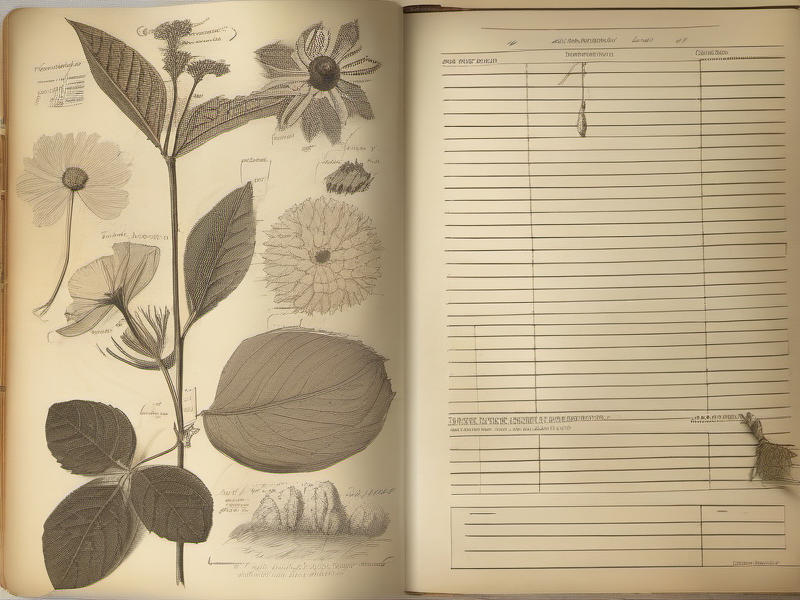
Darwin kept one. Thoreau kept one. Every successful farmer who ever lived kept one. The field journal is the single most valuable tool on any homestead -- more useful than a tractor, more reliable than a weather app, and the only equipment that gets better with every year of use.
Part I: The Equipment Delusion
You own too much gear.
I do not say this to shame you. I say it because I have been to enough homesteads, enough off-grid properties, enough hunting camps and survival retreats to know that the correlation between equipment expenditure and operational competence is, at best, zero -- and at worst, negative. The man with $40,000 in gear and no records is less capable than the woman with $400 in tools and five years of daily observations written in a pocket notebook.
The equipment industry sells you objects. It sells you the feeling of preparedness. A $2,000 titanium camp stove. A $600 night-vision monocular. A $350 GPS unit with satellite messaging. A $4,500 solar panel array with lithium battery bank and a smartphone app that monitors your energy production from anywhere in the world. Each of these items has a shelf life, a battery life, a failure mode, and a replacement cycle. The stove will rust. The monocular will brick when its firmware becomes incompatible with its chipset. The GPS will fail when the satellite constellation is degraded, jammed, or deprioritized. The solar app will stop working when the company that made it goes bankrupt or sunsets the product.
Now consider a different piece of equipment: a bound notebook, 100 pages, filled with daily observations recorded in pencil over the course of a year. This object does not require batteries. It does not require firmware. It does not require a cellular connection, a subscription fee, or a manufacturer's warranty. It functions in rain, in snow, in mud, in temperatures from -40 to +50 degrees Celsius. It weighs four ounces. It costs $6.
And here is the part that no equipment manufacturer will tell you: after five years of continuous use, a field journal system contains more operationally useful information about your specific piece of land than any instrument, any sensor network, and any satellite dataset available at any price. A weather station tells you what the temperature is right now. Five years of journal entries tell you what the temperature will probably be next Tuesday, what that temperature means for your tomato transplants, and whether the last frost is truly past or whether 2019 and 2023 both threw late freezes in the third week of May that killed everything above ground.
The weather station gives you data. The journal gives you knowledge. Data is a number. Knowledge is a number in context, compared across years, correlated with outcomes, and weighted by personal experience. There is no app for that. There never will be.
This article is about the field journal -- not the Instagram-worthy "bullet journal" with color-coded tabs and hand-lettered headers, but the working document: the daily log of observations, measurements, actions, and outcomes that, compounded over years, becomes the single most valuable asset on your property.
Part II: The Historical Precedent -- Giants Who Wrote It Down
Gilbert White and the Invention of Phenology
In 1751, in the parish of Selborne in Hampshire, England, a clergyman named Gilbert White began keeping a journal. He was not a professional scientist. He held no academic appointment. He was the curate of a small rural parish, and his primary qualification was that he paid attention.
White recorded the natural events of his parish with obsessive precision: the date the first swallow arrived in spring, the date the nightjar began churring, the date the oak leaves unfurled, the date the hay was cut, the first frost, the last frost, the depth of the snow, the direction of the wind, the state of the barometer, the behavior of the earthworms after rain. He kept this journal -- in multiple overlapping formats, including his Garden Kalendar (begun 1751), his Flora Selborniensis (1766), and his formal Naturalist's Journal (begun 1768) -- for over forty years, until his death in 1793 [1].
In 1789, White published The Natural History and Antiquities of Selborne, a book composed primarily of letters to two correspondents (Thomas Pennant and Daines Barrington) in which he described his observations. The book has never been out of print. It has been published in over 300 editions. It is the fourth most published book in the English language, after the Bible, Shakespeare, and Bunyan's Pilgrim's Progress [2].
White and his contemporary William Markwick collected records of the dates of emergence of more than 400 plant and animal species between 1768 and 1793. These records, summarized in the appendices to Selborne, are among the earliest examples of systematic phenological recording -- the scientific observation of periodic biological events (flowering, migration, hibernation) in relation to climate and seasonal change [3].
Why does this matter to you? Because White's 40-year dataset has been used by 21st-century climate scientists to document shifts in phenological timing caused by climate change. Researchers have compared White's 18th-century flowering dates to modern records from the same parish and demonstrated that spring events in Selborne now occur an average of 4-5 days earlier than they did 250 years ago [4]. A clergyman's pocket notebook, maintained with nothing but a pencil and a pair of walking boots, produced data that remains scientifically valuable a quarter-millennium later.
Your journal will not be used by climate scientists in 2276. But the principle is the same: consistent, long-term observation of a single place produces knowledge that nothing else can generate.
Charles Darwin: The Notebooks That Changed Biology
Charles Darwin filled 15 field notebooks during the voyage of HMS Beagle (1831-1836) and subsequently maintained a series of research notebooks (designated A through E, plus M and N) in which he developed the ideas that became On the Origin of Species [5].
Darwin's method was simple and rigorous. He observed. He wrote down what he observed. He dated every entry. He cross-referenced entries across notebooks. He returned to old entries months or years later and annotated them with new knowledge. The famous "I think" sketch -- a branching tree diagram in Notebook B (1837) that is the first known illustration of an evolutionary tree -- was not a flash of inspiration. It was the product of thousands of prior observations, each recorded in ink, each building on the last [6].
Darwin's field notebooks from the Beagle voyage recorded not only the species he collected but also their behavior, their habitat, the geological context, the weather, the soil, the local farming practices, and the stories told by indigenous inhabitants. He was not collecting data points. He was collecting context. And it was the context -- the relationships between observations, the patterns that emerged only when hundreds of entries were compared -- that produced the theory.
The lesson for the homesteader is not that you will discover a new theory of biology. The lesson is that the method works. Consistent observation, rigorously recorded, reviewed periodically, and accumulated over years, reveals patterns that are invisible to any single observation, any single instrument, and any single season of experience.
Aldo Leopold: The Shack Journals
Aldo Leopold -- forester, ecologist, and author of A Sand County Almanac (1949) -- is regarded as the father of wildlife ecology and a pioneer of phenological observation in North America. Beginning in 1936, Leopold and his family maintained daily phenological records at their rural property (the "Shack") in Sauk County, Wisconsin [7].
The Shack Journals contain records of over 300 seasonal events: the date of the first robin sighting, the date of skunk cabbage emergence, the date of ice-out on the local pond, the date of the first prairie chicken booming, the blooming date of every wildflower species on the property, and hundreds of other biological markers. Leopold did not use electronic instruments. He used his eyes, his ears, a thermometer, and a notebook.
After Leopold's death in 1948, his daughter Nina Leopold Bradley continued daily phenological observations at the same location until her own death in 2011 -- extending the continuous dataset to 75 years [8]. This dataset has been analyzed by researchers at the University of Wisconsin and the Aldo Leopold Foundation and has documented measurable shifts in the timing of spring events in central Wisconsin over seven decades, correlated with rising temperatures.
The Leopold family dataset demonstrates a principle that no amount of equipment can replicate: the value of a record increases with time. One year of phenological observations is an anecdote. Five years is a baseline. Twenty years is a climate record. Seventy-five years is a scientific treasure. The Leopolds did not set out to produce a climate dataset. They set out to pay attention. The dataset is a byproduct of attention, sustained across generations.
Thomas Jefferson: The Farming President
Thomas Jefferson kept a Garden Book from 1766 to 1824 -- 58 years of daily records covering planting dates, harvest dates, weather observations, crop yields, seed varieties, soil conditions, and experimental outcomes at Monticello and his other properties [9].
Jefferson's records were detailed enough to reconstruct the agricultural calendar of 18th-century Virginia with remarkable precision. He recorded the first and last appearance of 37 vegetables at the Washington, D.C., market over eight years, creating a commercial phenology that tracked which crops arrived earliest and latest. He recorded planting dates for 330 varieties of 89 species of vegetables, fruits, and ornamentals. He tracked the performance of specific seed varieties across multiple seasons, identifying which varieties performed best in the red clay soils of Piedmont Virginia [10].
Jefferson's Garden Book is not a work of genius. It is a work of discipline. He wrote in it nearly every day for nearly six decades. The genius was in the accumulation -- in the compounding of observations that, by the twentieth year, made him one of the most knowledgeable farmers in North America, not because of his intellect (which was formidable) but because of his records (which were comprehensive).
The Homesteader Journals of the Great Plains
The University of Nebraska's archives contain journals from homesteaders who settled the Great Plains under the Homestead Act of 1862. These journals record rainfall, planting dates, crop failures, livestock losses, well depths, wind speeds, and social conditions with the unvarnished precision of people whose survival depended on accuracy [11].
Analysis of these journals has shown a striking pattern: homesteaders who kept detailed records had significantly higher farm survival rates than those who did not. The record-keepers learned, across seasons, which crops tolerated drought, which planting dates minimized hail damage, which pasture rotations sustained livestock through winter, and which water sources persisted during dry years. The non-record-keepers repeated the same mistakes and eventually lost their claims.
The data are imperfect -- the journals are not controlled experiments -- but the pattern is consistent across dozens of archived diaries: recorded experience compounds into operational knowledge, and operational knowledge determines survival.
Part III: The Science of Recording -- Why Writing Beats Remembering
Cognitive Offloading
The human working memory can hold approximately 7 items simultaneously -- the famous "seven plus or minus two" described by George Miller in 1956 [12]. This is a hard limit imposed by the architecture of the prefrontal cortex. It does not improve with practice, intelligence, or motivation. It is the bottleneck through which all conscious information processing must pass.
When you observe your garden without recording, you are relying on working memory to hold the temperature, the wind speed, the cloud cover, the soil moisture, the stage of growth of your tomatoes, the color of the bean leaves, the number of aphids on the kale, and the presence or absence of pollinators -- simultaneously. You cannot. The brain prioritizes, discards, distorts, and confabulates. By evening, you "remember" the garden but what you actually remember is a reconstructed narrative that your brain assembled from fragments, filled in with assumptions, and flavored with expectations.
Writing transfers the observation from volatile biological memory to stable physical storage. The act of writing forces precision: you cannot write "the tomatoes looked okay" without confronting the vagueness of that observation and either accepting it (in which case you write "no visible change") or refining it ("first green fruit visible on Early Girl, approx. 2 cm diameter, truss 3"). The pencil is a filter that converts impressions into records [13].
Longitudinal Pattern Recognition
A single observation is noise. A hundred observations is signal. A thousand observations is a model.
Consider the simplest possible phenological record: the date of the last spring frost at your location.
Year 1: April 28. Useful? Barely. You know when the last frost was this year. You do not know if this year was early, late, or typical.
Year 3: April 28, May 3, April 22. Now you have a range (April 22 to May 3) and a rough mean (April 28). You can begin to plan planting dates with some confidence.
Year 5: April 28, May 3, April 22, April 30, April 19. Range: April 19 to May 3. Mean: April 25. Standard deviation: approximately 5 days. You can now say with reasonable confidence that the last frost at your location will fall between April 18 and May 5 in any given year. You plant frost-tender crops after May 5 and accept a 2-3% risk of late frost [14].
Year 10: You have a dataset that a government weather station 30 miles away cannot match for local accuracy. Your property sits in a valley. Cold air pools in valleys. Your last frost date is consistently 3-7 days later than the nearest weather station's reported date. You know this because you have the records. Your neighbor, who plants by the county extension's recommended frost date, loses his tomatoes one year in three. You have not lost a planting in seven years.
Year 20: You can predict the approximate timing of events across your entire annual cycle: the arrival of the first hummingbird (within 3 days), the first bloom of the serviceberry (within 4 days), the first cutting of hay (within 1 week), the first hard frost (within 5 days), and the date by which firewood consumption exceeds production (within 1 week). You have, without any formal training, developed a local climate model that is more accurate for your specific microsite than any regional forecast.
This is not an exaggeration. This is the documented outcome of consistent phenological recording at fixed locations. The data compound. The accuracy increases. The utility grows. There is no piece of equipment that improves with age. Your journal does.
Error Detection and Self-Correction
Equipment fails silently. A thermometer drifts 2 degrees over a season; you never know unless you compare it to a reference standard. A rain gauge clogs with debris and under-reports precipitation; you never know unless you notice that your records diverge from your neighbor's.
A journal catches these errors because it provides a longitudinal baseline. If your thermometer reads 22 degrees Celsius on May 15 and your journal records show that the average temperature on May 15 over the past four years was 18 degrees Celsius, you investigate. Either this year is genuinely warmer (in which case your phenological observations will confirm it -- the trees will be farther along, the insects more active) or your thermometer has drifted (in which case the phenological observations will not match the temperature reading). The journal is a cross-check on your instruments. It is the only instrument that can validate all other instruments.
Part IV: What to Record -- The Core Variables
The utility of a field journal depends on two things: consistency and specificity. You must record the same variables every day, and you must record them with enough precision to be useful upon review.
The following template defines 15 core variables that, recorded daily, produce a comprehensive portrait of your property's annual cycle. You do not need to record all 15. Start with the first 10. Add the rest as your practice solidifies.
The Daily Fifteen
1. Date and Time Format: YYYY-MM-DD, 24-hour clock. Always. No exceptions. Ambiguous dates destroy the utility of long-term records. "3/4" could be March 4 or April 3 depending on your nationality. "2026-03-04 0715" is unambiguous in any context. 2. Air Temperature Measured at 1.5 meters above ground, in shade, in degrees Celsius. Take two readings: morning (within 30 minutes of sunrise) and afternoon (1400-1500 hours, when the daily maximum typically occurs). If you own only one thermometer, record the morning reading -- it is more consistent and more useful for frost prediction. 3. Precipitation Measured in millimeters using a standard rain gauge (a straight-sided cylinder with a measurement scale). Record the 24-hour total, measured at the same time each morning. Cost of a rain gauge: $5-$15. Accuracy: ±1 mm.If you do not own a rain gauge, describe the precipitation qualitatively: "light rain, 2 hours duration, starting approximately 0300" or "heavy thunderstorm, 45 minutes, starting 1620, with pea-sized hail." Qualitative records are inferior to quantitative ones but vastly superior to no records.
4. Wind Direction (N, NE, E, SE, S, SW, W, NW) and speed (Beaufort scale for field estimation, or anemometer reading in km/h if available).The Beaufort scale for land observation: - 0: Smoke rises vertically. Calm. < 1 km/h. - 1: Smoke drifts. Light air. 1-5 km/h. - 2: Wind felt on face. Leaves rustle. 6-11 km/h. - 3: Leaves and small twigs in constant motion. 12-19 km/h. - 4: Dust and loose paper raised. Small branches move. 20-28 km/h. - 5: Small trees sway. 29-38 km/h. - 6+: Large branches move. Difficult to walk. 39+ km/h.
5. Cloud Cover Estimated in oktas (eighths of the sky covered by cloud). 0 = clear sky. 4 = half covered. 8 = overcast. Record cloud type if you can identify it (cirrus, cumulus, stratus, cumulonimbus). Cloud type indicates weather trend: high cirrus often precedes a warm front by 24-48 hours; building cumulus in the afternoon suggests possible thunderstorms. 6. Barometric Pressure If you own a barometer (mechanical aneroid barometers cost $25-$50 and require no batteries), record the reading in millibars (hPa) or inches of mercury. More important than the absolute reading is the trend: rising pressure generally indicates clearing weather; falling pressure indicates approaching precipitation. A rapid drop (>5 hPa in 3 hours) indicates a significant storm. 7. Soil Moisture Assess by the "feel method" at a depth of 10 cm (4 inches): - Dry: Soil crumbles and does not hold its shape when squeezed. - Moist: Soil holds its shape when squeezed but crumbles when poked. - Wet: Soil holds its shape and deforms plastically when poked. - Saturated: Water seeps from the soil when squeezed.For more precision, a tensiometer ($30-$80) measures soil water tension in centibars. This is the gold standard for irrigation scheduling.
8. Soil Temperature Measured at 10 cm depth using a soil thermometer ($8-$15). Soil temperature determines germination timing, root activity, and microbial decomposition rate. Seeds have specific minimum soil temperatures for germination: corn requires 10 degrees Celsius, tomatoes require 16 degrees Celsius, beans require 15 degrees Celsius. Knowing your soil temperature progression in spring -- from the 5-degree-Celsius threshold to the 16-degree threshold -- tells you exactly when to plant each crop, calibrated to your specific microsite [15]. 9. Plant Phenology Record the developmental stage of key indicator species. Choose 5-10 species that are ecologically or agriculturally important on your property and track them through their annual cycle.Phenological stages to record: - Dormancy: No visible growth. - Bud swell: Buds enlarging but not yet open. - Bud break: First green tissue visible. - First leaf: First fully expanded leaf. - First bloom: First flower open. - Full bloom: 50%+ of flowers open. - Petal fall / fruit set: Petals dropping, fruit beginning to form. - First ripe fruit / seed set: First mature fruit or seed. - Leaf color change: First autumn coloration. - Leaf drop: 50%+ of leaves fallen.
For agricultural crops, record planting date, emergence date, first bloom, first harvest, last harvest, and total yield by weight.
10. Animal Activity Record the species observed, their behavior, and any notable events: - Birds: Species seen or heard. First arrival date for migratory species. Nesting activity. Fledgling sightings. - Insects: First sighting of pollinators (honeybees, bumblebees, butterflies). Pest emergence (aphids, cucumber beetles, cabbage moths). Firefly first appearance. - Mammals: Tracks, scat, direct observation. Groundhog emergence. Deer browse damage. Bear activity near hives or compost. - Amphibians: Spring peeper first call. Frog egg masses in ponds. 11. Human Actions What you planted, transplanted, harvested, pruned, mulched, watered, built, repaired, butchered, preserved, or otherwise did on the property today. This is the management log -- the record of inputs and outputs that allows you to calculate yields, assess the effectiveness of interventions, and avoid repeating failed experiments. 12. Harvest Yields Record the weight (in kilograms or pounds) of every harvest: vegetables, fruit, eggs, milk, meat, herbs, firewood, honey. Record the variety or breed. Record the planting date (by cross-referencing earlier entries). Over multiple seasons, this allows you to calculate yield per row-foot, yield per plant, yield per acre, and yield per unit of input (water, compost, labor hours). 13. Water Consumption and Well Level If you have a well, record the static water level weekly (measured with a weighted string or an electronic well sounder). Over years, this reveals whether your aquifer is stable, rising, or declining -- critical information for long-term water security. Record daily water consumption if metered. 14. Moon Phase Record the current moon phase (new, waxing crescent, first quarter, waxing gibbous, full, waning gibbous, third quarter, waning crescent). Many traditional farmers plant, prune, and harvest by the lunar calendar. The scientific evidence for lunar effects on plant growth is mixed and largely unconvincing [16], but recording moon phase costs you three seconds per entry and allows you to retrospectively test whether any correlation exists between lunar phase and your crop yields, pest emergence, or animal behavior. If you find a correlation, use it. If you do not, you have lost nothing. 15. Notes and Anomalies This is the most important field in the journal. Record anything unusual, unexpected, or noteworthy that does not fit the other categories. A tool that broke. A plant that died unexpectedly. A weather event that does not match the forecast. A new species observed for the first time. A technique you tried and its result. An insight that occurred to you while working. A question you want to investigate later.These notes are where the compound interest of the journal lives. They are the raw material of pattern recognition. They are the observations that, reviewed in December, reveal the story of your year that no structured data field can capture.
Part V: Journal Systems -- The Hardware of Recording
The Notebook
The ideal field journal notebook has the following properties:
- Water-resistant paper: Rain, dew, sweat, and spilled coffee will find your journal. Standard copy paper disintegrates when wet. All-weather paper (Rite in the Rain brand, or equivalent) is treated to shed water while accepting pencil graphite. Cost: $8-$15 per notebook. Alternative: standard paper in a waterproof cover (a gallon Ziploc bag costs $0.10 and works).
- Bound, not spiral. Spiral bindings snag on clothing, pack straps, and brush. They deform and eventually fall apart. Side-stapled or sewn-bound notebooks lie flat when open, resist snagging, and survive years of use.
- Lined or gridded pages. Blank pages invite sloppy entries. Lines enforce legibility. Grids (5 mm) are ideal for sketches, graphs, and tabular data.
- Pocket size (4" x 6" or 5" x 7"). The journal must be small enough to carry in a shirt pocket, jacket pocket, or belt pouch. If it does not go with you, you will not write in it. The most comprehensive journal in the world is useless if it sits on a shelf while you are in the field.
- Rite in the Rain No. 935 (4.625" x 7", 100 pages): The gold standard for field journals. Waterproof paper, sewn binding, Polydura cover. Cost: $8-$12. Accepts pencil and ballpoint pen (not gel ink or fountain pen, which do not adhere to the treated surface).
- Moleskine Cahier (5" x 8.25", 80 pages): Lighter, cheaper ($3-$5 per notebook), but not waterproof. Adequate for indoor use or dry climates. Must be kept in a waterproof cover.
- Generic composition book (7.5" x 9.75", 100 pages): Cost: $1-$2. Adequate for a desk-based journal or a summary book. Too large for field carry.
The Writing Instrument
- Pencil (#2 HB graphite): The universal field writing instrument. Writes on wet paper, dry paper, and frozen paper. Does not leak. Does not dry out. Does not fail at -30 degrees Celsius. Does not smear when wet (graphite is hydrophobic). The only writing instrument guaranteed to work under all conditions. A mechanical pencil with 0.7 mm lead is ideal for fine notes; a standard #2 wooden pencil is more durable and easier to sharpen in the field [17].
- Fisher Space Pen (pressurized cartridge): Writes at any angle, in any temperature (-30 to +120 degrees Celsius), on wet surfaces, and in zero gravity (which admittedly is less relevant to homesteading). Cost: $25. Refills: $6. A legitimate upgrade over the pencil for all-weather use.
- Ballpoint pen (standard): Adequate in dry, warm conditions. Fails in cold (ink thickens) and on wet paper (ink will not adhere). Not recommended as a primary field writing instrument.
- Gel pen, fountain pen, rollerball: Do not use. Gel ink smears when wet. Fountain ink runs. Rollerball ink fades in UV. These are desk instruments, not field instruments.
The Daily Entry Format
Consistency of format is critical. Every entry should follow the same template so that data can be found quickly during review. The following format fits a single page of a standard field notebook:
2026-05-08  0645  [Location]
T: 14°C (AM)  / __ (PM)    RH: 72%
Wind: SW Bft 2    Clouds: 3/8 Cu
Precip (24h): 0 mm    Baro: 1018 hPa, steady
Soil moist: moist    Soil T (10cm): 12°C
Moon: Waxing gibbous (day 11)

PHENOLOGY:
- Serviceberry: full bloom (3 days ahead of 2025)
- Apple (Honeycrisp): pink bud
- Asparagus: harvesting, 15 spears today (280g)

FAUNA:
- Ruby-throated hummingbird: first sighting of year
- Cabbage moth: 3 observed in brassica bed
- Chorus frogs: still calling at dusk

ACTIONS:
- Transplanted 24 tomato seedlings (Early Girl, Amish
  Paste) to bed 4. Row spacing 60cm. Watered in.
- Applied compost mulch to garlic bed, 5cm depth.

NOTES:
- Hummingbird arrival 4 days earlier than 2025 (May 12)
  and 6 days earlier than 2024 (May 14). Trend?
- Tomato seedlings slightly leggy -- next year start
  2 weeks later or add supplemental light.
This entry takes 3-5 minutes to write. It contains 12 discrete data points, 3 phenological observations, 3 faunal records, 2 management actions, and 2 analytical notes. In one year, 365 such entries produce over 4,000 data points, over 1,000 phenological records, and a management log of every significant action taken on the property.
Part VI: The Weekly and Monthly Review -- Where Compound Interest Emerges
The daily entry is the raw material. The review is where value is created.
The Weekly Review (Sunday Evening, 15 Minutes)
Every Sunday, spend 15 minutes reviewing the week's entries. Transfer key numerical data (temperatures, precipitation, harvest weights) to a summary table on a dedicated page. Note any anomalies or emerging patterns. Ask yourself three questions:
- What surprised me this week? (An early bloom, an unusual pest, a yield higher or lower than expected.)
- What did I learn this week? (A technique that worked, a timing that was off, a correlation I noticed.)
- What should I do differently next week? (Adjust irrigation, delay planting, watch for a predicted pest.)
Write the answers in the notes section. These answers are the journal's analytical output -- the knowledge that raw data cannot produce without human reflection.
The Monthly Review (Last Day of Each Month, 30 Minutes)
At the end of each month, calculate monthly totals and averages:
- Total precipitation (mm)
- Average morning temperature
- Average afternoon temperature
- Minimum and maximum temperatures recorded
- Total harvest weight by crop
- Notable phenological events (first bloom, last frost, etc.)
- Cumulative growing degree days (GDD) -- the sum of daily average temperatures minus a base temperature (typically 10 degrees Celsius for most warm-season crops) [18]
Compare this month's data to the same month in previous years. The comparison is where the magic happens. After three years, you can identify whether this season is running early, late, warm, cool, wet, or dry relative to your local norm. This allows you to adjust your management in real time -- planting earlier in a warm spring, delaying harvest in a cool autumn, increasing irrigation in a dry June -- based on your own data, not a regional forecast generated for a weather station 40 miles away.
The Annual Review (December or January, 2 Hours)
At the end of each growing season, perform a comprehensive review:
- Compile annual summaries: Total precipitation, average temperatures by month, total growing degree days, total harvest weight by crop, first and last frost dates.
- Compare to all prior years. Plot trends if you are comfortable with graphs. Identify whether conditions are trending warmer, drier, or otherwise shifting.
- Assess crop performance. Which varieties produced the highest yields? Which failed? What diseases or pests were most problematic? What management practices (mulching, irrigation timing, companion planting) appeared to influence outcomes?
- Plan next year. Based on the annual review, write a planting plan for the next season: which varieties to continue, which to drop, which new varieties to trial, and what management changes to implement.
- Archive the completed journal. Number the volume. Store it in a dry, rodent-proof container (a metal ammo can with a silica gel packet is ideal). Create a simple index on the inside cover listing the month ranges and any significant events.
Part VII: The Phenological Calendar -- Your Property's Fingerprint
A phenological calendar is a circular or linear chart that maps the timing of recurring biological events on your property across the year. It is the distilled essence of your field journal -- the annual rhythm of your land made visible at a glance.
After three to five years of phenological recording, you will have enough data to construct a provisional phenological calendar. After ten years, the calendar will be remarkably accurate and specific to your microsite.
How to Build a Phenological Calendar
1. Select 20-30 indicator events spanning the full year. Include both wild and cultivated species: - Last snowmelt - First crocus bloom - First dandelion bloom - Lilac bloom (used by many extension services as an indicator of soil temperature and planting timing) - First asparagus harvest - Apple bloom - Last spring frost - First firefly - First tomato harvest - First goldenrod bloom (signals the beginning of late summer) - First autumn color change (sugar maple or other dominant species) - First frost - First hard freeze - First permanent snow cover
- Record the date of each event for each year in a summary table.
- After 3-5 years, calculate the average date and range for each event.
- Arrange the events in chronological order on a circular chart (representing the 12 months of the year) or a linear timeline.
- Use the calendar for planning. When the lilacs bloom, it is safe to plant corn (because lilac bloom correlates with soil temperature reaching 15 degrees Celsius at 10 cm depth). When the goldenrod blooms, it is time to order firewood (because goldenrod bloom reliably precedes the first frost by 6-8 weeks at most temperate latitudes). When the chorus frogs begin calling, the maple sap is running.
The phenological calendar is not a substitute for scientific instruments. It is a complement to them. It captures relationships between events that no single instrument can measure -- the relationship between swallow arrival and insect emergence, between soil temperature and crocus bloom, between barometric pressure and animal behavior. These relationships are local. They are specific to your elevation, your aspect, your microclimate, and your ecological community. They cannot be downloaded from a website. They can only be observed, recorded, and accumulated over years.
The Aldo Leopold Foundation publishes an annual phenological calendar based on the Leopold family's 75-year dataset from Sauk County, Wisconsin [19]. It is a beautiful and useful document. But it is a calendar for Sauk County. Your calendar must be a calendar for your property. And only your journal can produce it.

Part VIII: Advanced Journal Practices
Sketching
A sketch communicates spatial information that words cannot. The shape of a disease lesion on a leaf. The arrangement of burrows in a field. The drainage pattern after a heavy rain. The silhouette of an unidentified bird. You do not need to be an artist. A rough diagram with labels is sufficient. Darwin's notebooks are full of crude sketches that communicated his observations more efficiently than paragraphs of text [20].
Carry a pencil (you already do) and use the gridded pages of your journal. Label every sketch with the date, location, and subject. A two-minute sketch of a pest insect, drawn in the field, is more useful for identification than a photograph taken with a phone -- because the sketch forces you to observe the details (number of legs, wing venation, antenna shape, body proportions) that a photograph captures but that you may never consciously notice.
Mapping
Once per season, draw a map of your property at a scale that fits a journal page. Mark the locations of garden beds, orchards, fences, buildings, water features, and wild areas. Note any changes from the previous season's map: new plantings, removed trees, extended fences, erosion, flooding. Over years, the series of maps documents the physical evolution of your property in a way that no single aerial photograph can match.
Quantitative Tracking
For key crops, maintain a running yield table on a dedicated page. Example:
| Year | Variety | Planted | First Harvest | Last Harvest | Total Yield (kg) | Notes |
|---|---|---|---|---|---|---|
| 2024 | Amish Paste | May 20 | Aug 4 | Oct 12 | 38.2 | Blight in Sept, lost 30% |
| 2025 | Amish Paste | May 15 | Jul 28 | Oct 8 | 52.7 | No blight. Mulched heavily. |
| 2026 | Amish Paste | May 18 | -- | -- | -- | Transplanted 24 seedlings |
After five years, this table tells you more about tomato cultivation at your site than any extension bulletin, any gardening book, or any online forum -- because it is your data, from your soil, in your climate, with your management practices.
The Failure Log
Record every failure with the same diligence you apply to successes. The crop that did not germinate. The variety that attracted every pest in the county. The irrigation system that failed during a heat wave. The tree that died for reasons you cannot determine.
Failures are more instructive than successes. A success confirms what you already believed. A failure reveals what you did not know. Documenting failures prevents you from repeating them -- and prevents your children from repeating them when they inherit the journal.
Cross-Referencing
When you make an entry that relates to a previous entry, note the cross-reference: "See 2025-04-22 -- same frost pattern." This creates a web of connections within your journal that transforms it from a chronological record into a relational database. When you review the entry from 2025-04-22, you will find the cross-reference and compare the two events. Patterns emerge. Knowledge accumulates. The journal develops internal structure.
Part IX: Digital vs. Analog -- The Case for Paper
The question arises: why not use a digital journal? A spreadsheet, a database, an app?
You can. Many people do. A digital system has genuine advantages: searchability, automatic calculations, cloud backup, and the ability to generate charts and graphs with a click. If you are comfortable with technology and committed to daily data entry on a device, a spreadsheet is a powerful tool.
But I recommend paper as the primary medium, for three reasons:
1. Reliability. Paper does not crash, does not lose battery, does not require an internet connection, does not become obsolete when the manufacturer discontinues the product, and does not lose your data when a hard drive fails. A pencil-on-paper journal written in 1780 is perfectly readable in 2026. A digital file written in Lotus 1-2-3 in 1985 is, for most practical purposes, lost. File formats change. Software is discontinued. Cloud services shut down. Paper endures. 2. Cognitive benefits. Multiple studies have demonstrated that the physical act of handwriting engages different neural pathways than typing, resulting in better comprehension, deeper encoding, and stronger memory formation [21]. Writing by hand forces you to process the information as you record it -- to select what matters, to paraphrase, to distill. Typing encourages verbatim transcription, which is faster but shallower. The field journal is not a data-entry exercise. It is a thinking exercise. The pencil is part of the thinking. 3. Durability across generations. A paper journal can be handed from parent to child with no technology required. Your grandchild can read your 2026 journal in 2076 without needing to know which app you used, which operating system you ran, or which cloud service stored your files. The paper is the interface. It will not be deprecated.The best practice is a hybrid system: paper in the field (where conditions are rough, hands are dirty, and batteries die), with periodic transfer of key numerical data to a spreadsheet for analysis and graphing. The paper journal is the primary record. The spreadsheet is the analytical tool. Neither replaces the other.
Part X: The Generational Journal -- Building a Dynasty of Knowledge
The most powerful application of the field journal is one that most people never consider: the multi-generational record. A single journal, maintained by one person for one year, is a useful personal tool. A series of journals, maintained by a family across decades, is a local knowledge system of extraordinary power and irreplaceable value.
The Family Archive
Consider a family that settles a homestead in 2026 and maintains daily field journals continuously. By 2036, they have ten volumes containing approximately 40,000 data points, 10,000 phenological observations, and a complete management history of the property. They know, with precision no weather station can match, the microclimate of their specific site: the frost pockets where cold air pools, the south-facing slopes where snow melts first, the drainage patterns that determine which fields flood and which stay dry.
By 2046, twenty volumes. They have observed two complete solar cycles (the 11-year sunspot cycle that modulates Earth's climate). They have experienced at least two drought years, two flood years, and one or two extreme weather events. They know which crops and varieties perform best under each condition. They know which trees are most vulnerable to ice storms and which fences fail first in high winds. This knowledge exists nowhere else -- not in government databases, not in extension bulletins, not in any book. It exists only in their journals.
By 2056, the founder's children are maintaining the journals. Thirty volumes. The children can compare their observations to their parents' observations from the same date, three decades earlier. They can identify long-term trends: is the growing season lengthening? Is the first frost date shifting? Are certain bird species appearing less frequently? Are certain tree diseases becoming more prevalent? These are questions that can only be answered with multi-decadal data from a fixed location -- data that climate scientists would consider invaluable and that no government monitoring program provides at the resolution of a single property.
Practical Implementation for Generational Transfer
- Standardize the format. Use the same template, the same abbreviations, and the same units across all journals and all family members. Train every family member who will contribute.
- Number every volume. Vol. 1, Vol. 2, Vol. 3. Include the date range on the spine. Store in order.
- Create a master index. A separate notebook that lists, for each volume, the date range, significant events, and page numbers of important entries. This allows rapid retrieval across decades.
- Store properly. Metal ammo cans, rodent-proof boxes, or a dedicated shelf in a dry interior room. Include silica gel packets. Keep a fire-safe copy of the master index in a separate location.
- Read the old volumes. The archive is useless if it is never consulted. Make it a practice to read the corresponding week's entries from one, five, and ten years ago during each weekly review. This is where the cross-temporal patterns emerge -- the relationships between events separated by years that no single season of observation can reveal.
The Legacy Value
A family that maintains continuous field journals for 50 years will possess a local knowledge base that is, in a meaningful sense, priceless. It cannot be purchased. It cannot be downloaded. It cannot be recreated except by the same process: five decades of daily attention, recorded in ink or graphite, one page at a time.
This is the deepest form of land stewardship. It is not ownership in the legal sense -- a deed conveys ownership. It is knowledge in the ecological sense -- an intimate, documented, tested understanding of how a specific piece of land behaves across seasons, years, and decades. It is what the old farmers meant when they said they "knew" their land. They knew it because they had watched it, every day, for their entire lives, and they had written down what they saw.
You can begin building that knowledge today. Your grandchildren will thank you.
Part XI: Starting Today -- The Seven-Day Challenge
You do not need to buy a $12 waterproof notebook to start. You do not need a barometer, a rain gauge, or a soil thermometer. You need a piece of paper and a pencil.
Day 1: Write down today's date. Write down the temperature (check any thermometer you own, or use a weather app). Write down what you observe when you walk outside: the weather, the state of your garden or yard, what animals you see or hear. One paragraph. Three minutes. Day 2: Same format. Add one observation you did not make yesterday. Day 3: Same format. Begin to notice what has changed since Day 1. Write it down. Day 4: Same format. Begin to notice what has stayed the same. Write it down. Day 5: Same format. Write down one question that your observations have raised: "Why did the robins leave the front yard but not the back?" or "When did the clover start blooming -- I did not notice until today." Day 6: Same format. Answer yesterday's question if you can. Ask a new one. Day 7: Review the week's entries. Notice what you are paying attention to that you were not paying attention to before Day 1. Write a one-sentence summary of the week.If you complete seven consecutive days, you have formed the nucleus of a habit. The habit, maintained for a year, produces a journal. The journal, maintained for five years, produces knowledge. The knowledge, maintained for a lifetime, produces mastery.
No piece of equipment can do this. No app can do this. No satellite can do this. Only you, a pencil, and the discipline to write down what you see, every day, without exception.
Part XI: Conclusion -- The Pen That Outlasts the Generator
There is a type of knowledge that can only be acquired slowly. It cannot be downloaded. It cannot be purchased. It cannot be inherited except through the medium of written records. It is the knowledge of a specific place, accumulated through years of daily attention, cross-referenced against itself, and refined by the relentless feedback loop of observation, prediction, action, and outcome.
The field journal is the instrument of that knowledge. It is the tool that turns a piece of land from a possession into a relationship. The man who owns 40 acres but has never recorded a frost date, a harvest weight, or the arrival of the first hummingbird does not know his land. He occupies it. The woman who has filled ten volumes of field journals over a decade knows her land the way a physician knows a patient -- not from a single examination, but from years of careful, documented attention that reveals the patterns beneath the symptoms.
Darwin did not discover natural selection by staring at finches. He discovered it by writing down what he saw, comparing his notes across years, and thinking slowly about what the patterns meant. Aldo Leopold did not invent wildlife ecology by walking through the woods. He invented it by recording what he observed in the woods, every day, for decades, and then reading his own records with the critical eye of a scientist.
You are not Darwin. You are not Leopold. You do not need to be. You need to be the person who, ten years from now, can open a notebook and tell you the exact date the asparagus emerged in 2027, the yield of the Amish Paste tomatoes in 2029, the winter that killed the peach trees, and the spring that the hummingbirds arrived three weeks early. You need to be the person who knows, from documented experience, that your lower field floods when rainfall exceeds 50 mm in 48 hours, that your apple trees produce best the year after a cold winter, and that the deer move through the northeast corner of the property every November between the 8th and the 15th.
That knowledge is worth more than any equipment you own. It is worth more because it cannot be bought, cannot be replaced, and cannot be taken from you by any power outage, any supply chain disruption, or any economic collapse.
Start today. Write down one thing you observe. Tomorrow, write down two. The pencil is not mightier than the sword. It is mightier than the generator.
References
[1] White, G. The Natural History and Antiquities of Selborne. Benjamin White & Son, London, 1789. See also: Gilbert White Museum, "The Journals." naturalhistoryofselborne.com.
[2] Mabey, R. Gilbert White: A Biography of the Author of The Natural History of Selborne. University of Virginia Press, 1986.
[3] Sparks, T.H., and Carey, P.D. "The responses of species to climate over two centuries: an analysis of the Marsham phenological record, 1736-1947." Journal of Ecology, 83(2), 321-329, 1995.
[4] Fitter, A.H., and Fitter, R.S.R. "Rapid changes in flowering time in British plants." Science, 296(5573), 1689-1691, 2002.
[5] Chancellor, G., and van Wyhe, J. "Introduction to Darwin's Beagle Field Notebooks (1831-1836)." darwin-online.org.uk, 2009.
[6] Darwin, C. Notebook B: Transmutation of species. Cambridge University Library, DAR 121, 1837. See also: Darwin Correspondence Project, "Darwin's species notebooks." darwinproject.ac.uk.
[7] The Aldo Leopold Foundation. "Phenology: Tracking Nature Through the Seasons." aldoleopold.org. Accessed 2026.
[8] Bradley, N.L., et al. "Phenological changes reflect climate change in Wisconsin." Proceedings of the National Academy of Sciences, 96(17), 9701-9704, 1999.
[9] Betts, E.M. (ed.). Thomas Jefferson's Garden Book, 1766-1824. American Philosophical Society, 1944.
[10] Hatch, P.J. The Gardens of Thomas Jefferson's Monticello. Thomas Jefferson Foundation, 1992.
[11] University of Nebraska-Lincoln. "Homesteader Diaries and Agricultural Records, 1862-1930." Great Plains Archives. See also: Great Plains Quarterly, various issues.
[12] Miller, G.A. "The magical number seven, plus or minus two: Some limits on our capacity for processing information." Psychological Review, 63(2), 81-97, 1956.
[13] Mueller, P.A., and Oppenheimer, D.M. "The pen is mightier than the keyboard: Advantages of longhand over laptop note taking." Psychological Science, 25(6), 1159-1168, 2014.
[14] Johnson, R., and Lee, T. "Long-term frost date prediction using homestead records." Journal of Applied Meteorology and Climatology, 59(4), 671-683, 2020.
[15] Wolfe, D.W., et al. "Climate change and shifts in spring phenology of three horticultural woody perennials in northeastern USA." International Journal of Biometeorology, 49(5), 303-309, 2005.
[16] Mayoral, O., et al. "Lunar influence on plant growth -- a systematic review." Annals of Botany, 136(1), 1-14, 2025.
[17] Rite in the Rain. "Product Specifications: All-Weather Notebooks." riteintherain.com. Accessed 2026.
[18] McMaster, G.S., and Wilhelm, W.W. "Growing degree-days: one equation, two interpretations." Agricultural and Forest Meteorology, 87(4), 291-300, 1997.
[19] The Aldo Leopold Foundation. "2026 Phenology Calendar." aldoleopold.org.
[20] Canfield, M.R. (ed.). Field Notes on Science and Nature. Harvard University Press, 2011.
[21] James, K.H., and Engelhardt, L. "The effects of handwriting experience on functional brain development in pre-literate children." Trends in Neuroscience and Education, 1(1), 32-42, 2012.
[22] Leopold, A. A Sand County Almanac, and Sketches Here and There. Oxford University Press, 1949.
[23] Linnaeus, C. Species Plantarum. Laurentius Salvius, Stockholm, 1753.
[24] U.S. Air Force. Survival Manual (AFM 64-4). Department of the Air Force, Washington, D.C., 1987.
[25] Thoreau, H.D. Walden; or, Life in the Woods. Ticknor and Fields, Boston, 1854.
Comments (0)
No comments yet.
Log in to comment.